
Last updated October 30, 2026
 Wrought iron
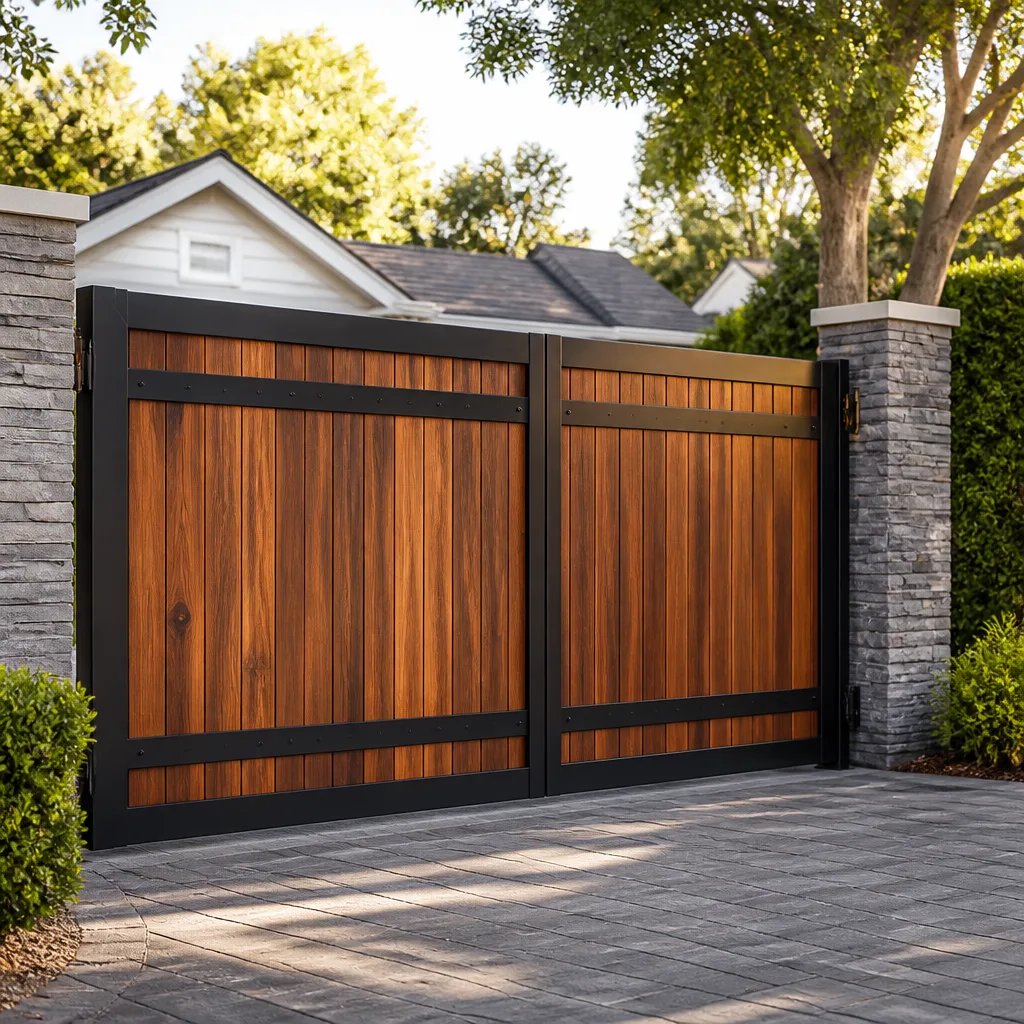 Wood & steel frame
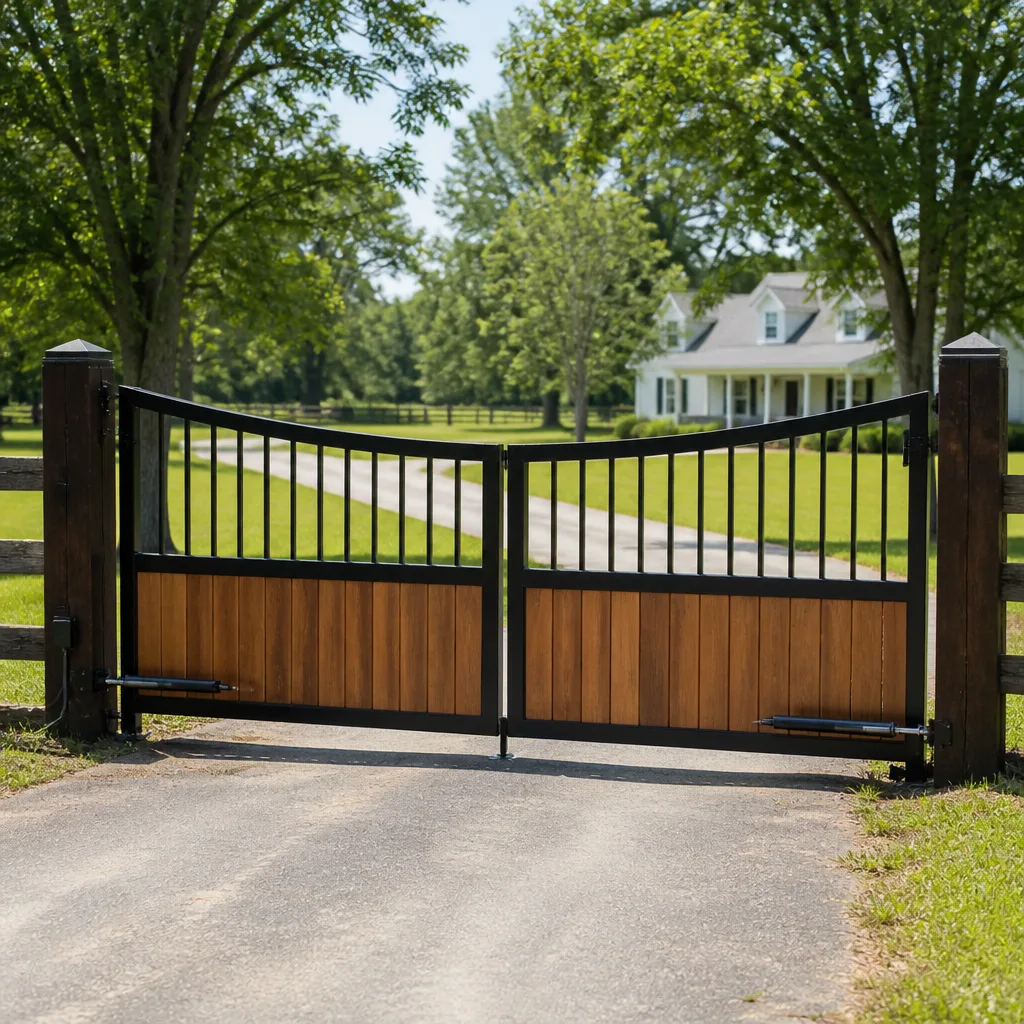 Farm & ranch
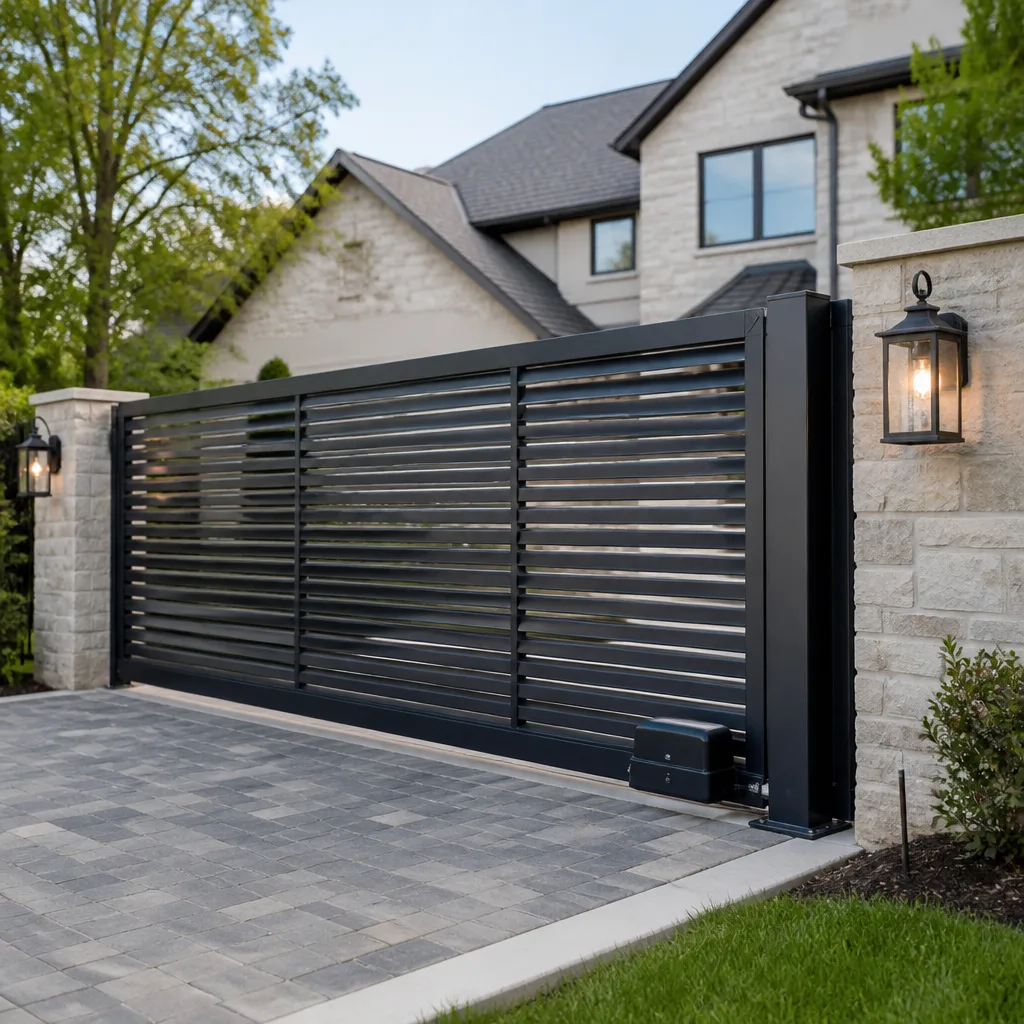 Sliding driveway gates
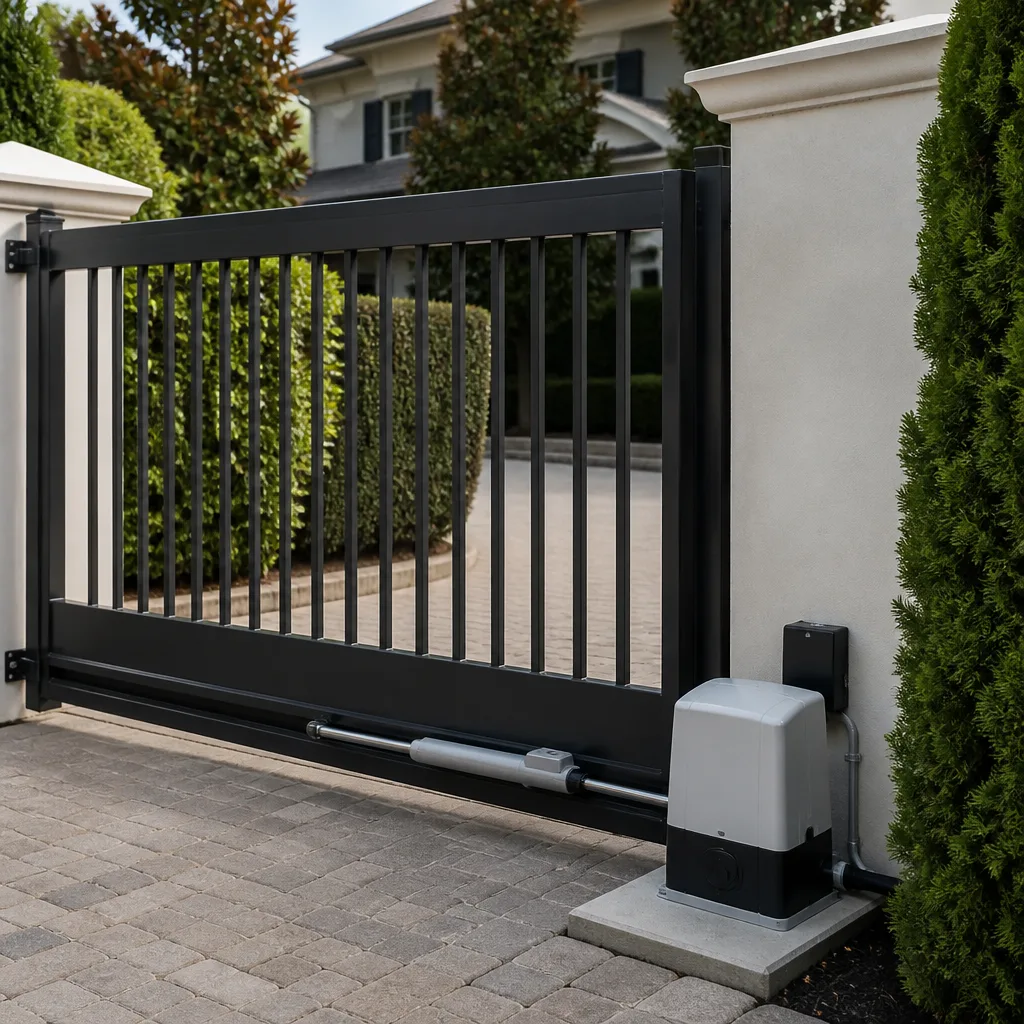 LiftMaster operators
Free on-site gate assessment - hinges, posts, and your LiftMaster or Nice gate operator checked before anything is quoted
The assessment is free and the quote is the invoice.
Get your free estimateGate Repair Maintenance Checklist for Anaheim Homeowners
There’s a piece of gate-maintenance advice circulating in Anaheim Facebook groups and HOA newsletters that should be retired immediately: “Spray the mechanical parts with WD-40 every few months.” On a FAAC operator’s worm gear, that’s a warranty-voiding mistake. On a Viking swing arm, it turns dust into grinding paste. This guide replaces the generic lubricate-and-inspect template with a Gate Repair Troubleshooting: Common Problems and How to Fix Them maintenance checklist organized by the actual equipment on your property: the operator type, the gate panel material, the safety system, and the way Anaheim’s specific climate accelerates wear. By the end, you’ll know exactly what to check, how often, and which tasks genuinely require a specialist.
Styles & brands we work with
Quick Answer
A correct gate maintenance checklist for Anaheim homeowners is built around your specific system, not a universal task list. For most residential swing gates used twice daily, inspect hinge welds, operator torque, and safety sensors every 3 months, with a deeper battery-backup and limit-switch test every 6 months. The most neglected items that lead to Anaheim service calls are loop detector sensitivity drift after summer heat, UV-degraded plastic housing on Mighty Mule control boards, and torque creep on Viking and LiftMaster arms that burns out motors slowly. If you have a slide gate, a commercial entry, or a gate cycled more than 10 times a day, the schedule compresses.
Table of Contents
- Know Your System Before You Touch Anything
- The Operators: What to Check on Linear, Viking, Ghost Controls, and DoorKing
- Torque and Tension: The Check That Saves Motors
- Gate Panels: Aluminum, Wrought Iron, and Wood in Anaheim’s UV
- Loop Detectors and Safety Edges: Why Summer Heat Changes Behavior
- Battery Backup Health: The Voltage Numbers That Actually Matter
- Maintenance Frequency by Gate Type and Traffic
- Common Mistakes to Avoid
- When to Call a Professional
- Frequently Asked Questions
- The Bottom Line
Know Your System Before You Touch Anything
Every gate maintenance checklist is only as good as the identification step that comes first. Anaheim’s housing stock spans postwar ranchers with simple chain-link drive gates, 1980s and 1990s tract developments with aluminum swing gates, and newer hillside and gated communities in Anaheim Hills with heavier operators. A checklist written for a Ghost Controls residential swing opener is wrong for a DoorKing slide gate operator, and a checklist for either is wrong for a LiftMaster commercial arm on an HOA entry. The cheapest repair is the one you never cause by maintaining the wrong component the wrong way.
Here’s how to identify what you have before you start:
- Find the operator. It’s the metal box mounted on the gate post or on a pad near the gate. The brand name is on the lid or side. LiftMaster operators are beige or gray. Viking arms are often black with yellow labels. Ghost Controls units are compact and usually mounted directly on the post. DoorKing operators are common on multi-unit and commercial entries.
- Identify the gate type. Swing gates pivot on hinges. Slide gates roll on a track or a cantilever system. Barrier arms pivot at one end. Each has completely different wear points.
- Confirm the power source. Solar, hardwired AC, or battery backup. If you don’t know, look for a solar panel near the gate or a low-voltage wire running from the house.
- Test the manual release. Every operator has one. It’s usually a keyed cylinder or a pull handle on the operator housing. Disengage it once and move the gate by hand to feel for physical resistance before doing anything electrical.
If you’re in a rental or an HOA property in Anaheim, confirm who owns the gate before doing any Gate Repair work. Many HOAs maintain the common entry gates but not the private driveway gates behind them. We’ve seen residents spend money maintaining a gate their association was already contracted to service.
The Operators: What to Check on Linear, Viking, Ghost Controls, and DoorKing
Operators in Anaheim fail for predictable reasons. Heat, dust, and daily cycling wear out specific components on specific brands. Our electric gate repair work across Anaheim turns up the same issues repeatedly, which is why we organize maintenance around what each system actually demands. Here’s what to inspect, sorted by what’s most likely to take your gate down.
Linear swing and slide operators
- Limit switches: These tell the motor when to stop. If your gate slams or stops short, the limit switches have drifted. Check them quarterly by running a full open-close cycle and watching for a clean stop, not a hard hit against the post.
- Capacitor: Linear units use a start capacitor that degrades over 3 to 5 years in Anaheim heat. If the gate hums but doesn’t move, or moves slowly for a second before starting, the capacitor is dying. This is a test-and-replace item for a professional, not a DIY fix.
- Gearbox oil: Linear slide operators have a sealed gearbox. If you see oil weeping around the housing seam, the seal has failed. Continued operation grinds the gear teeth. Call a technician rather than adding lubricant.
Viking swing arms
- Torque output: Viking arms are built heavy, which means when they drift out of adjustment they don’t stall, they overdrive. Check the arm’s attachment bracket bolts monthly if the gate sees heavy use. Look for movement in the bracket, not just on the arm itself.
- Clutch slip: Viking operators use an internal clutch to protect the motor. When it slips too easily, the gate won’t fully close. When it’s set too tight, the motor burns out. Test by holding the gate mid-cycle for a second, it should stop on its own without grinding. If it grinds, the clutch is wrong.
- Weather sealing: The control enclosure gasket dries out in Anaheim’s low-humidity summers. A cracked gasket lets dust and occasional rain onto the board. Replace it every 2 years.
Ghost Controls residential openers
- Plastic housing UV degradation: Ghost Controls units are popular on Anaheim residential gates because they’re affordable and solar-compatible. The tradeoff is that the control box housing is ABS plastic, which gets brittle after several seasons of direct sun. Inspect the housing for cracks every 6 months. A crack that lets moisture in is the beginning of a board failure.
- Battery terminals: The 12V battery sits inside the control box. Corrosion on the terminals looks like a white or green crust. Clean it with a terminal brush and reconnect tightly. Loose terminals cause the intermittent “gate won’t open from the remote” calls we get most often.
- Remote range: If you’re standing closer than usual to trigger the gate, the receiver antenna may be damaged or the remote battery is fading. Test from a consistent distance monthly.
DoorKing commercial operators
- Drive chain or belt tension: DoorKing slide gates run on chain or belt drive. A loose chain slaps and wears the sprockets. A chain with more than 1 inch of mid-span flex is too loose. Tensioning is a bolt adjustment, but if you can hear it slapping, don’t run the gate until it’s adjusted.
- Control board relays: DoorKing boards are workhorses, but the relays that fire the motor wear out on high-cycle commercial entries. Listen for a clicking sound without gate movement. That’s the relay engaging and failing to pass current.
- RPM sensor: DoorKing slide operators use a magnetic sensor to monitor motor speed. If the gap between the sensor and the magnet drifts, the board throws a fault and disables the gate. A visual check that the bracket hasn’t vibrated loose is quick and prevents a full shutdown.
We work on DoorKing, Linear, Viking, and Ghost Controls gates, along with five other major brands, so we’re not tied to one manufacturer’s recommended checklist. That matters when the issue spans multiple components from different makers.
Torque and Tension: The Check That Saves Motors
The single most expensive repair on Anaheim electric gates is a burned-out motor, and the single most common cause is torque that drifted upward over months of use. Operators work harder when hinges bind, when panels get heavier with paint or moisture, and when the gate’s natural resistance increases. A motor running against rising resistance overheats, draws more current, and dies. Here’s the torque and tension check we recommend doing every 3 months on any motorized gate.
- Disengage the operator. Use the manual release. The gate should move freely by hand. You shouldn’t need two hands or body weight to swing it.
- Check movement smoothness halfway through the travel. Most binding shows up in the middle of the swing, not at the ends. If there’s resistance mid-travel, the hinges or the operator’s pivot points are fighting you.
- Close the gate by hand and listen. Grinding means metal on metal at a hinge or pivot. Squealing means dry bearings. A low groaning sound on a slide gate usually means the wheels are flat-spotted or the track is filled with debris.
- Re-engage the operator and run a full cycle. Watch the motor strain. If the housing vibrates visibly or the motor sounds like it’s laboring, the torque setting is too high for the current gate resistance.
- Check hinge and bracket bolts. Use a socket wrench. A single loose hinge bolt changes the gate’s geometry and adds load. Tighten to firm contact, not to maximum crank.
On Viking and LiftMaster operators common in Anaheim HOA communities, torque is set at the board or at the gearbox. If you’re not certain which adjustment matches your system, or if the gate feels heavy even after checking the hinges, have a professional set the torque. A wrong adjustment here is the difference between a smooth-running gate and a motor replacement in six months.
Gate Panels: Aluminum, Wrought Iron, and Wood in Anaheim’s UV
Anaheim’s climate is hard on gate panels in very specific ways. We get 270-plus sunny days a year, summer highs in the 90s, and almost no rain from June through October. That’s great for outdoor living and terrible for unprotected metal and wood. Your gate repair needs in Anaheim will be lower if you catch panel damage before it becomes structural.
Aluminum gates
- Powder coat checking: Aluminum panels on Anaheim tract homes are usually powder coated. After 7 to 10 years in full sun, the coating develops a faint crosshatch pattern called checking. Once you see it, the base metal is exposed and oxidation starts invisibly. Wax or re-coat early.
- Weld stress at the stiles: Aluminum expands and contracts more than steel. The welded joints where horizontal rails meet vertical stiles work loose over hundreds of temperature swings. Look for hairline cracks radiating from the welds every spring and fall.
- Hardware corrosion: Aluminum doesn’t rust, but the steel hardware on aluminum gates does. Hinge bolts, latch screws, and handle mounts are galvanic corrosion points. Replace rusted hardware with stainless.
Wrought iron gates
- Rust at the base: The bottom rail and the lowest 6 inches of the pickets rust first, especially if the gate sits near sprinkler overspray. Tap the rust with a screwdriver handle. If it crumbles or flakes off in sheets, the metal has lost structural thickness.
- Paint blisters: Blisters mean rust is forming underneath the paint. Sand, prime, and repaint the spot within a season. The coastal-influenced air in west Anaheim carries more salt than areas further inland, accelerating this.
- Scrollwork stress cracks: Ornamental scrolls concentrate stress. Look at the tightest curves for hairline fractures. A cracked scroll spreads vibration through the whole panel when the operator cycles.
Wood gates
- End grain checking: Wood gates in Anaheim dry out fast. The ends of horizontal rails crack and split within the first 2 to 3 years if not sealed. Paint or seal the end grain aggressively, it wicks moisture and loses integrity faster than any other surface.
- Sag at the latch side: Wood is heavy and Anaheim’s dry air makes it lighter, then first rain makes it heavier again. That cycle loosens glue joints and fasteners. Check the latch side gap every 6 months. A widening gap means the frame is racking.
- Termite activity: Subterranean termites are active in Anaheim’s soil year-round. Look for mud tubes along the bottom rail and any wood-to-soil contact. A wood gate that was never installed with a proper gap above grade is a termite highway.
The right material for a replacement depends on exposure. A west-facing gate in Anaheim takes the hardest afternoon sun. Aluminum handles it best with good coating. Gate installation in Anaheim is where material choice gets made once and paid for or enjoyed for a decade.
Loop Detectors and Safety Edges: Why Summer Heat Changes Behavior
Here’s a scenario we hear from Anaheim homeowners every August: the gate worked fine all spring, then suddenly the car doesn’t trigger it consistently. Sometimes you wait, sometimes you have to use the remote. The gate isn’t broken. The loop detector has drifted.
Loop detectors are wires buried in the pavement that sense the metal mass of a vehicle. They’re tuned to a specific sensitivity at installation. When Anaheim’s summer heat raises pavement temperature by 30 to 40 degrees, the inductance of the loop changes. A detector set to a tight sensitivity in March falls out of range in August, so it stops reliably detecting vehicles. The fix is usually a small sensitivity adjustment at the detector module, not a new loop.
Here’s how to test whether drift is your problem:
- Drive over the loop slowly at your normal approach speed. If the gate opens reliably when you approach slowly but not at normal speed, sensitivity has drifted low.
- Test with a smaller vehicle if you have one. If a motorcycle or small car triggers the gate reliably but an SUV doesn’t, or vice versa, the loop frequency has shifted with temperature.
- Listen for the detector click. Stand near the operator while someone drives over the loop. Most detectors have an audible relay click or an LED that flashes when the loop is triggered. No click means no detection.
- Check the safety edges separately. Press the rubber safety edge on the gate’s leading edge while the gate is closing. The gate should reverse immediately. If it doesn’t, the edge or its wiring has failed, and that’s a safety issue that needs prompt attention.
Loop detector adjustment is a calibration task, not a repair. It’s done at the control board with a small screwdriver in most systems. If you’re not comfortable opening the operator housing, it’s a quick service call. Safety edge replacement is more involved and should be done by someone who understands the system’s safety circuit.
Battery Backup Health: The Voltage Numbers That Actually Matter
Most Anaheim gate operators installed in the last 15 years include a battery backup, either to keep the gate working during power outages or to buffer solar-powered systems. Batteries don’t fail suddenly. They decline, and the decline is measurable with a basic multimeter. Here are the numbers that tell you whether the battery is healthy, marginal, or dead.
- 12V systems: 12.6 volts or higher is healthy at rest. 12.0 to 12.5 volts means the battery is aging but functional. Below 11.8 volts at rest means replacement. A battery that reads 10.5 volts or lower has likely suffered cell damage and won’t recover.
- 24V systems: 25.2 volts or higher is healthy at rest. 24.0 to 25.0 volts means aging. Below 23.6 volts means replacement.
- Load test is what matters more than resting voltage. A battery can read 12.6 volts at rest and collapse under load. Test voltage while the gate is cycling. If it drops below 10.5 volts during operation on a 12V system, the battery is done regardless of resting reading.
- Check charging voltage too. With the operator powered on, the battery terminals should read between 13.5 and 14.5 volts on a 12V system. Lower means the charging circuit is failing, and the battery will die even if it’s new.
Batteries in Anaheim last 3 to 5 years typically. Heat shortens that lifespan, so a battery in a black metal operator housing on a south-facing wall ages faster than one in a shaded location. If your battery is past year 4, test it now and budget for replacement before the next Santa Ana wind event knocks out power.
Maintenance Frequency by Gate Type and Traffic
A maintenance schedule that works for a residential swing gate used twice a day is dangerously thin for a commercial slide gate cycling 50 times daily. Here’s the frequency breakdown we recommend based on what we see across Anaheim’s residential neighborhoods, HOA entries, and business properties.
- Residential swing gate, light use (1 to 5 cycles daily): Full visual inspection every 6 months. Torque and hinge check every 6 months. Battery test quarterly. Loop detector check before summer and after summer. This is the typical Anaheim single-family setup.
- Residential swing gate, heavy use (6 to 20 cycles daily): Same checks, but on a 3-month schedule. Add limit switch verification monthly. This applies to shared driveways and homes with multiple drivers cycling the gate constantly.
- Slide gate, residential or light commercial (10 to 30 cycles daily): Track and wheel inspection monthly. Chain or belt tension check quarterly. Loop detector calibration check every 2 months. Slide gates accumulate debris in the track, and a pebble in the wrong spot stresses the whole system.
- Commercial entry gate or HOA gate (30+ cycles daily): Professional maintenance quarterly. This is not a homeowner-maintained system. DoorKing and LiftMaster commercial operators on Anaheim apartment entries and business driveways need relay checks, RPM sensor checks, and safety system verification on a defined schedule. Skipping a quarter costs more than paying for the maintenance.
- Solar-powered gates of any type: Panel cleaning monthly. A layer of dust from Santa Ana winds cuts output by 10 to 20 percent. Battery health check quarterly regardless of cycle count.
The pattern is simple: the more the gate cycles, the shorter the interval between checks. A gate that runs 50 times a day in a week experiences what a residential gate sees in a year. Frequency of maintenance is not about the calendar, it’s about accumulated wear cycles.
Common Mistakes to Avoid
- Using WD-40 on operator internals. WD-40 is a solvent and water displacer, not a lubricant. On a FAAC worm gear or a Viking pivot, it strips whatever grease remains and accelerates wear. Use a proper silicone or lithium grease on hinges and a manufacturer-specified gear oil on the gearbox.
- Over-torquing to fix a drifting gate. When the gate doesn’t close fully, the first instinct is to crank the torque up. That masks the real problem, a stiff hinge or a binding wheel, while cooking the motor. Find the bind before touching the torque setting.
- Ignoring seasonal loop detector drift. Anaheim’s pavement temperature swings more than 40 degrees between January and August. A loop that works in winter may not work in summer. If the gate gets inconsistent with vehicle detection in August, suspect drift before replacing anything.
- Painting over rust without addressing it. On wrought iron gates, a fresh coat of paint over active rust looks fixed for about six months. Then the rust comes through and the panel is weaker than before. Remove rust, prime, then paint.
- Neglecting the safety edges and photo eyes. The reversing mechanism is the most important safety component on your gate. A gate that doesn’t reverse on contact can injure a child or pet. Test the safety system every time you do any other maintenance.
- Replacing batteries without testing the charging circuit. A new battery on a failing charger dies in a few months. If the old battery was truly dead, check that the operator is charging at the right voltage before installing the replacement.
- Assuming all gates need the same maintenance. A DoorKing slide gate and a Ghost Controls swing gate share almost no maintenance tasks. Know your system before you start checking boxes.
When to Call a Professional
Some maintenance tasks are checks, and some are interventions. You can check torque, hinges, battery voltage, and loop detector behavior yourself. You should call a professional when the check turns up something that requires disassembly, calibration, or safety-system work. That includes replacing a limit switch, setting torque on a Viking or LiftMaster arm, opening a gearbox to inspect oil, adjusting a loop detector inside the control board, or replacing a safety edge. If a gate is used by children, tenants, or the public, and the safety system isn’t behaving correctly, don’t wait. Your gate is the only thing we fix, and we’re set up to diagnose across brands rather than guessing from one manufacturer’s manual. See our Gate Repair Permits, Codes & Inspections in CA: What You Need to Know for regulatory guidance. First Light Gate Repair offers free estimates in Anaheim, call (833) 734-5599.
Frequently Asked Questions
Gate repair in Anaheim typically runs between $150 and $450 for most residential fixes, including hinge replacements, limit switch adjustments, battery replacement, and safety sensor repair. Motor or control board replacement runs higher, usually $500 to $1,200 depending on the operator brand. Call (833) 734-5599 for an exact quote on your gate, estimates are free and the price is set before we start work.
A residential swing gate in Anaheim used 1 to 5 times daily should get a visual inspection and hinge and torque check every 6 months, with battery testing quarterly and loop detector checks before and after summer. Higher-traffic gates need shorter intervals. See the maintenance frequency section above for the full schedule by gate type.
Anaheim’s hot summer pavement shifts the sensitivity of your loop detector, so a detector tuned in cooler weather may not reliably detect your vehicle in August. This is sensitivity drift, not a broken gate, and it’s usually fixed with a small calibration adjustment at the control board.
You can lubricate hinges and pivot points with a silicone or lithium grease, but do not spray lubricant inside the operator housing or onto the gearbox. The wrong product on a gear train causes more wear than no lubrication at all. If the gearbox needs service, that’s a professional task.
We work on nine major gate brands including LiftMaster, FAAC, BFT, Linear, Viking, Ghost Controls, DoorKing, Elite, and Mighty Mule. If you have one of those systems, we diagnose and repair it in place. If you’re not sure what brand you have, a photo of the operator usually tells us.
A full gate installation includes the gate panel, posts, hinges, operator, safety edges or photo eyes, and any required wiring for power and access control. We quote every installation with a written price before work starts. Call (833) 734-5599 for a free measure and estimate.
The Bottom Line
A gate maintenance checklist only works when it matches the equipment you actually have. Anaheim homeowners need to know their operator brand, their panel material, and their cycle count before any check is meaningful. Torque and tension drift quietly kills motors. Loop detector sensitivity drifts with summer heat. Battery voltage tells you replacement timing. Panels need different care depending on aluminum, iron, or wood construction. Check the right things at the right intervals, and a well-built gate lasts decades instead of failing on the day you can least afford it. Explore more guides & resources for year-round maintenance tips. When a check turns up something beyond a visual inspection or a battery test, call a specialist who works on your brand. Our gates are the only thing we fix, and we answer the phone at (833) 734-5599.
Written by the team at First Light Gate Repair, serving Anaheim since 2014.
See the difference
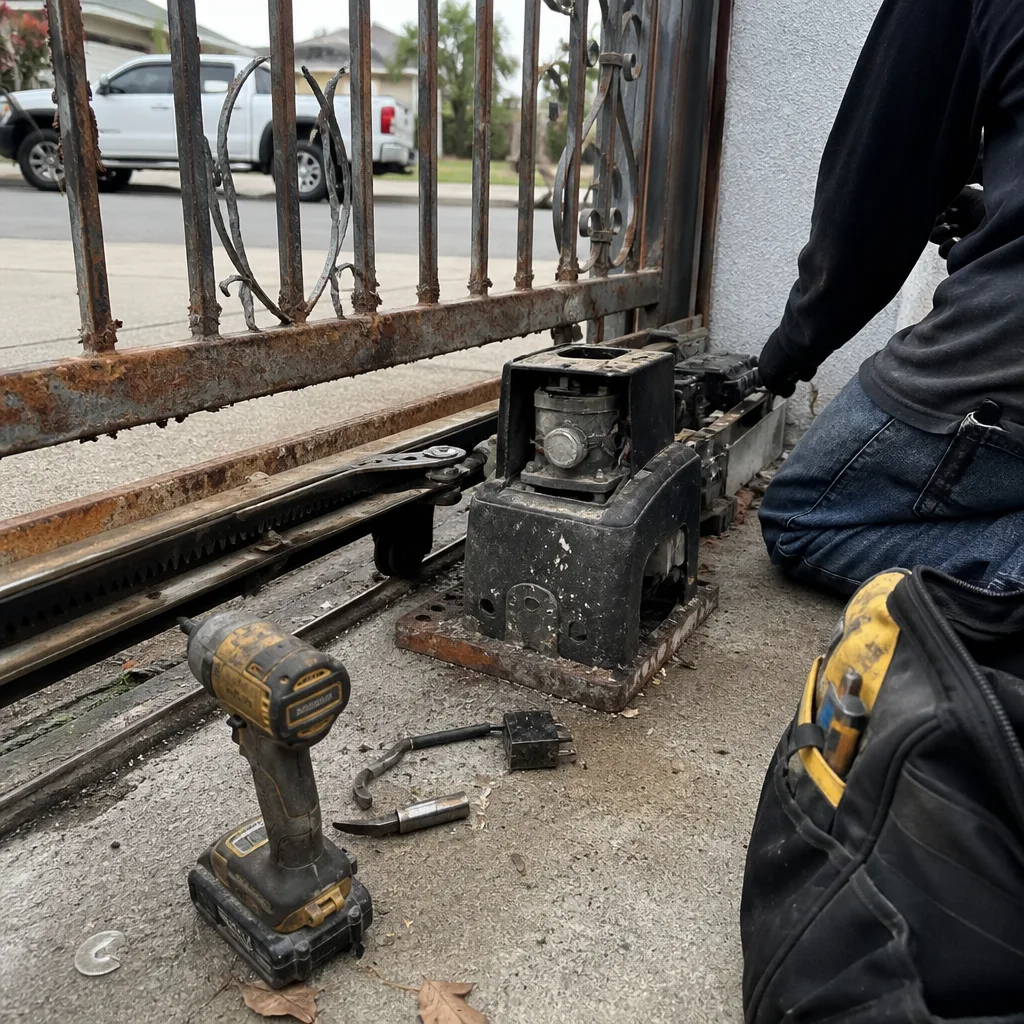 Before
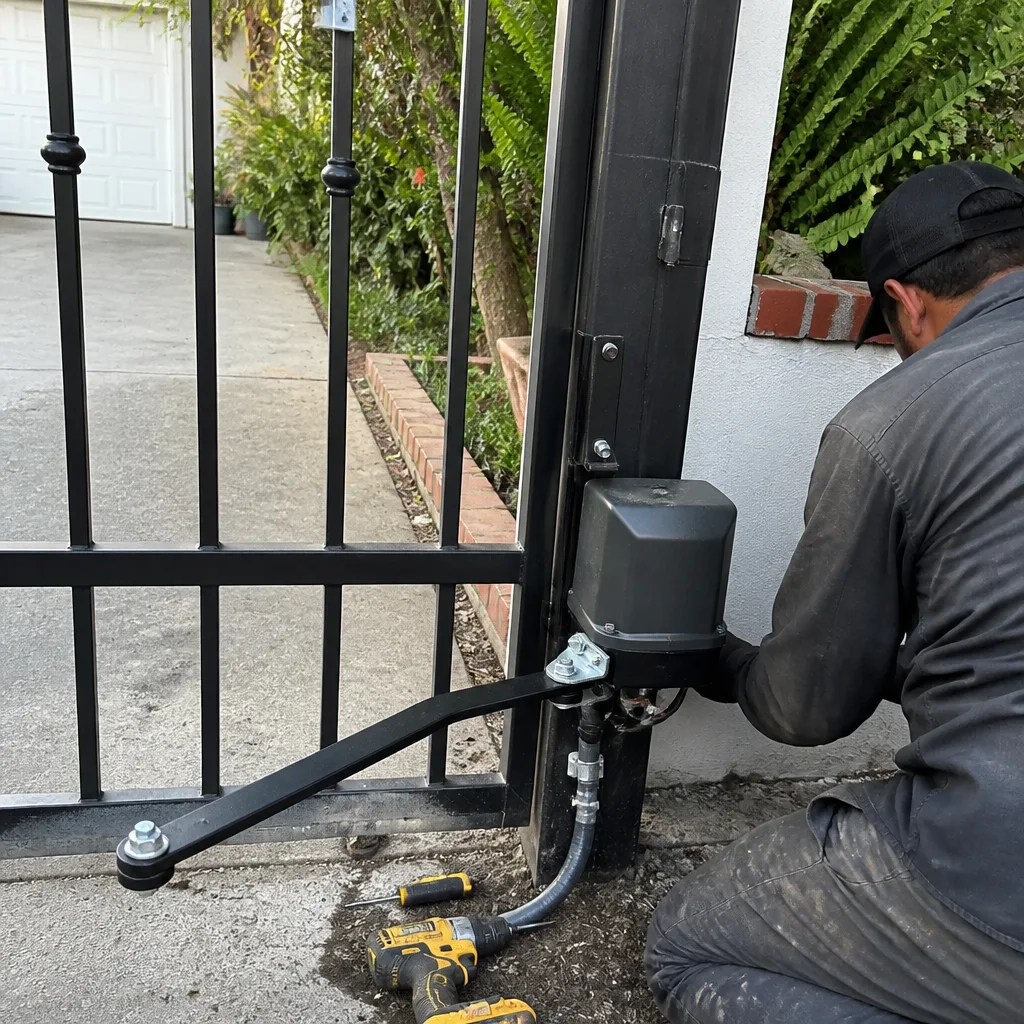 After
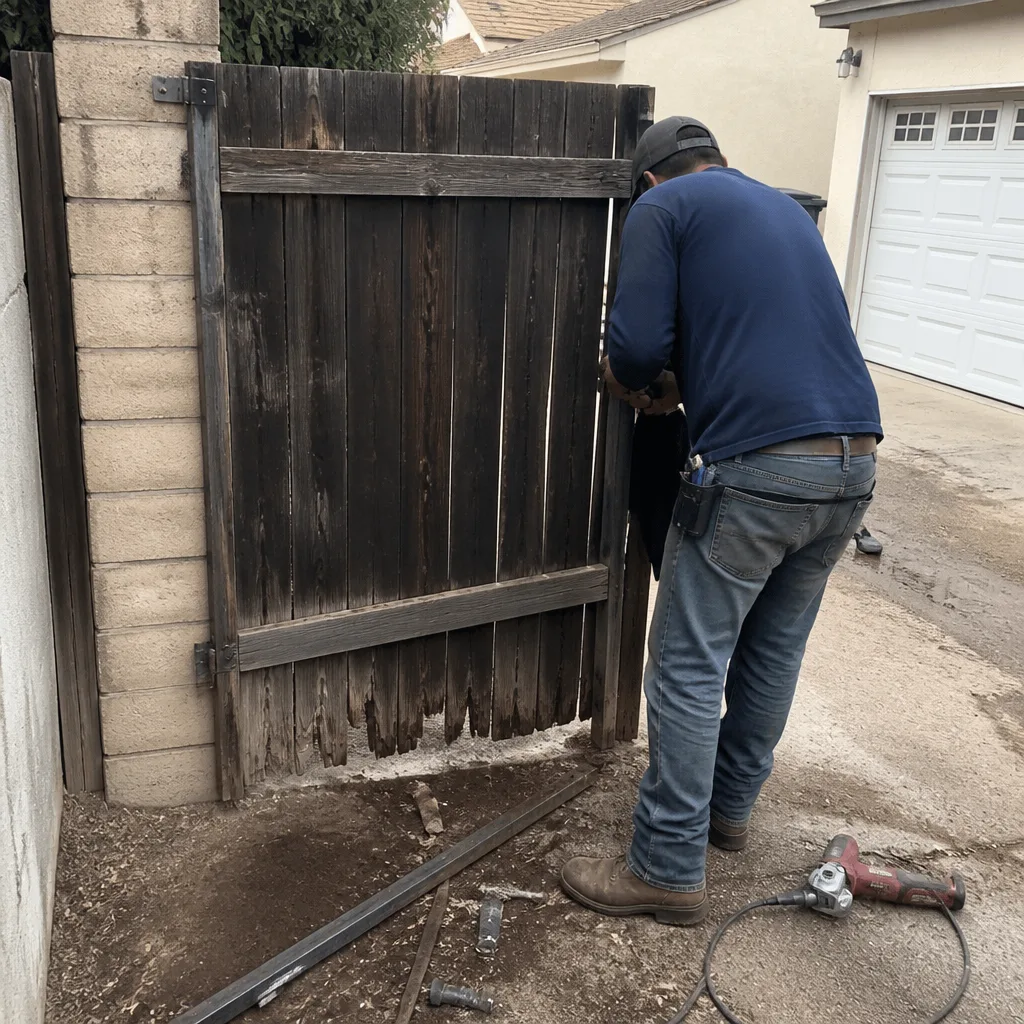 Before
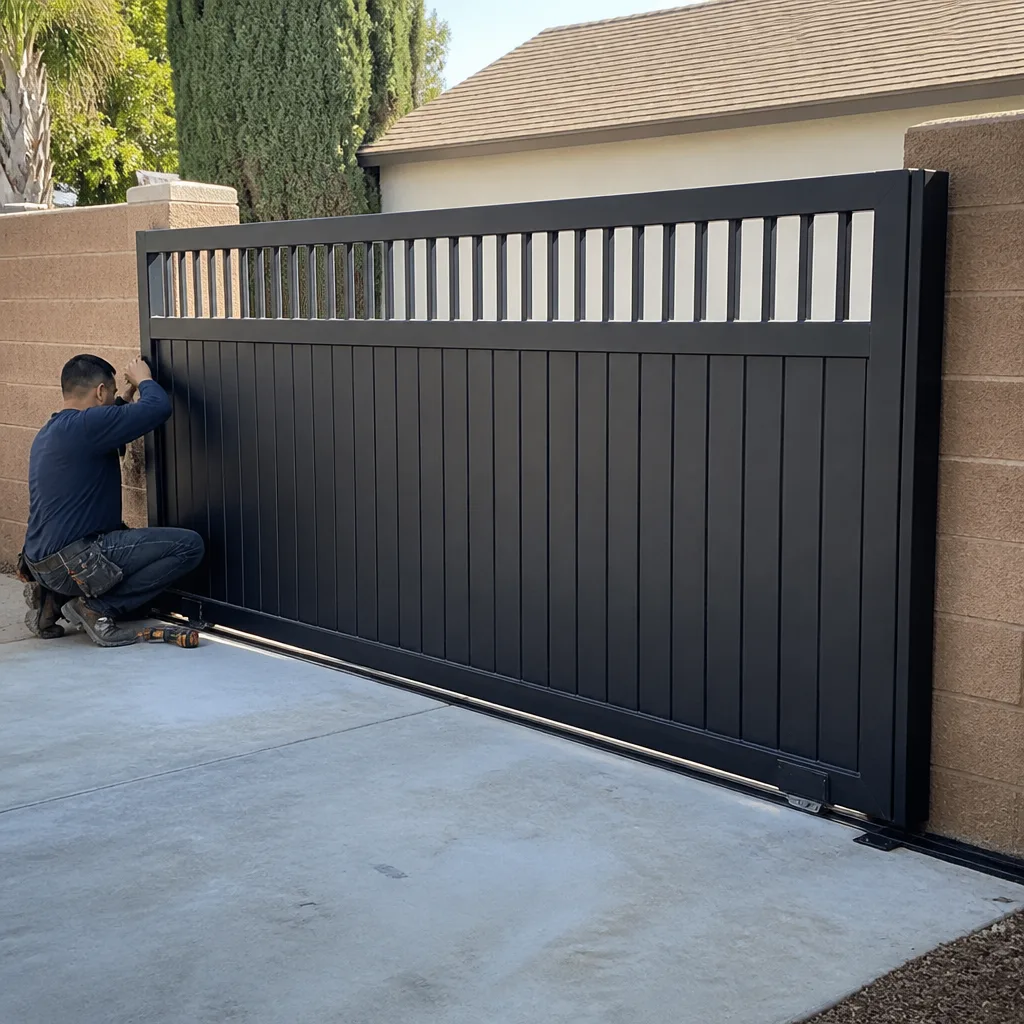 After
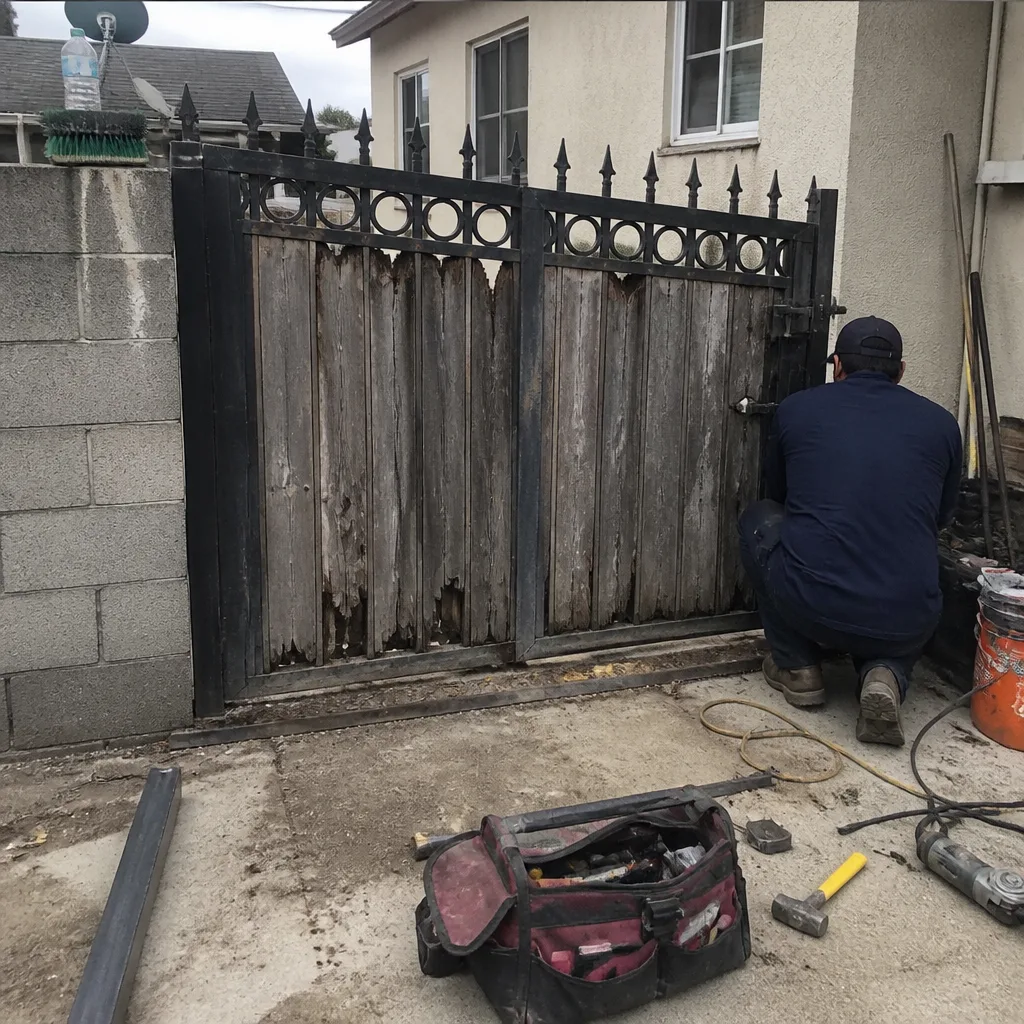 Before
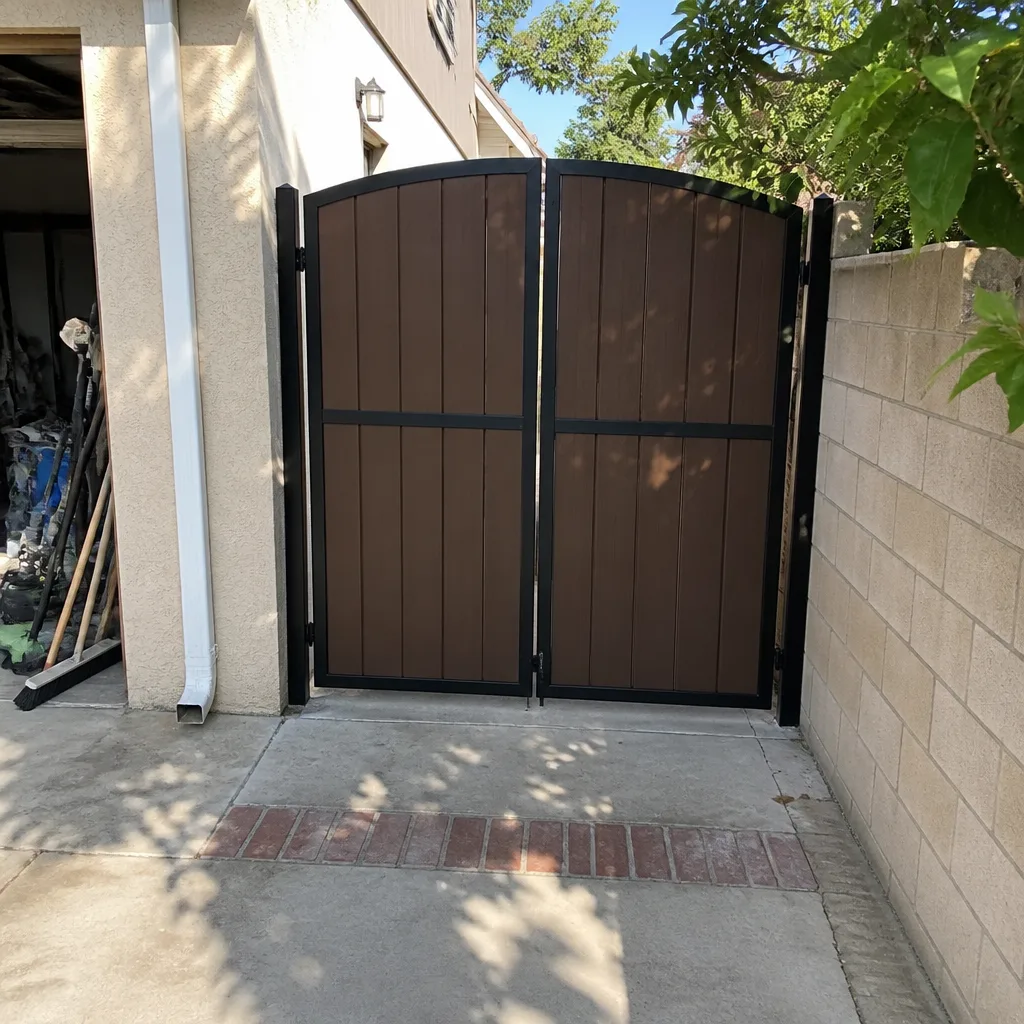 After