Last updated October 30, 2026
 Wrought iron
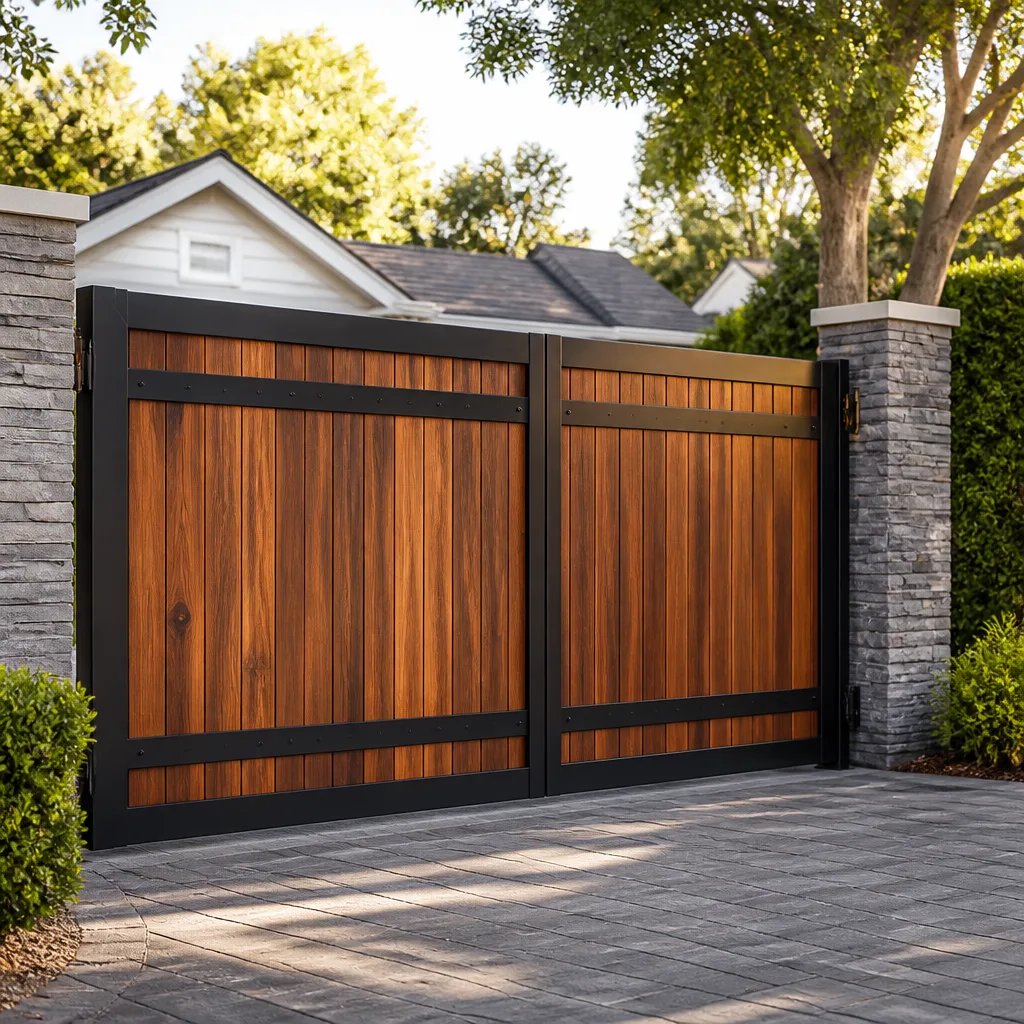 Wood & steel frame
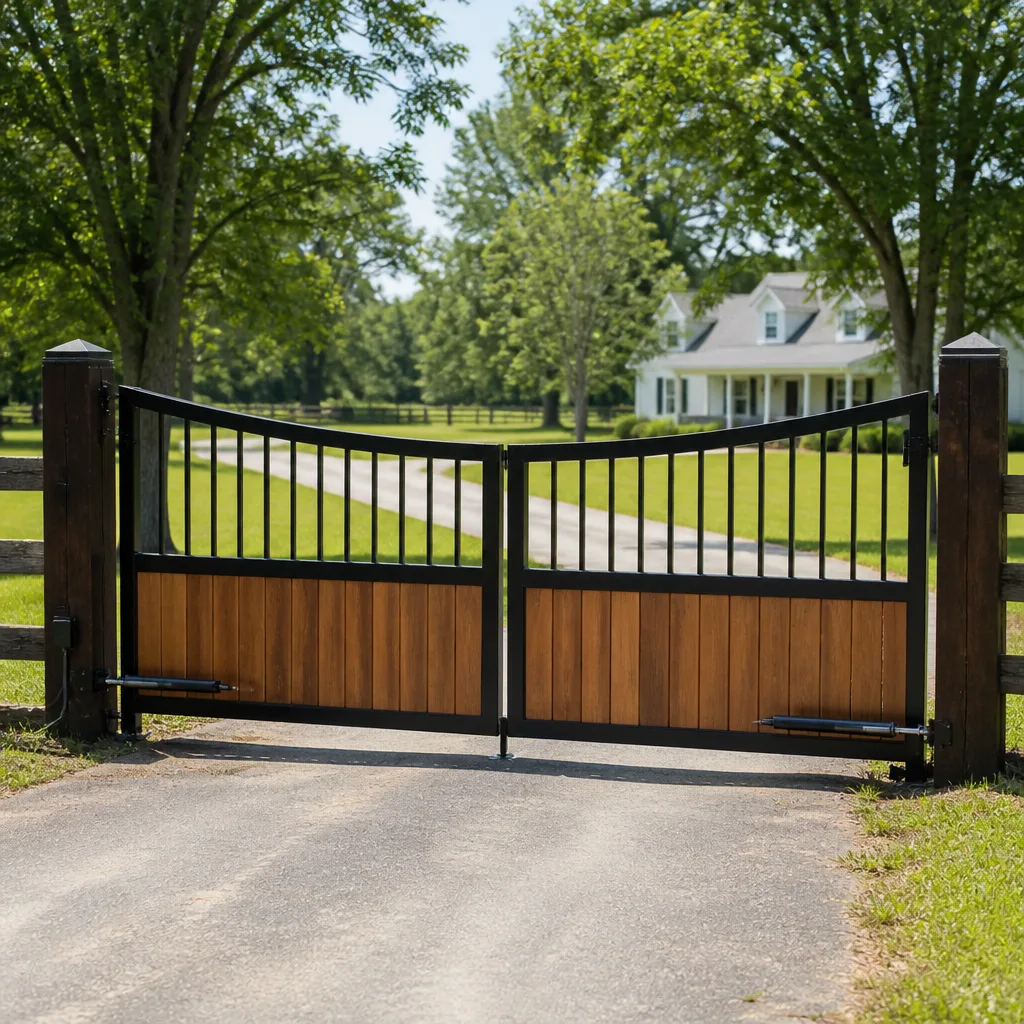 Farm & ranch
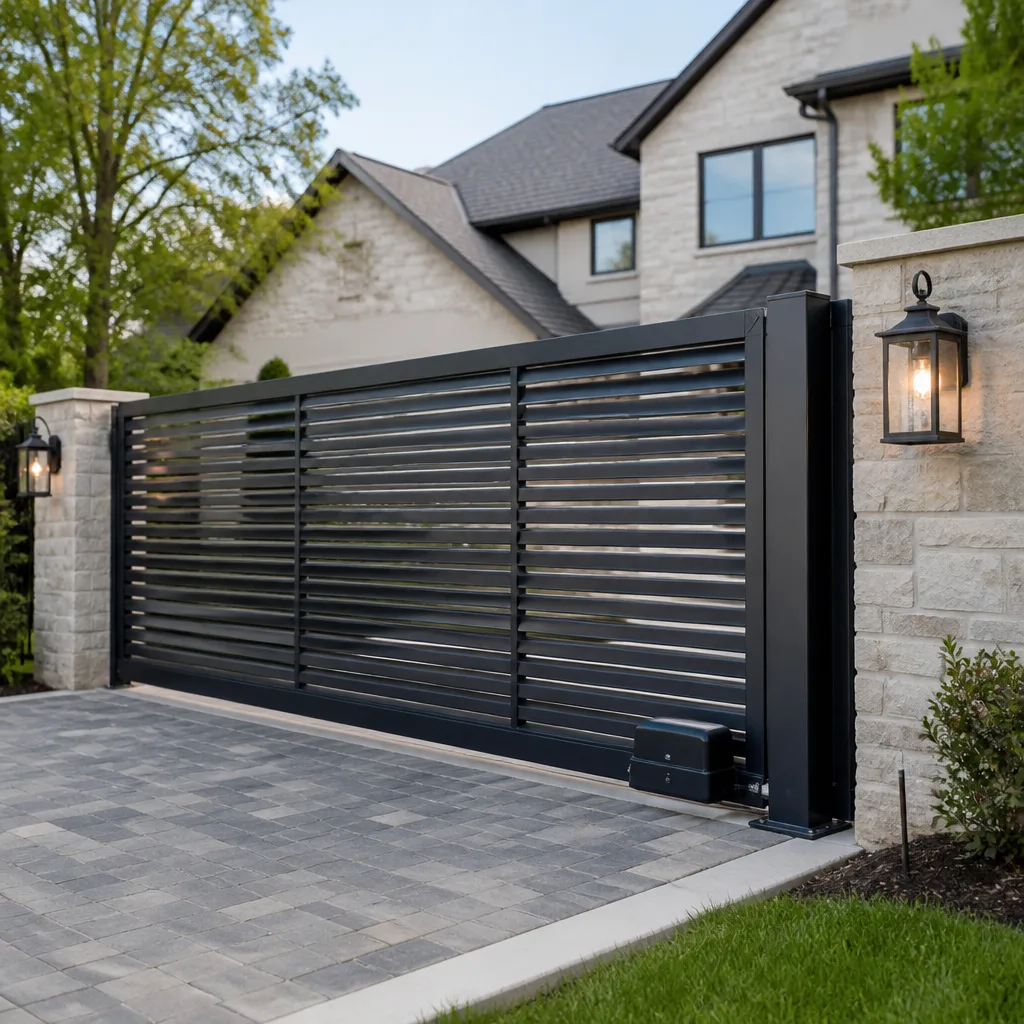 Sliding driveway gates
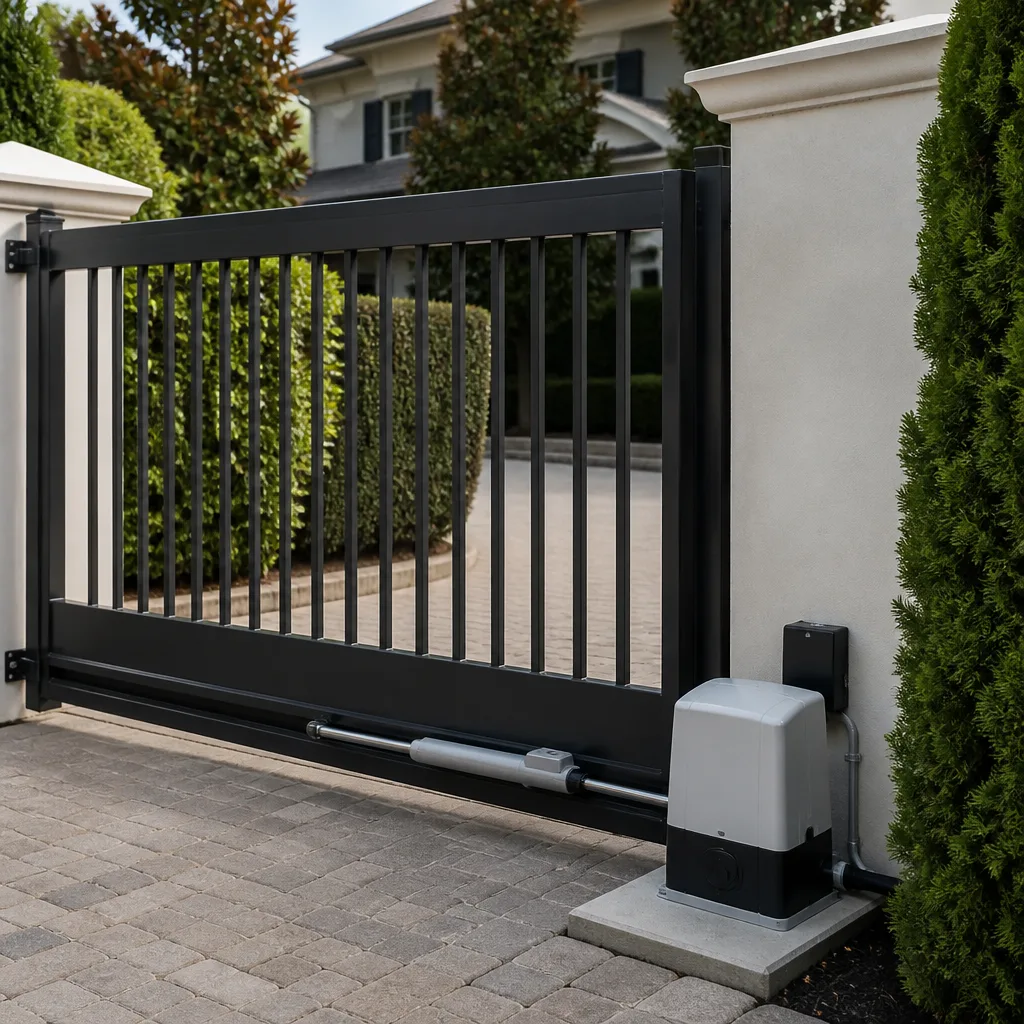 LiftMaster operators
Free on-site gate assessment - hinges, posts, and your LiftMaster or Nice gate operator checked before anything is quoted
The assessment is free and the quote is the invoice.
Get your free estimateGate Repair Warning Signs: A Anaheim Homeowner’s Reference Guide
A gate that hesitates for two seconds before opening is not “just slow.” It’s an operator working against a friction load it was never designed to carry, and the motor will fail under that condition. We’ve torn down enough burned-out operators in Anaheim to know the pattern: the failure happened 60 days earlier, at the moment the gate first started moving differently. This guide assigns urgency levels to the exact symptoms your gate is showing, so you can tell a $40 hinge shim from a $900 operator replacement before the gate makes the decision for you.
Styles & brands we work with
Quick Answer
Most gate failures in Anaheim announce themselves 30 to 90 days in advance through specific symptoms: a gate that slows down near the end of travel, a new grinding or clicking sound, a control board flashing an error code, or a keypad that needs two or three tries. The warning sign itself rarely tells you the cost – but the type of symptom (mechanical vs. electrical vs. access control) is the single most reliable predictor of whether you’re looking at a minor adjustment or a component replacement. Learn to read the difference and you’ll never pay for a full operator when a limit switch was the fix.
Table of Contents
- Audible Warning Signs: What Your Gate Is Trying to Tell You
- Visual Warning Signs You Can Spot Without Tools
- Intermittent Operation: Why “Mostly Works” Is a Red Flag
- Control Board Error Codes: Decoding the Blink Sequences
- Access Control Warning Signs: Keypads, Intercoms, and Loop Detectors
- Anaheim-Specific Factors That Accelerate Gate Wear
- Urgency Levels: What to Fix This Week vs. What Can Wait
- Common Mistakes to Avoid
- When to Call a Professional
- Frequently Asked Questions
- The Bottom Line
Audible Warning Signs: What Your Gate Is Trying to Tell You
Gates are not quiet machines. A healthy operator makes a consistent, low mechanical hum – the sound of a motor turning a gearbox at the speed it was designed for. When that baseline sound changes, something has already shifted. The specific type of new noise tells you which subsystem is failing, and that’s the difference between a $180 roller replacement and a $1,200 operator swap. Here’s what we listen for on service calls across Anaheim:
The Grind on a Slide Gate
A slide gate that grinds while moving is almost always a roller or track problem, not a motor problem. The motor is working harder because the gate’s weight is no longer rolling smoothly – it’s dragging. On steel cantilever slide gates, we typically find worn nylon rollers that have gone flat on one side. On V-track slide gates, the track itself has usually collected enough Anaheim road dust and decomposed granite to create a sandpaper effect. The urgent part: a grinding slide gate puts continuous lateral load on the operator’s output shaft. Let it run for a month and the gearbox starts shedding metal. The roller replacement was $180. The gearbox replacement is $700-plus and the gate is down for days.
The Click on a Swing Gate Operator
A swing gate that clicks rapidly when you press the remote is telling you the operator’s limit switch logic has lost its reference point. The control board is sending power, the capacitor is charged, but the motor won’t turn – so the relay clicks and releases. On LiftMaster swing operators, this often follows a power interruption that wiped the limit settings. On Mighty Mule units, it’s commonly a low battery combined with a stuck limit switch. The fix is usually a limit relearn, not a new motor. But ignored long enough, the repeated stall current burns the relay contacts on the board – and that is a board replacement.
The Squeal on Any Gate Type
A high-pitched squeal during movement is metal-on-metal contact without lubrication. On swing gates, it’s hinge pins that have never been greased. On slide gates, it’s the chain or belt rubbing against a misaligned sprocket. This one is deceptively benign-looking: a squeal doesn’t stop the gate, so homeowners let it ride. But unlubricated hinge pins wear into an oval shape, and the gate starts to sag at the latch end. At that point you’re not greasing a hinge; you’re re-hanging a gate leaf.
Here’s a reference table for audible symptoms, what they mean mechanically, and typical urgency:
- Low grinding while sliding: Worn rollers or dirty track. Urgency: Medium-high. Fix within 2-4 weeks to protect the gearbox.
- Rapid clicking, gate won’t move: Limit switch fault or low battery. Urgency: High. Call same day; the board is at risk.
- High-pitched squeal during travel: Dry hinge pins or misaligned chain. Urgency: Medium. Lubricate and align; don’t ignore past 30 days.
- Thunk or clunk at start or stop: Loose operator mounting bolts or a worn drive coupler. Urgency: Medium. The operator is shifting under load.
- Humming with no movement: Motor is getting power but the capacitor has failed or the gate is physically jammed. Urgency: High. Disconnect power; call same day.
One Anaheim-specific note: if your gate’s noise changes after a Santa Ana wind event, check for debris in the track or a branch wedged at the hinge line before assuming the operator failed. We see this pattern every fall – the wind moves landscape material into the gate’s travel path, and the resulting friction gets blamed on the motor.
Visual Warning Signs You Can Spot Without Tools
You don’t need a multimeter or a welder to catch most gate failures early. You need to know what “normal” looks like and then notice when it drifts. The following checks take under five minutes and require no tools. We recommend doing them once a month – the same cadence most Anaheim homeowners use for checking sprinkler heads or pool chemistry.
Gate Sag Measurement
Stand at the latch end of your gate and look across the top rail toward the hinge post. The top rail should form a continuous visual line with the post. If the latch end dips even an inch below level on a 12-foot gate, the hinge side is carrying uneven weight. On a swing gate, the gap between the two leaves at the latch should be consistent from top to bottom. A wider gap at the top means the gate is sagging outward. This is purely mechanical wear – hinges, post settlement, or a weld losing integrity – and it will not self-correct.
Hinge Gap Evaluation
Examine each hinge where the moving leaf meets the stationary post. On a healthy gate, the hinge knuckle gap is even and the pin sits straight. If you can see daylight through the top of one hinge knuckle but not the bottom, the pin is bending. If the gap has widened compared to the other hinges, the bearing surface inside is wearing. On a gate with three hinges, the middle hinge should carry roughly equal share; if it’s floating free with visible play while the top and bottom hinges look compressed, you’re already in structural-issue territory.
Ground Clearance Check
For slide gates, look at the gap between the bottom of the gate and the concrete or track. Anaheim’s clay-heavy soil expands and contracts with irrigation cycles and rain, and slab sections shift by fractions of an inch. A slide gate that once cleared the ground by two inches may now be dragging at one corner – the gate didn’t move; the slab did. Run your eye along the entire travel path. If the clearance changes from one end to the other, the gate’s weight is being transferred unevenly to the rollers and the operator.
Scrape Marks or Paint Transfer
Fresh scrape marks on the gate frame, the adjacent fence, or the concrete tell you the gate is no longer traveling in its designed plane. A swing gate that’s scraping the driveway at the latch corner has sagged enough to contact the ground – every open-close cycle is now a minor collision. A slide gate with horizontal scrape marks on its face is tracking into a misaligned post or a shifted fence section.
The unifying truth across all visual checks: none of these symptoms get better with time, and none of them affect the motor first. They affect the structure, and the motor fails later as a symptom of fighting the structure. Fix the structure early and the operator often outlives its expected service window.
Intermittent Operation: Why “Mostly Works” Is a Red Flag
We’d rather diagnose a gate that has stopped working entirely than one that works “most of the time.” A fully dead gate gives you a contained set of failure points: power, board, motor, limit switch. An intermittent gate gives you all of those plus temperature sensitivity, vibration sensitivity, loose connections, and failing solder joints. It’s the difference between finding a broken wire and finding a wire that’s broken only when the gate reaches 95 degrees on an Anaheim afternoon.
Here’s the counterintuitive part: a gate that works 90% of the time is often closer to a hard failure than one that has stopped completely. Here’s why. Intermittent operation is usually an electrical connection degrading – a terminal screw that’s loosened with vibration, a solder joint developing micro-cracks, a limit switch contact wearing thin. The “90% working” state is the symptom of that connection still occasionally making contact. But the physical degradation continues regardless of whether the gate opens on any given cycle. By the time you notice the intermittent behavior, the component is already most of the way through its failure curve.
Common Intermittent Patterns and What They Signal
- Gate opens on the second or third remote press: Receiver sensitivity degradation, remote battery failing, or antenna wire loose. On LiftMaster operators, check the antenna first – it’s a thin wire that gets pinched behind the cover.
- Gate operates fine in the morning, fails in the afternoon: Thermal expansion breaking a marginal connection, or a motor capacitor degrading under heat. Anaheim’s summer temperature swings make this pattern common from June through September.
- Gate stops mid-travel and reverses: Obstruction sensor or safety edge false-triggering. On a windy day, a loose safety edge may flex enough to open the circuit. On a slide gate, check for anything touching the photoelectric sensor path.
- Gate works from the keypad but not the remote (or vice versa): This isolates the problem: if both inputs fail, it’s the board or power. If one input fails, it’s that input device or its wiring.
Here’s the diagnostic flow we run on intermittent gates, in order:
- Confirm the pattern: Which input fails (remote, keypad, exit loop, intercom)? Which time of day? Which gate position?
- Check the power source: Battery voltage on solar systems, outlet GFCI status on AC systems, breaker integrity.
- Inspect connections: Every screw terminal at the board and at the motor. Loose connections reveal themselves as intermittent because the gate’s own vibration is what breaks the contact.
- Test the limits: Run the gate through a full cycle and watch where it stops, reverses, or hangs. Limit switches that are drifting produce intermittent behavior at the same travel point every time.
- Temperature test: If the intermittent behavior correlates with heat, suspect capacitors and solder joints on the control board. If it correlates with cold, suspect battery voltage drop in solar systems.
The practical takeaway: if your gate has failed to open or close more than twice in the last two weeks – even if it worked on the retry – call our Gate Repair services. “Mostly works” is a phase, not a condition.
Control Board Error Codes: Decoding the Blink Sequences
Modern gate operators diagnose themselves. The control board has an LED that blinks in specific patterns, and every manufacturer has a code table. The problem is that the code tables are written for installers, not homeowners – a table that says “Error 31: RPM sensor fault” doesn’t tell you whether you’re looking at a $90 sensor or a $500 board. Here’s what the common patterns mean in plain language, with a note on what you’re actually likely to pay if you call a specialist in Anaheim.
LiftMaster Blink Patterns
LiftMaster operators (common on both residential and light commercial swing gates in Anaheim) use a diagnostic LED on the control board. A steady light means the board has power and is waiting for input. A flashing pattern indicates a fault code. The important patterns:
- 1 flash, pause, repeat: Limit switch fault. The board can’t determine gate position. This is often a wiring issue at the limit switch or a switch that’s been knocked out of alignment.
- 2 flashes, pause, repeat: Obstruction detected. The gate met resistance and stopped. Check the gate’s physical travel path before resetting.
- 3 flashes, pause, repeat: Motor or RPM sensor fault. The board commanded the motor to turn and didn’t see the expected speed signal return. This could be the motor, the sensor, or the wiring between them.
- 4 flashes, pause, repeat: Force reversal threshold exceeded. The gate is meeting more resistance than the force settings allow. This means something is physically binding – do not just turn up the force setting to “fix” it.
The error code tells you which subsystem to inspect. It does not tell you to replace the board. Most boards we replace were never the original failure point – they burned out after weeks of compensating for a mechanical issue the error code had been reporting since day one.
DoorKing and Elite Codes
DoorKing operators (very common on Anaheim commercial properties and multi-tenant residential complexes) display their diagnostics differently. Instead of blink patterns, DoorKing boards show a numeric readout or a combination of LED states. The key ones:
- Loop detector LED staying lit with no vehicle present: The exit loop or safety loop in the driveway is either failing or picking up interference. This is a loop detector problem, not an operator problem – and replacing the loop wire in the pavement is a different job than replacing a board.
- Gate opens but won’t close on auto-close: The safety loop is telling the board a vehicle is still present, or the auto-close timer is fighting a fault. This is common after Anaheim’s rain storms when loop wires short against grounded rebar.
Elite operators (found on many higher-end residential installations in Anaheim’s newer hillside communities) use a similar LED diagnostic scheme. The critical distinction with Elite: many models have a separate “motor capacitor” that provides the starting torque. A failed capacitor presents exactly like a board failure – the gate hums but doesn’t open, and the board may throw a motor fault. A capacitor is a $40 part. A board replacement is $400-plus. The diagnostic step that saves you $360 is testing the capacitor before condemning the board.
Here’s the practical rule: write down the error code before resetting anything. The code is the starting point for diagnosis. Reset it and you’ve erased the evidence, and a technician arriving later has to reproduce a fault that’s no longer consistently showing. We’d rather arrive to a gate that’s failed and reporting than to a gate that was reset into temporary compliance.
Access Control Warning Signs: Keypads, Intercoms, and Loop Detectors
The operator moves the gate. The access control tells the operator when to move. And access control components fail in their own specific, predictable ways – often degrading for weeks before they stop working entirely. A keypad that needs two presses is not a “finicky keypad.” It’s a membrane keypad with a degrading contact layer, and it will fail completely soon.
Keypad Degradation Patterns
The most common keypad warning sign in Anaheim is weather-related. Our UV exposure is brutal on outdoor keypads – the sun breaks down the membrane surface over two to three summers, and the buttons lose their tactile response. Here’s what to watch:
- Buttons need extra pressure or multiple presses: The conductive layer under the keypad membrane is wearing thin. This gets progressively worse; it never resolves on its own.
- Some digits work, others don’t: A single failed key row usually means the keypad’s internal ribbon cable has a cracked trace. It’s not the code; it’s the hardware.
- Keypad works in the morning, fails in direct sun: Thermal expansion is pushing the membrane away from the contact layer. This is common on west-facing pedestals in Anaheim afternoons.
- Red or green LED lights but no response: The keypad has power but isn’t communicating with the operator. Check the wiring run next – Anaheim’s irrigation-heavy soil means shallow-buried low-voltage wire corrodes faster than in drier climates.
Intercom and Telephone Entry Systems
Multi-tenant gates and commercial properties in Anaheim often use intercom or telephone entry systems. The warning signs here are specific and consistent:
- Call button activates but voice audio is crackly or one-way: The microphone or speaker element is degrading. This is almost always environmental – moisture ingress around the faceplate or degraded weather sealing.
- Tenant can hear visitor but can’t buzz the gate open: The DTMF relay that translates the phone’s button press into a gate open command is failing. This is a relay or control board issue, not a wiring issue.
- Directory display shows flickering or dead segments: Early sign of display failure. The system will still function until the display goes fully dark, at which point visitors can’t find tenant codes.
Loop Detector Degradation
Loop detectors are buried wires in the driveway that sense a vehicle’s metal mass and trigger the gate. When they fail, the gate either doesn’t open for vehicles or won’t close after a vehicle passes. Warning signs:
- Gate opens for some vehicles but not others: A partially failed loop has reduced sensitivity. It may still detect a truck but miss a smaller car. The loop wire’s insulation is breaking down.
- Gate closes on a vehicle sitting on the loop: The safety function has failed. This is urgent – it’s a safety issue, not just a convenience issue.
- Gate re-opens immediately after closing with no vehicle present: The loop detector is false-triggering, often from moisture in the loop wire or a failing detector module in the operator.
Access control components fail on their own schedule, independent of the gate’s mechanical condition. A property manager can have a perfectly functioning operator and a dead intercom panel, and the gate is effectively out of service for visitors. The warning signs above are all addressable in a single service visit if caught early – and all of them require an electric gate specialist, not a general handyman.
Anaheim-Specific Factors That Accelerate Gate Wear
Anaheim’s climate and geography impose specific stresses on gate systems that you won’t find in coastal Orange County cities or the inland desert. Understanding these local factors helps you separate “normal for Anaheim” from “needs a repair.”
UV Exposure on Electronics and Finishes
Anaheim averages over 280 sunny days per year, and our inland position means summer temperatures routinely cross 90 degrees. That sun load does two things to gate systems. First, it degrades the polymer components of keypads, intercom faceplates, and wire insulation at an accelerated rate – a keypad that lasts five years in coastal Long Beach may show UV damage in three years in Anaheim. Second, direct sun on a dark-colored operator housing pushes internal temperatures 30-40 degrees above ambient, which shortens capacitor life and accelerates solder joint fatigue on control boards. We routinely see operators in full-sun west-facing locations in Anaheim fail two to three years earlier than identical units in shaded or east-facing positions.
Clay Soil Movement
Much of Anaheim sits on clay-heavy soil that expands when wet and contracts when dry. The cycle creates measurable ground movement between summer and winter – enough to shift gate posts, crack poured concrete aprons, and change the plane of a slide gate’s track. If your gate was installed with post foundations that didn’t account for this soil movement (common on older Anaheim homes), the posts will tilt incrementally year after year. The symptom you’ll notice first is usually a gate that’s harder to latch in summer than winter, or a slide gate that drags at one end after rain. This isn’t a manufacturing defect in the gate; it’s the ground moving underneath it.
Santa Ana Wind Loads
A solid-panel swing gate acts like a sail in a Santa Ana wind event. A 12-foot gate leaf that’s 6 feet tall presents 72 square feet of surface area, and a 40 mph gust generates hundreds of pounds of force against that panel. Gates that are marginal in their hinge strength or operator torque will bind, stall, or get blown out of limit calibration during wind events. If your gate behaves differently in the 24 hours after a wind event, the wind exposed a structural weakness that was already developing.
Anaheim’s Gate Mix: Older Homes, Newer Automation
Anaheim’s housing stock spans from mid-century neighborhoods with original iron gates to newer hillside developments with modern automated systems. What we see across that spectrum: older mechanical gate hardware retrofitted with modern operators, and modern operators paired with gates that were never designed for automation. A heavy ornamental iron gate from 1968 with a new operator bolted on is a longevity mismatch – the operator is working against gate weight and hinge friction that predates it by decades. If you’re in a pre-1990 Anaheim neighborhood and your gate was recently automated, pay extra attention to the mechanical warning signs in this guide. The electronics may be new, but the metal they’re moving is not.
For a deeper look at how these local factors play into repair decisions, see our gate repair in Anaheim page.
Urgency Levels: What to Fix This Week vs. What Can Wait
Every warning sign has an urgency level. The urgency isn’t about the symptom’s visibility – it’s about what the symptom is actively doing to the rest of the system. Here’s the framework we use when advising Anaheim homeowners:
Urgency Level 1: Address Within 48 Hours
- Gate closes on a vehicle or person: Safety edge or loop detector failure. This is a live safety issue.
- Gate won’t stay closed or won’t close at all: Security issue – an open gate is a standing invitation.
- Operator hums but gate doesn’t move: Motor capacitor or jam. The motor is drawing current against a stalled load; the next component to fail is usually the board or the motor windings.
- Any burning smell near the operator: Electrical failure in progress. Kill power at the breaker and call immediately.
Urgency Level 2: Address Within 2 Weeks
- New grinding noise on a slide gate: Rollers are wearing; the load is transferring to the gearbox.
- Gate visibly sagging at the latch end: Structural wear is accelerating.
- Error code flashing consistently: The board is telling you something specific. Listen to it before it becomes expensive.
- Gate slows noticeably near the end of travel: Friction is increasing somewhere; the operator is compensating with higher amp draw.
Urgency Level 3: Monitor and Plan
- Faded keypad membrane with occasional double-press required: It’ll fail eventually, but you have runway. Order the replacement before it’s urgent.
- Light surface rust on gate hardware: Cosmetic for now; structural if left unaddressed for another year or two.
- Gate moves slightly slower in winter: Cold weather affects motor torque and lubrication viscosity. Note it; don’t panic.
The key principle: the urgency level is about what the symptom is doing to the system right now, not how annoying it is. A loud grind is sometimes less urgent than a quiet click. Read the symptom category, not the volume.
If you’re dealing with a symptom that’s tied to the operator, the motor, or the control board, the electrical side needs a specialist’s read – see our electric gate repair in Anaheim coverage for specifics.
Common Mistakes to Avoid
- Reset, repeat, forget. Cycling the breaker or resetting the error code to clear a fault is a band-aid. The fault will come back, and it’ll come back having done more damage. If you’ve reset the same error twice in a month, that’s not an electrical gremlin – it’s a diagnosed problem you’re ignoring.
- Turning up the force to fix a binding gate. Force adjustment exists to match the operator to the gate’s legitimate weight. Cranking it up to overcome new friction doesn’t fix the friction; it just spreads the damage to the motor and gearbox. A gate that needs more force now than it did last year has a problem that force settings won’t solve.
- Ignoring a new noise because the gate still works. The gate still works today. The noise is the future failure arriving early. Every Anaheim homeowner we’ve met who said “it made that noise for months before it broke” is describing a $700 repair that could have been a $180 repair.
- Lubricating everything with WD-40. WD-40 is a solvent, not a gate lubricant. It cleans, then it evaporates, leaving the surface drier than it started. Use a proper lithium or silicone grease on hinge pins and a dry lubricant on roller bearings. Wrong lubrication is worse than no lubrication.
- Assuming the operator is the problem. The operator is the most visible component, so it takes the blame. But the majority of operator failures we see are secondary – the operator failed because the gate’s mechanical condition degraded first. Replacing an operator without addressing the underlying friction is buying a new motor to pour into a broken machine.
- Wait-and-see on intermittent issues. Intermittent is the most expensive phase of a failure. Every day the gate “mostly works” is a day the underlying component is degrading further and the diagnostic picture is getting muddier. Call while it’s still misbehaving, not after it’s stopped.
When to Call a Professional
Some gate problems are appropriate for a confident homeowner to monitor and plan around. Others demand a professional’s diagnostic process. Call a gate specialist when: the gate has made contact with a person or vehicle; the operator hums without moving; an error code is flashing; the gate has failed the same way more than twice; or any safety feature (loop, edge, photocell) is behaving unpredictably. These are not convenience problems. They’re the difference between a gate that protects your property and a gate that’s learning to fail at the worst possible moment. First Light Gate Repair offers free estimates in Anaheim – call (833) 734-5599 and we’ll tell you what the symptom means before we ever ask for a service order.
Frequently Asked Questions
Most gate repairs in Anaheim fall between $180 and $900 depending on the component and the gate type. A roller replacement on a slide gate typically runs $180-$340. A swing gate hinge pin replacement is usually $150-$300. A control board replacement on a LiftMaster, DoorKing, or Elite operator typically ranges from $400-$900 including the part and labor. A full operator replacement can run $800-$1,500 depending on the brand and whether the gate’s mechanical condition needs addressing at the same time. The price you’re quoted is the price you’ll pay – we confirm the number before any work starts. Call (833) 734-5599 for an exact quote on your specific gate and problem; estimates are free.
Intermittent operation is almost always a degrading electrical connection or a component responding to temperature and vibration. Loose terminal screws, failing capacitors, and micro-cracked solder joints all produce “sometimes it works” behavior. The pattern of when it fails (heat of day, after rain, when the gate is midway through its travel) is a diagnostic clue. We’ve seen more intermittent gates than consistent failures, and the intermittent ones are usually closer to the hard failure than the owner realizes. If your gate has failed twice in two weeks, call a specialist before the intermittent problem becomes a permanent one.
For a gate that won’t close or won’t open – a security or access emergency – yes, we prioritize those calls and dispatch as quickly as possible. For less urgent repairs, we schedule based on parts availability and current service load. The fastest way to get an answer is to call (833) 734-5599 and describe the symptom. We’ll tell you over the phone whether we can get there today or whether it can wait for a scheduled visit.
We work on LiftMaster, DoorKing, Elite, Mighty Mule, and five other major brands; the full list includes FAAC, BFT, Linear, Viking, and Ghost Controls. That breadth matters because it means we’re not tying you to one manufacturer’s diagnosis or replacement parts. A DoorKing problem gets a DoorKing diagnosis, not a upsell to a different brand’s operator. If you’re not sure what brand you have, we’ll identify it on arrival.
In Anaheim’s climate, a properly installed and maintained operator should last 8 to 12 years. The factors that shorten that: full-sun exposure without a shade option, a gate that’s too heavy for the operator’s rating, or a mechanical issue that was allowed to persist. We’ve seen operators fail in 3 years in full-sun west-facing locations, and we’ve seen 15-year-old operators still working because the gate’s mechanics were kept in alignment. Climate and maintenance, not brand, are the biggest lifespan variables.
Not necessarily. An older gate that’s well-maintained can outlast a newer gate that’s been neglected. The deciding factors are: hinge condition, post stability, operator age, and whether replacement parts are still available for your operator. Some pre-2000 operators have boards that are no longer manufactured – when those fail, the choice is made for you. If your gate is older but mechanically sound and the operator has been reliable, there’s no urgency. The warning signs in this guide are the better signal than age alone. For help deciding whether a repair or a new gate installation in Anaheim makes more sense, call us for a straight answer.
The Bottom Line
Gates don’t fail suddenly. They fail gradually, and they tell you about it the whole way: a new noise, a changed speed, a code on the board, a keypad that needs two tries. The skill is knowing what each signal means and acting on it with the right urgency. Most of the gate repairs we perform in Anaheim could have been smaller and cheaper if the warning sign had been addressed when it first appeared – a $180 roller instead of a $700 gearbox, a $90 limit switch instead of a $450 board. Learn your gate’s normal sounds and movements, check the visible mechanics once a month, and never ignore a symptom just because the gate still opens. The gate is giving you the diagnostic data. This guide is the translation. When a symptom shows up and you’re not sure which urgency column it falls in, call (833) 734-5599 – we’ll tell you over the phone whether it needs a visit this week or just a note on your calendar.
For more on our approach to gate systems and the full scope of what we do, visit the First Light Gate Repair home page.
Written by the team at First Light Gate Repair, serving Anaheim since 2014. Explore more guides & resources.
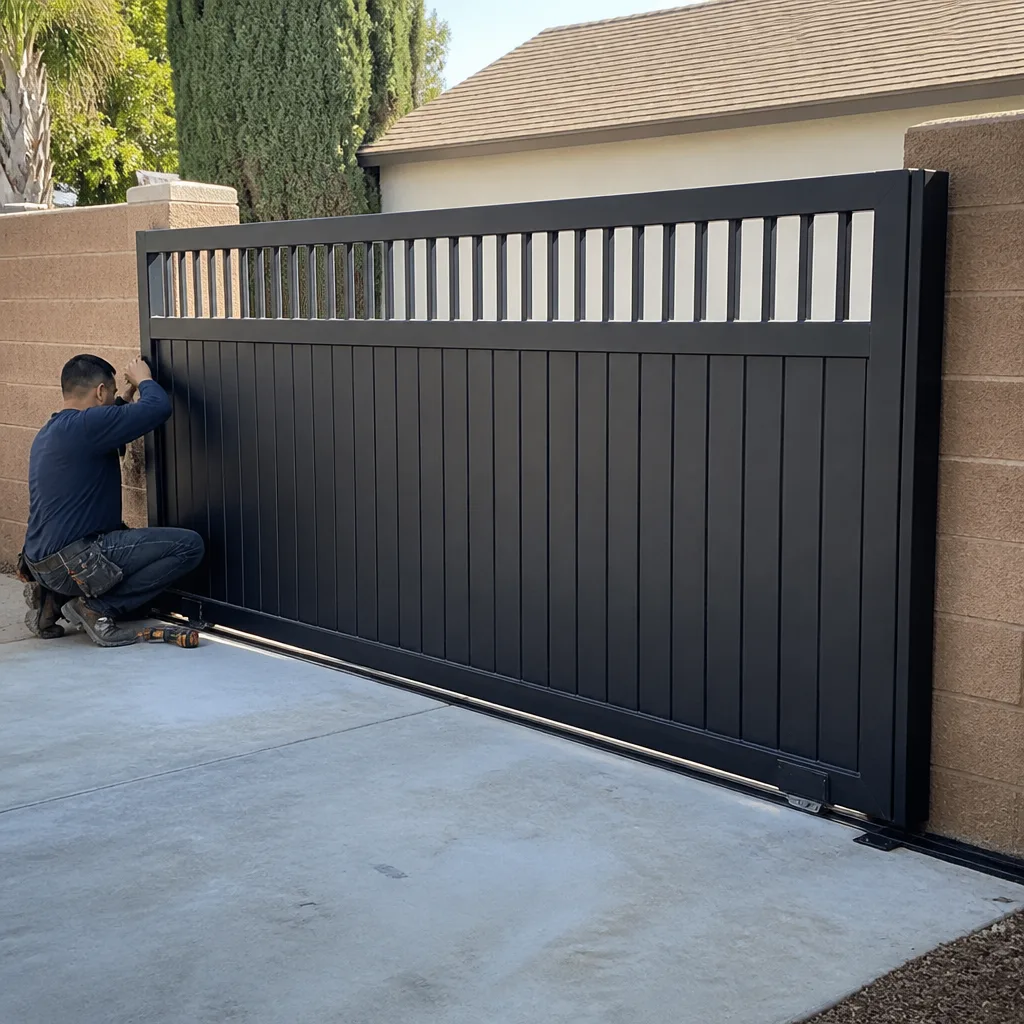
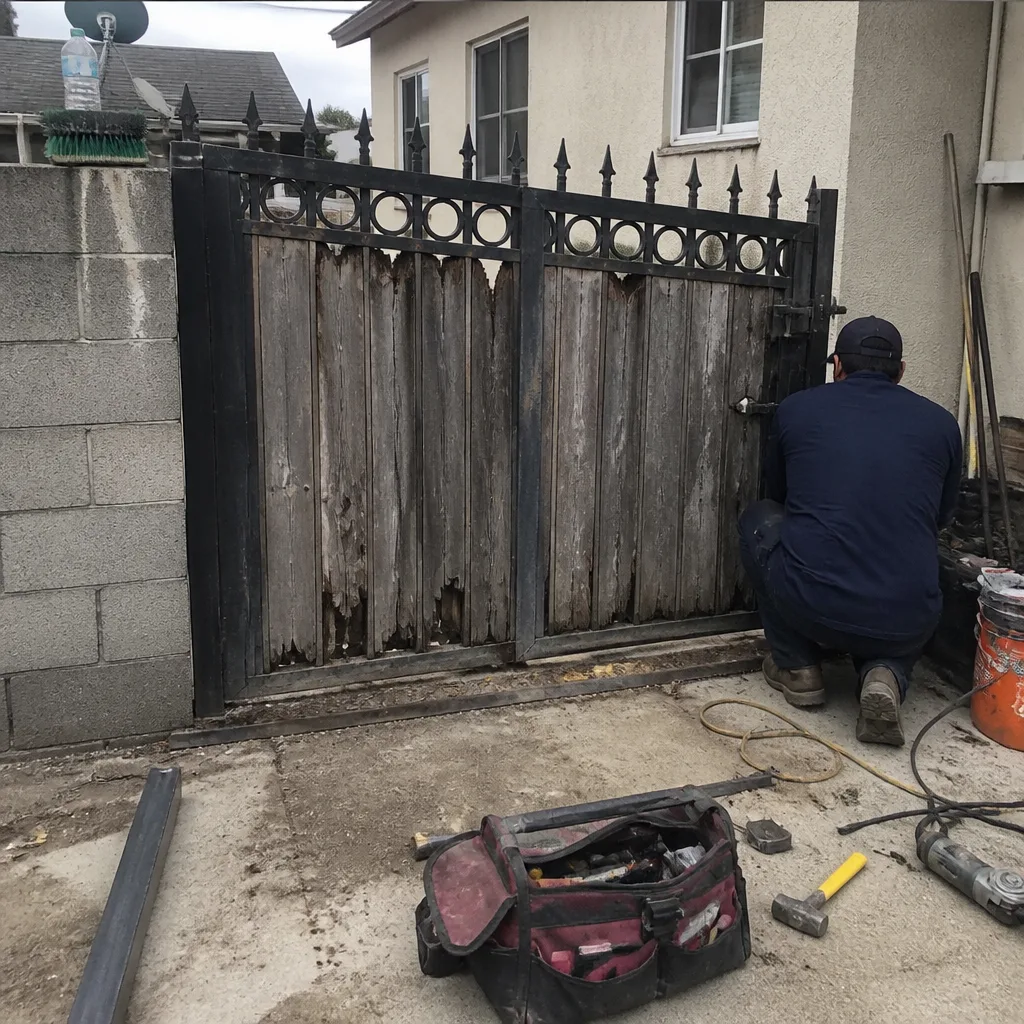
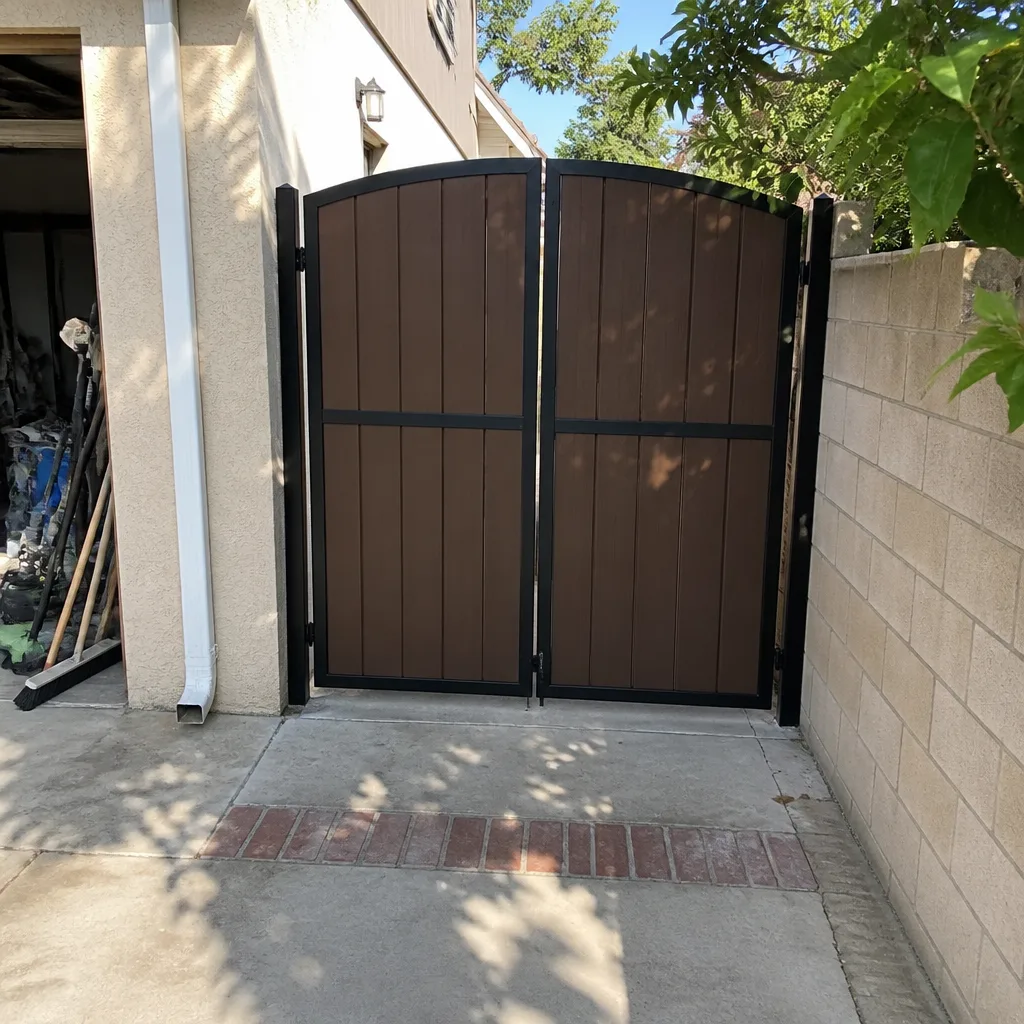
See the difference
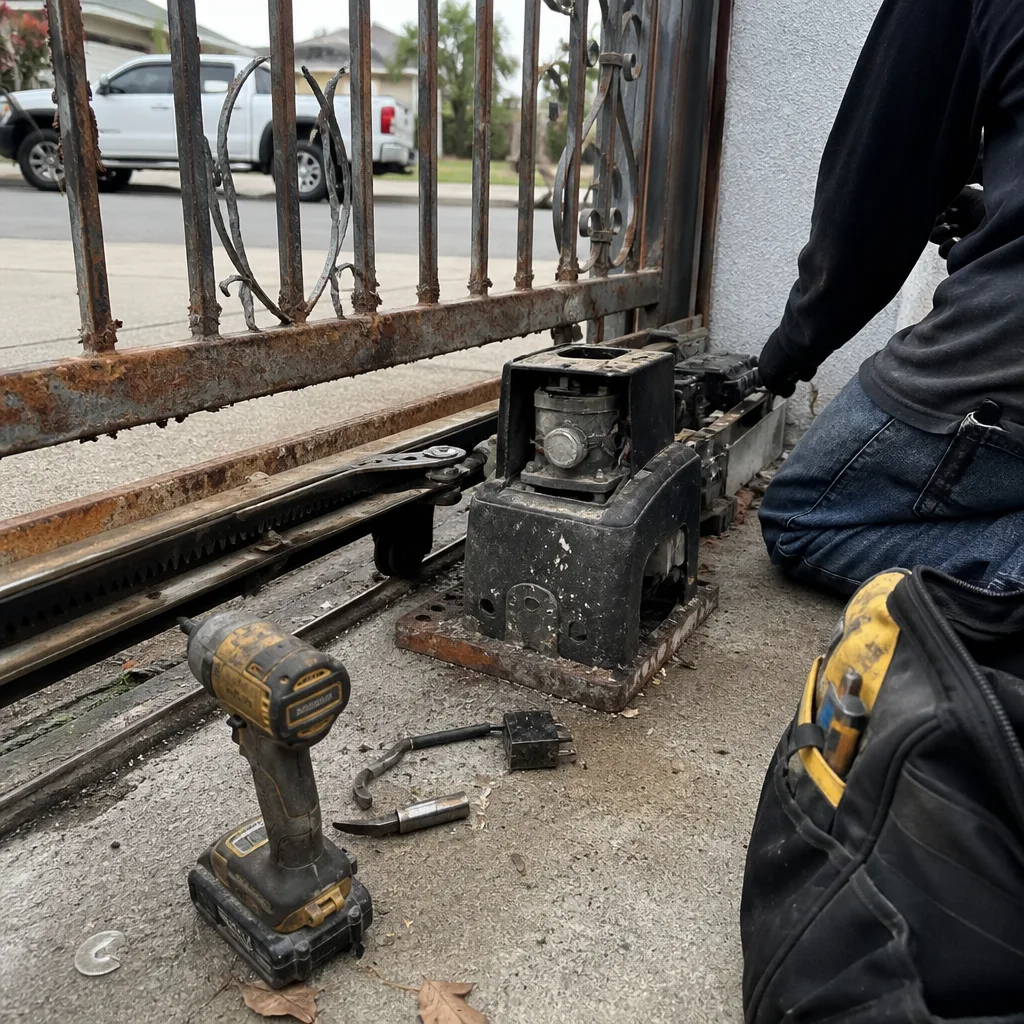 Before
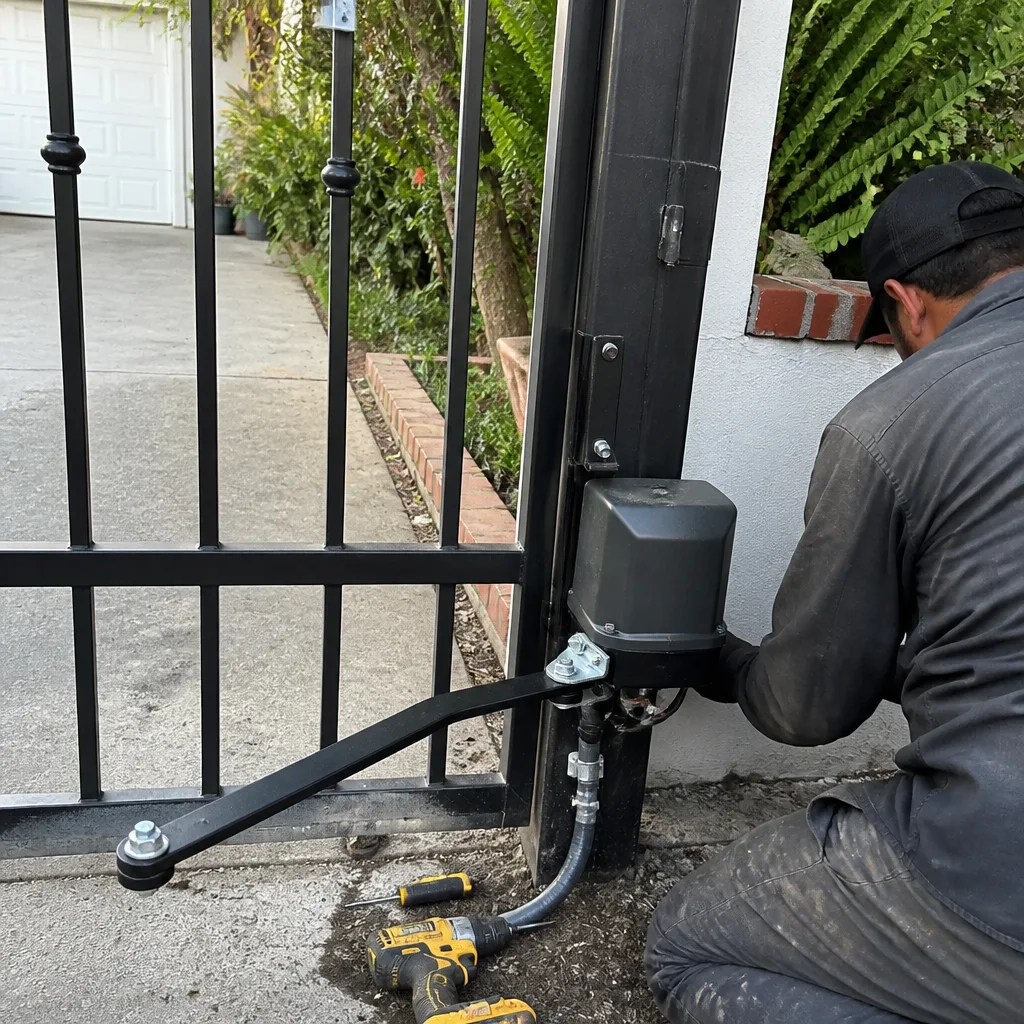 After
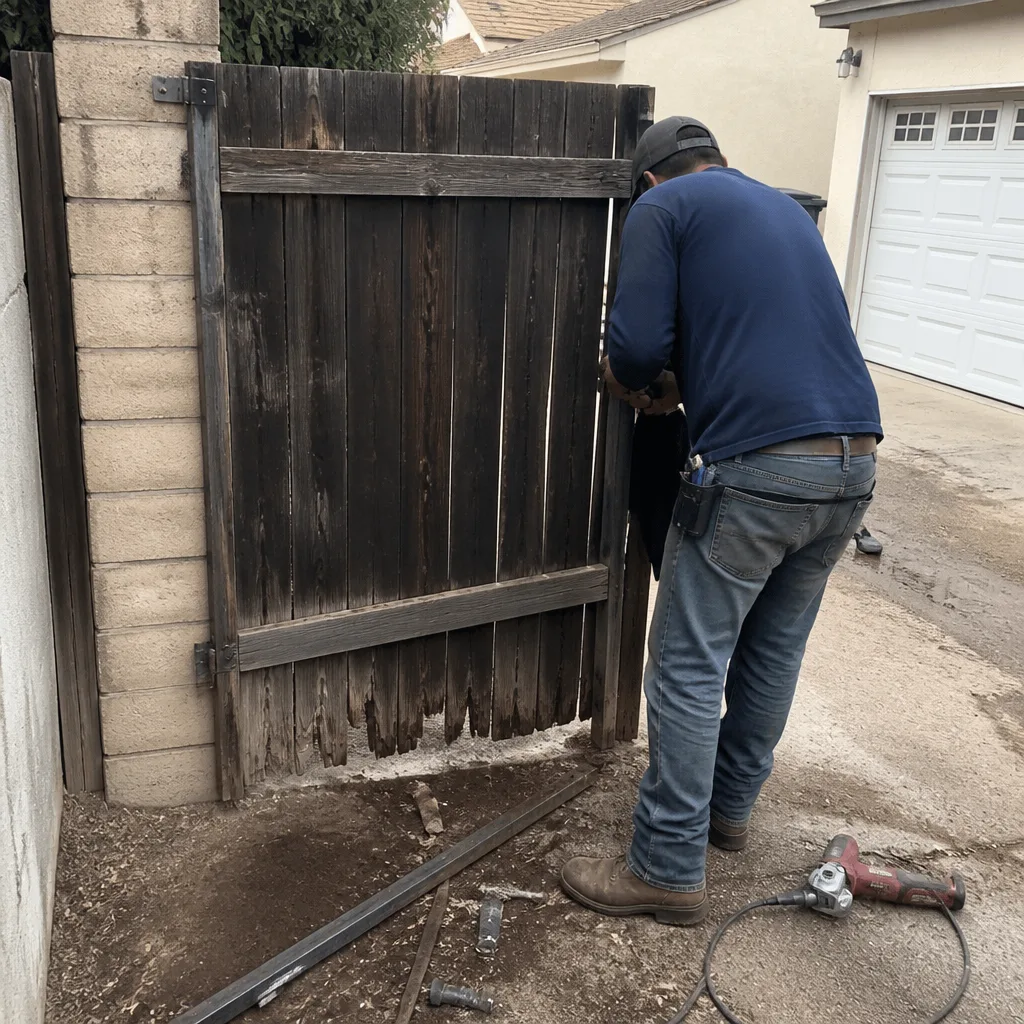 Before
 After
 Before
 After