
Last updated October 30, 2026
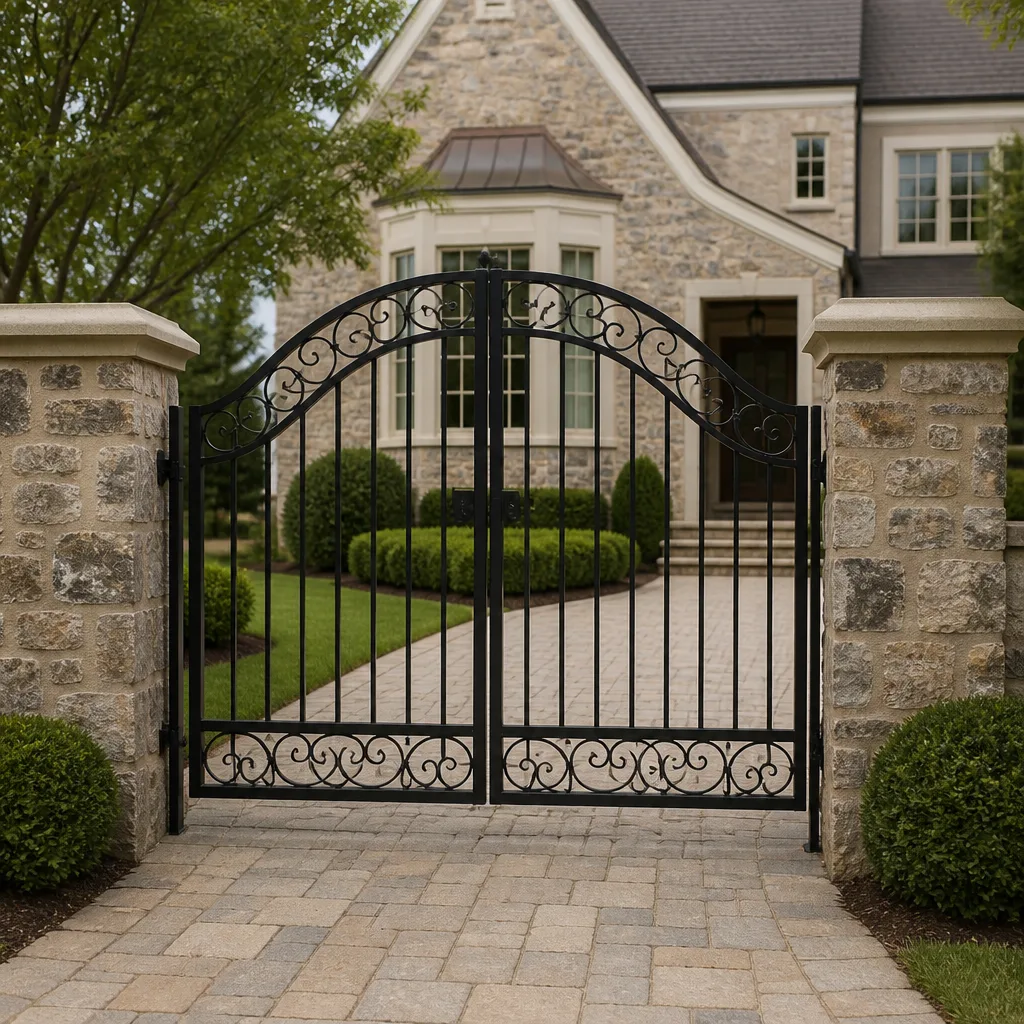 Wrought iron
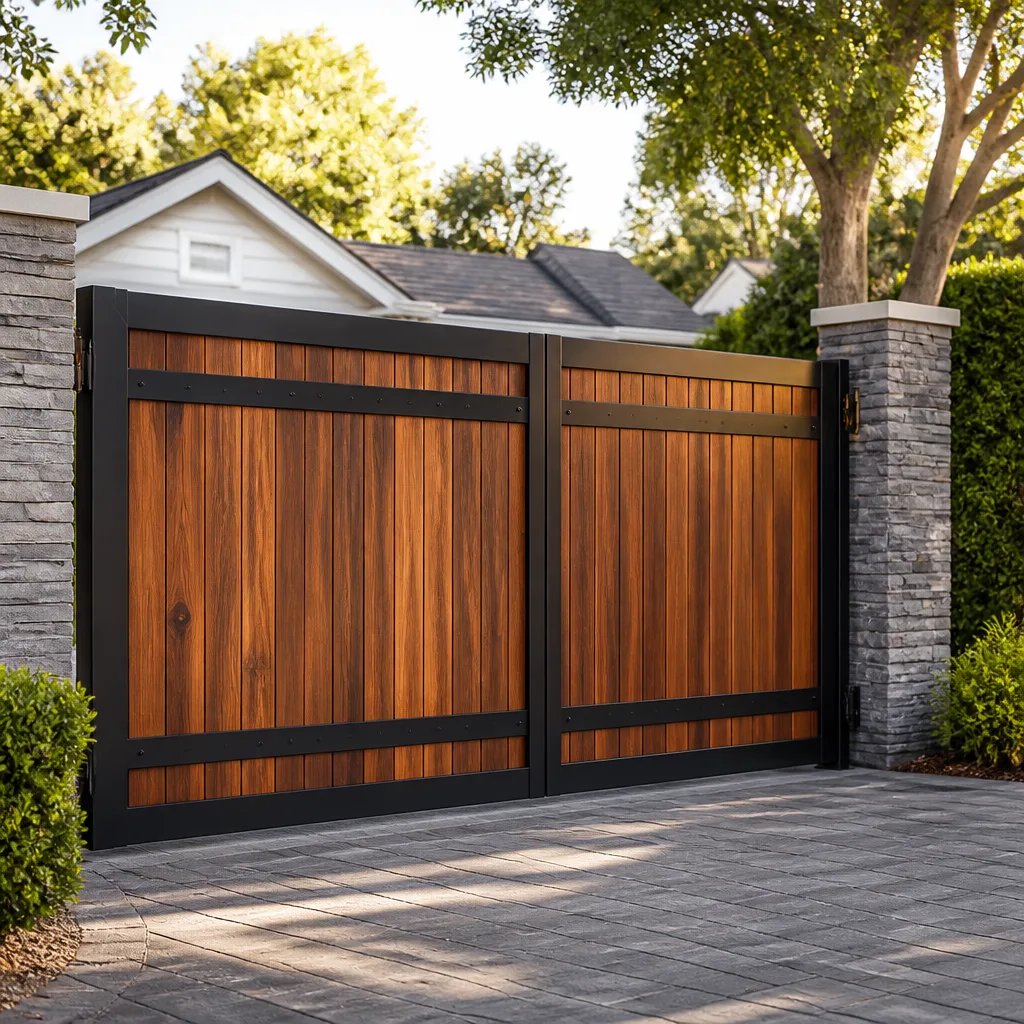 Wood & steel frame
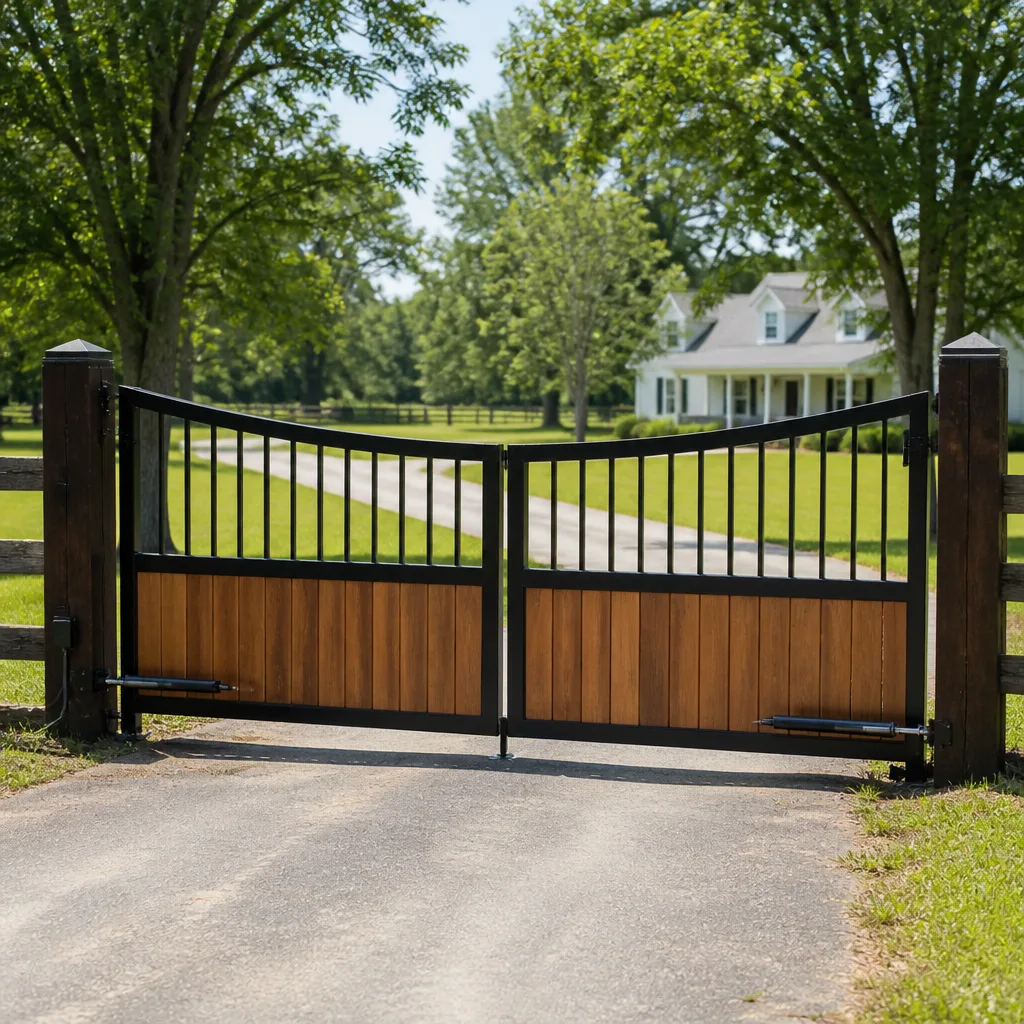 Farm & ranch
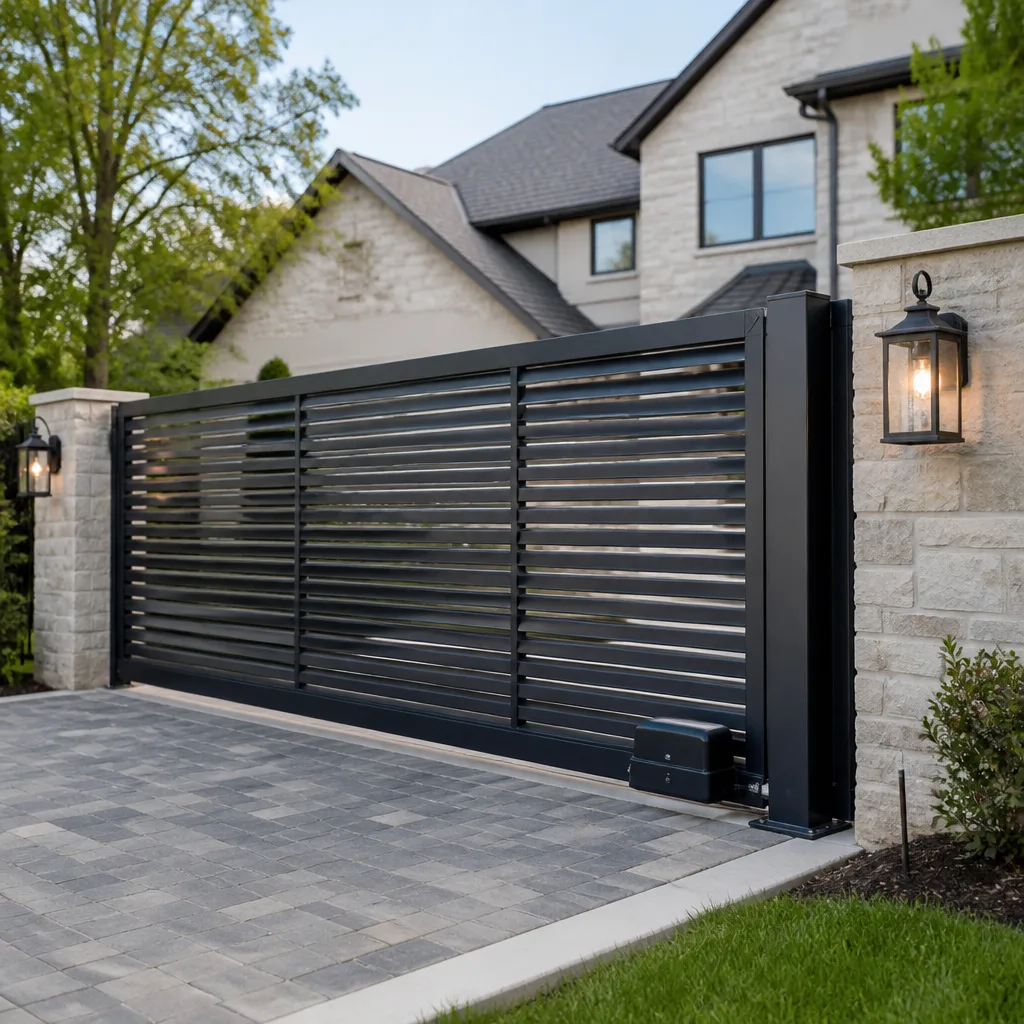 Sliding driveway gates
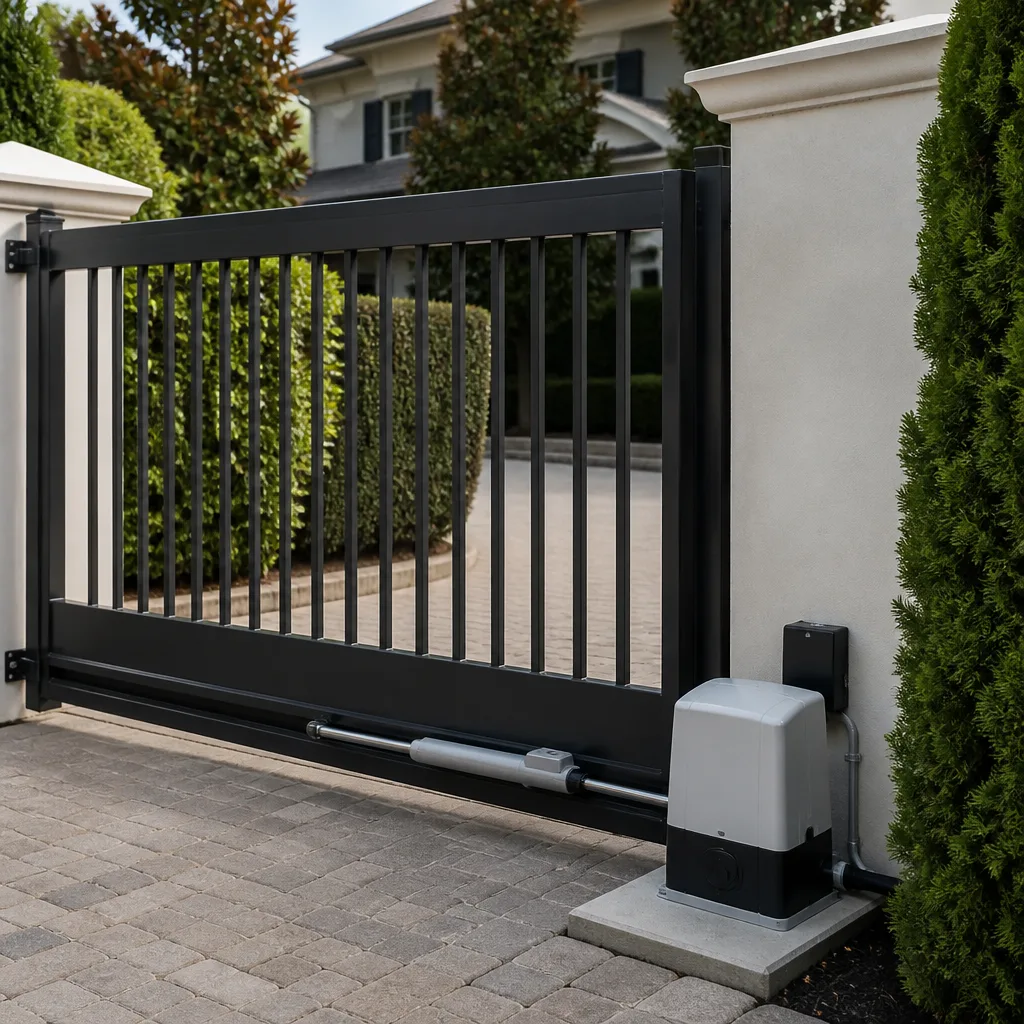 LiftMaster operators
Free on-site gate assessment - hinges, posts, and your LiftMaster or Nice gate operator checked before anything is quoted
The assessment is free and the quote is the invoice.
Get your free estimateSeasonal Gate Repair Care for Anaheim: Year-Round Homeowner’s Guide
October in Anaheim isn’t fall. It’s Santa Ana season. And for automatic driveway gates across Orange County, those dry, high-velocity wind events are the single largest driver of debris strikes, motor overloads, and misaligned safety sensors that we see all year. Most homeowners learn this the hard way, standing in their driveway at 7 a.m. with a gate that won’t close and a schedule that won’t wait. This guide maps the full Anaheim gate calendar: what breaks when, why it breaks, and the short list of seasonal tasks that prevent the predictable failures before they strand you. If you own a Mighty Mule swing arm, a DoorKing slide gate, or a FAAC hydraulic operator, the timeline below is your maintenance manual.
Styles & brands we work with
Quick Answer
Seasonal gate care in Anaheim means preparing for Santa Ana wind events each fall, cleaning oxidation and photo eye lenses during marine layer months, checking battery and hydraulic systems before summer heat peaks, and inspecting drainage and in-ground loop detectors after winter rain. Most failures follow a predictable seasonal pattern tied to wind, humidity, UV exposure, and soil drainage rather than random equipment breakdown.
Table of Contents
- Pre-Santa Ana Wind Preparation (September – October)
- Marine Layer Months: Humidity, Photo Eyes, and Signal Issues (May – June)
- Summer Heat and Your Gate’s Electrical Components (July – August)
- Post-Rain Inspection: Drainage and Loop Detector Checks (December – February)
- The One Annual Task That Protects Wrought Iron in Anaheim
- Quarterly Maintenance Schedule Every Anaheim Homeowner Should Follow
- Common Mistakes to Avoid
- When to Call a Professional
- Frequently Asked Questions
- The Bottom Line
Pre-Santa Ana Wind Preparation (September – October)
Santa Ana winds are the most destructive seasonal force any Anaheim gate repair call handles, and homeowners can prevent roughly half of the calls we get between late September and early November with a two-hour seasonal check. Here’s the key insight: most Santa Ana damage doesn’t come from direct gate failure. It’s from what the wind throws.
A 60 mph gust turns a palm frond into a missile. When it hits a swing gate arm, the arm tries to fight it. That’s when motors overheat, limit switches lose their setting, and the operator board burns out trying to push against resistance it was never designed to manage. For slide gates, the story is different but no better: wind-blown debris settles in the track, and the next opening cycle drags it through the rollers and the motor.
Here’s the before-wind checklist we recommend for every Anaheim property with an automatic gate:
- Clear the arc and track. Walk the full swing path or slide track and remove palm debris, leaves, toys, and anything light enough to move in 40 mph gusts. Do this in September and again after the first major wind event.
- Check swing arm attachment points. The bolts that hold the operator arm to the gate and the post are the first mechanical points to loosen under repeated wind stress. A 30-second visual check catches most problems.
- Adjust auto-close timing. If your gate stays open 15 seconds before closing, wind-driven debris has a wide window to enter the path. Shortening the hold-open time to 8 or 10 seconds in September reduces the chance of obstruction faults.
- Verify limit switch settings. If a gust pushes the gate even two degrees past its normal stop point, the limit setting can drift. When that happens, the operator no longer knows where the gate actually is, and the next cycle may stall completely.
- Confirm safety edge function. If your gate relies on a pressure-sensitive safety edge, test it by hand. It’s the first line of defense when wind gusts confuse the operator’s internal logic. On a electric gate repair call after a wind event, a malfunctioning edge is present more often than not.
We’ve seen Gates from Elk Grove to Orange Park Acres torn off their tracks by a single Santa Ana event because the guide rollers had worn down over summer and no one noticed until the wind found the weakest point. The fix takes thirty minutes in September. The failure takes three days in October. Our team across First Light Gate Repair home works on Viking, Ghost Controls, DoorKing, and Elite systems, and the pre-wind checklist applies to every brand we service. The physics of a debris strike is identical whether you have a residential swing arm or a commercial slide operator. What changes is the cost of the repair when the wind wins.
Marine Layer Months: Humidity, Photo Eyes, and Signal Issues (May – June)
Anaheim sits in a peculiar microclimate band where late spring brings persistent marine layer influence, even though the city is only about twelve miles from the coast as the crow flies. Morning overcast, overnight condensation, and elevated humidity during what locals call the “June Gloom” create a surprisingly hard season for exterior electronic components. The pattern is consistent enough that we can trace a seasonal spike in service calls during May and June back years.
The reason most people miss it: nothing visibly breaks. The gate doesn’t fail dramatically; it starts behaving inconsistently. That’s the signature symptom of marine layer season.
How humidity cycles affect your gate, from the lowest-cost failure to the most expensive:
- Photo eye lens fogging. The safety photo eyes mounted low on the gate posts are the first components to fail in humid June air. Micro-condensation on the lens diffuses the infrared beam. When the beam weakens enough, the gate reverses and refuses to close. Most homeowners see this as a phantom problem because the eyes appear clean.
- Wireless receiver range loss. Remote receiver modules mounted inside the gate operator housing are vulnerable to moisture accumulation. The signal still works, but at reduced range. You notice it when the gate opens from forty feet away in February but only twelve feet in June. That’s not a remote battery issue, it’s a receiver sensitivity issue.
- Exposed steel micro-corrosion. Steel hinges, guide rollers, and the sheet metal inside the operator housing all oxidize faster in May and June than at any other time of year in Anaheim, including during actual rain. It’s the sustained moisture, not the sudden shower, that does the damage.
- Control board terminal corrosion. When condensation forms inside the operator housing and the unit breathes daily through its vent pores, the low-voltage terminals start to corrode. A few micro-amps of resistance on a wire connection is enough to make a Viking or Ghost Controls board misread input signals. The symptoms are intermittent stops, refusal to close, or the motor humming but NOT moving.
The fix for marine layer season is more about observation than tools. Once in May and once in June, take a dry cloth to both photo eye lenses, even if they look clean. Then stand at the far end of your normal remote range and open the gate three times in a row. If any cycle hesitates or fails, note it. That’s your receiver telling you moisture is already affecting the system. Trap the problem early and it’s a calibration day. Let it sit until July and the heat will bake the corrosion into the board terminals, which turns a service call into a replacement.
DoorKing technicians have documented marine layer failures across Southern California for decades, and Anaheim’s specific geography, sitting just inland enough to get the June overcast without the cooling effect of direct ocean air, makes the problem more acute here than in coastal cities. But the pattern is predictable. That’s the useful part. You can get ahead of it.
Summer Heat and Your Gate’s Electrical Components (July – August)
Anaheim’s July and August heat pushes gate electrical systems to their design limits, even when the air temperature feels mild compared to the Inland Empire. The issue isn’t just ambient temperature. It’s the temperature inside the gate operator housing when it sits in direct sun on a black-topped driveway or an unshaded south-facing wall.
A surface-mounted operator housing will read thirty to forty-five degrees hotter than the air temperature on a 95-degree Anaheim afternoon. That puts the internal electronics at 130 to 140 degrees Fahrenheit, which is the exact range where thermal protection circuits start to trip and battery systems begin to fail permanently.
Here’s what happens to a gate system as temperatures climb through summer:
- Battery backup degradation. Most gate operators with battery backup use sealed lead-acid batteries. At interior temperatures above 120 degrees, these batteries lose capacity permanently, not temporarily. A battery that survives one full summer at elevated temperature is weaker the following winter, even after temperatures drop. If you have an Elite or LiftMaster operator with a backup battery, check it in July. Heat is killing its lifespan year-round, not just during heat waves.
- Hydraulic operators and FAAC systems. Hydraulic gate operators, particularly FAAC units, change behavior in sustained heat. Hydraulic fluid loses viscosity at high temperature, which changes the operating speed and the force curve of the operator. You may notice the gate moving slightly faster in July than in March. That’s the fluid. More importantly, the internal pump works harder in heat, which accelerates seal wear over multiple seasons.
- Capacitor failures. Motor start capacitors are one of the most common summer failures in warm climates. Once internal temperatures cross about 140 degrees, electrolytic capacitors inside the control board age at a dramatically accelerated rate. The same capacitor that might last eight years in coastal San Diego can fail in four or five years in inland Anaheim.
- Limit switch drift in heat. Thermal expansion of the gate leaf itself, particularly for long iron swing gates, shifts the closed position by a fraction of an inch. We see operators that have been trouble-free for months suddenly stall at the closed limit because the gate expanded into the stop. It’s an adjustment, not a repair, and it takes a technician minutes to correct.
There’s no single fix for summer heat. Instead, there’s a simple annual habit: during July or August, run the gate through ten full open-close cycles on the hottest day of the month and listen. A smooth, consistent motor hum is fine. A change in pitch, a pause mid-cycle, or the operator housing feeling hot to the touch from the outside all indicate that the internal temperature is already too high. Catching it now is a service adjustment. Catching it in October is a replacement board.
Our technicians handle gate repair in Anaheim across nine major brands, and the heat-related failures we see from Viking, FAAC, BFT, and DoorKing systems follow the same thermal physics. The brand changes the wiring diagram. The heat doesn’t change. If you’re seeing temperature-related faults, a specialist who works across multiple manufacturers spots patterns that a single-brand dealer never sees, because the problem repeats itself in every brand’s hardware.
Post-Rain Inspection: Drainage and Loop Detector Checks (December – February)
Anaheim doesn’t get rain. It gets runoff events. The city’s soil is a dense, poorly draining clay-sand mix that holds surface water longer than most homeowners expect, especially in flat neighborhoods like the Colony District, where the developed land sits at relatively consistent grade. When a winter storm drops an inch of rain in a day, the water doesn’t soak away quickly. It pools.
And pooled water around a gate does two specific things that cost homeowners real money come spring.
First: in-ground loop detectors. If your gate is triggered by an in-ground magnetic loop, typically cut into the asphalt or concrete on the exit side, those loops are sensitive to water saturation. When the surrounding soil stays wet for days, the loop’s inductance shifts. The detector begins to read false vehicle detections, and the gate opens on its own, or it fails to detect a car that’s sitting directly on top of the loop. It’s an intermittent, weather-dependent failure that’s easy to misdiagnose as a control board problem. If your gate acts erratically only during or immediately after rain, it’s the loop. That’s the signature.
Second: flooded operator bases and post pockets. Any low-mounted operator, post base plate, or underground junction box sits in direct line with surface water. Anaheim’s flat terrain means water moves slowly. If the base of your gate post sits in a slight depression, three days of standing water after a storm will find its way into the underground splice, the operator base, or the conduit that carries the low-voltage power. Once moisture gets inside, corrosion begins immediately and continues for months, even after the surface dries.
Post-rain inspection checklist for Anaheim gate owners:
- Check the drainage path around the gate posts. Is water pooling within three feet of the base? If so, that’s the priority to fix, ideally by adding French drain material or re-grading the soil to shed water outward. Landscaping work fixes more gate problems in Anaheim than any wrench.
- Open and close the gate once after the storm. If it stalls, hesitates, or reverses unexpectedly, note whether the behavior happens with a car on the loop or without one. That distinction tells a technician whether the loop is involved.
- Visually inspect all low-mounted connections. Junction boxes, operator bases, and any wiring visible at ground level should be dry. If you see water beading on conduit or the operator base is sitting in damp soil, call for an inspection before the problem becomes internal.
- Test the manual release. After a wet period, the manual release mechanism on your operator can seize. A quick manual open-close cycle confirms it still functions, which matters most when a storm knocks out power and you need to operate the gate by hand.
- Check the safety edges and photo eyes one more time. Post-rain is when wiring connections that developed corrosion during marine layer season finally fail. Test them now. If a safety edge fails, your gate becomes a hazard, not just an inconvenience.
These checks take fifteen minutes. They catch the failures that show up in March and April, long after the rain is gone, when the corrosion from December has finally eaten through a connection and the gate stops dead. When we arrive for a spring electric gate repair in Anaheim, the root cause is often still sitting in the dirt from a January storm. The gate just didn’t tell anyone until now.
The One Annual Task That Protects Wrought Iron in Anaheim
Anaheim’s ultraviolet index sits high nearly year-round, and our specific geographic position, with relatively low atmospheric moisture to filter the sun, means that any exposed iron surface absorbs more UV energy than the same material in a coastal or northern city. The chemical process is simple: UV radiation breaks down paint and powder coat binders, exposing the iron underneath to the marine layer moisture that arrives every May. Moisture plus exposed iron equals oxidation. Oxidation in Anaheim’s cycle repeats on a timer.
Most homeowners buy a can of rust-inhibiting spray paint or a wax product, apply it once, and consider the gate protected. That’s half right. Here’s what we’ve learned from seeing hundreds of Anaheim gates through full seasonal cycles:
The single most protective annual task for a wrought iron gate is not a coating. It’s a mechanical task: removing the oxidation layer before it bonds with the base metal. When you catch surface rust early, during the dry months of September or October, it wipes off with a wire brush or a Scotch-Brite pad. When you catch it in March, after a marine layer season and a winter rain, it has already bitten into the steel and requires grinding, priming, and repainting to stop properly.
So the annual task is simple and specific:
- Once each year, in September, walk the entire gate with a wire brush.
- Scrape or brush any visible rust spots down to bare metal.
- Spot-treat those areas with a quality rust converter or primer designed for exterior iron.
- Apply a fresh layer of paint or a rust-inhibiting sealant to those spots only.
- Inspect the weld points and hinge barrels, which rust first because the original coating is thinnest there.
The entire task takes an hour. Done consistently in September, it interrupts the annual oxidation cycle at the exact point where the iron is driest and most receptive to treatment. That’s the difference between a gate that still looks right after fifteen years of Anaheim sun and one that needs rust repair every third year. No spray-on product on the market replaces the mechanical removal of existing oxidation, and we see proof of that every season on gates across Orange County. This applies to iron and steel gates regardless of which operator drives them. The operator cares about the rust only when it reaches the hardware. That’s when a $20 annual task becomes a multi-hundred-dollar hinge or weld repair.
Quarterly Maintenance Schedule Every Anaheim Homeowner Should Follow
Here’s the full-year calendar, compressed into four checkpoints. Each season’s task list follows the failure pattern that actually occurs in Anaheim, not a generic list that would apply equally in Phoenix or Portland. Run through these four sessions and you’ll catch most failures before they become service calls.
September – October: Wind Season Prep
- Clear the gate path of all debris, with particular attention to anything that can become airborne in Santa Ana winds.
- Check swing arm attachment bolts for looseness and tighten as needed.
- Shorten auto-close timing to reduce the window for wind-blown obstruction faults.
- Verify limit switch settings so the operator knows where the gate actually stops.
- Test safety edges and photo eyes.
- Complete the annual rust-control task on iron gates.
December – January: Post-Rain Inspection
- Walk the drainage path around gate posts and operator bases after the first significant storm.
- Run the gate through multiple cycles and note any hesitation or erratic behavior.
- Check loop detector function with a vehicle on the exit side, especially after wet periods.
- Test the manual release mechanism so it works when you need it.
- Visually inspect all low-mounted wiring connections for moisture.
May – June: Marine Layer and Humidity Check
- Clean both photo eye lenses, even if they look clean.
- Test remote range from your normal distance and note any reduced signal.
- Check for early micro-corrosion on exposed steel and hinges.
- Inspect the operator housing interior, if accessible, for condensation or terminal corrosion.
- Verify that the gate opens and closes smoothly without the motor struggling in humid morning air.
July – August: Heat Stress Verification
- Run the gate through ten full cycles on the hottest day of the month and listen for changes in motor pitch.
- Check the operator housing surface temperature; hot to the touch means the internal temperature is already elevated.
- Verify battery backup function if your system has one; summer heat permanently degrades sealed lead-acid batteries.
- For FAAC or other hydraulic operators, note any change in operating speed that suggests fluid viscosity shifts.
- Confirm limit positions, as thermal expansion can shift the gate’s closed position slightly.
This calendar assumes an Anaheim climate pattern: hot, dry Santa Ana winds in October; moderate winter rain with drainage issues; marine layer humidity in late spring; and sustained summer heat with intense UV. The map changes if you live in Yorba Linda or Fullerton, where wind patterns or elevation shift the timing slightly, but the sequence remains the same. Gate installation in Anaheim projects follow this same calendar for the new gate’s first year, which is when most warranty issues emerge. Whether it’s a new install or a fifteen-year-old gate, the seasonal pressure points are identical.
Common Mistakes to Avoid
- Waiting until the gate fails to inspect it. Every Anaheim gate follows a predictable seasonal failure pattern. The inspection that should have happened in September is the one that gets skipped, and the October Santa Ana is the one that finds the loose bolt. Inspect before the season, not during the repair.
- Treating a photo eye problem as an alignment issue. In marine layer months, we see homeowners repeatedly realign photo eyes that are actually suffering from lens condensation or terminal corrosion. If realignment doesn’t fix it, and the problem disappears by midday when the sun burns off the fog, it’s moisture, not alignment.
- Ignoring reduced remote range. If your remote once worked from the end of the block and now only works from thirty feet away in June, that’s a receiver issue, not a dying battery. Waiting until the range shrinks to zero in winter means the corrosion has already done its damage.
- Spraying rust inhibitor on visible rust without removing the rust first. Coating over existing rust traps moisture and accelerates the damage underneath. The wire brush step is the actual fix. The spray is a follow-up, not a solution by itself.
- Using a gate with a failing safety edge. If the pressure-sensitive edge isn’t working, the gate doesn’t know when it’s hitting something. In a city with as many children, pets, and delivery drivers as Anaheim, this is one of the most easily preventable hazards. Test the edges at least seasonally, and stop using the gate if one fails until it’s repaired.
- Letting standing water sit near operator bases. Anaheim’s clay-heavy soil holds water longer than homeowners expect. Pooled water near the gate posts after a storm is a corrosion problem waiting to happen, even if the gate works fine the day after it rains.
- Treating heat-related faults as random failures. When a gate faults on a 98-degree day but works fine in the evening, the problem is thermal, not mysterious. Repeated heat-cycling will permanently damage the components. Note the pattern and address it before the heat does permanent damage.
When to Call a Professional
Most seasonal maintenance tasks on this calendar are safe for an attentive homeowner: clearing debris, cleaning photo eye lenses, checking for rust, and observing gate behavior. But some things should stop you from touching the system further until a trained technician looks at it. If a swing gate arm is loose enough to move by hand, the attachment hardware may be compromised and you’re dealing with a moving gate that can fall on someone. If the operator housing is hot to the touch, opening it involves live electrical components and possible stored energy in capacitors. If an in-ground loop detector is misbehaving, the fix involves cutting into the driveway. If a safety edge has failed, the gate is a hazard to anyone nearby until it’s repaired, not just an inconvenience. And if your gate is a commercial or multi-tenant system, the liability considerations change the equation entirely.
First Light Gate Repair offers free estimates in Anaheim, call (833) 734-5599. Your gate is the only thing we fix.
Frequently Asked Questions
Run a basic visual inspection every two to three months, and do the full seasonal checklists in September, January, May, and July. The seasonal pattern is wind in fall, rain in winter, humidity in spring, and heat in summer, and each creates different failure points. Fifteen minutes per season is enough for most residential systems.
Yes. A closed gate takes the full wind load across its surface like a sail, and long swing gates with worn hinges or loose post anchors can shift or bind. More common is wind-blown debris landing in the track or path, which then causes damage when the gate next cycles. Securing the gate against wind isn’t just about closing it; it’s about clearing the path before the wind does its work.
Morning fog in Anaheim, particularly during May and June marine layer months, causes micro-condensation on photo eye lenses and inside operator housings. The most common symptom is a gate that refuses to close in the morning but works by afternoon. If cleaning the photo eye lenses doesn’t fix it, the issue is likely internal moisture in the receiver or control board, and it will need a technician to resolve.
Late spring or early summer, after the marine layer has dried out but before peak summer heat, is the most predictable window for installation work. The soil is dry enough for stable post setting, the wind isn’t yet at Santa Ana levels, and temperatures are mild enough for proper concrete curing. Contact Gate Installation in Anaheim for a site assessment.
The soil’s drainage characteristics matter more than the water itself. Anaheim’s clay-heavy soil slows drainage after winter storms, which keeps moisture against gate post bases and underground junction boxes for days. That’s why post-rain inspections in December and January are important here, even when the gate seems to work fine immediately after the storm.
Heat is the primary battery killer. A sealed lead-acid backup battery in an Anaheim operator housing that sits in afternoon sun will typically lose meaningful capacity after two to three summers. Coastal installations see longer life; inland and unshaded installations see shorter life. If your system has a battery backup, checking it annually in July is the most reliable way to avoid finding a dead battery during a winter power outage.
No. Pressure washers drive water into operator housings, photo eyes, hinge seals, and low-voltage connections. The damage isn’t always visible immediately, which makes it worse: the internal corrosion shows up weeks or months later as an intermittent electrical fault. Use a garden hose at low pressure, a bucket with mild soap, and a soft brush. Avoid direct spray into any electrical enclosure or mounted component.
The Bottom Line
Anaheim’s gate failures follow a pattern that repeats every year, and once you know the pattern, you can stop most of them before they happen. Santa Ana winds in October attack loose hardware and fill tracks with debris. Marine layer humidity in May and June corrodes photo eyes, receivers, and control board terminals. Summer heat destroys batteries and stresses hydraulic operators. Winter rain finds every low-mounted connection and each drainage issue around your posts. The annual rust-removal task on iron gates does more long-term good than any off-the-shelf product. Run the four seasonal checklists, fix what you find while it’s small, and call a specialist when the problem involves moving parts, electrical components, or a failed safety edge. That’s the whole year for an Anaheim gate owner. Fifteen minutes per season beats three days of driveway frustration every time.
Written by the team at First Light Gate Repair, serving Anaheim since 2014.
See the difference
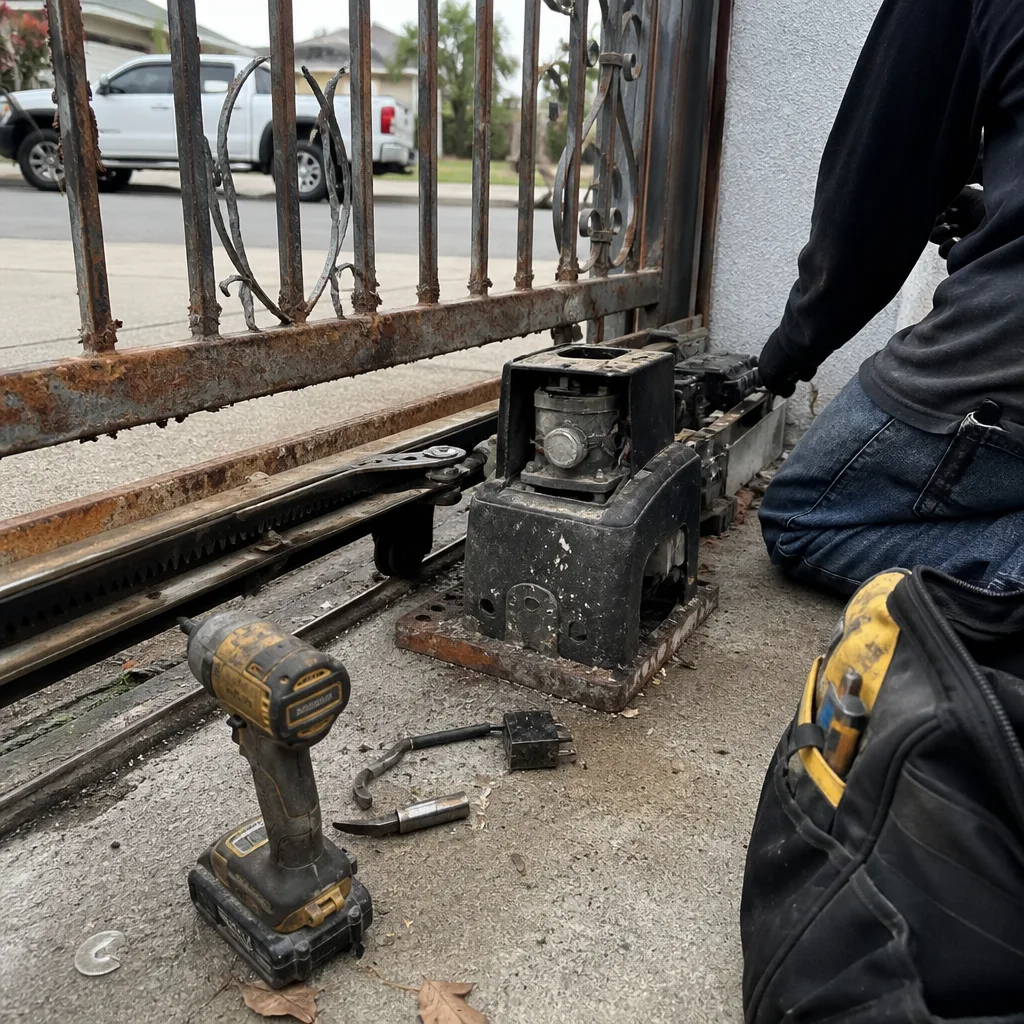 Before
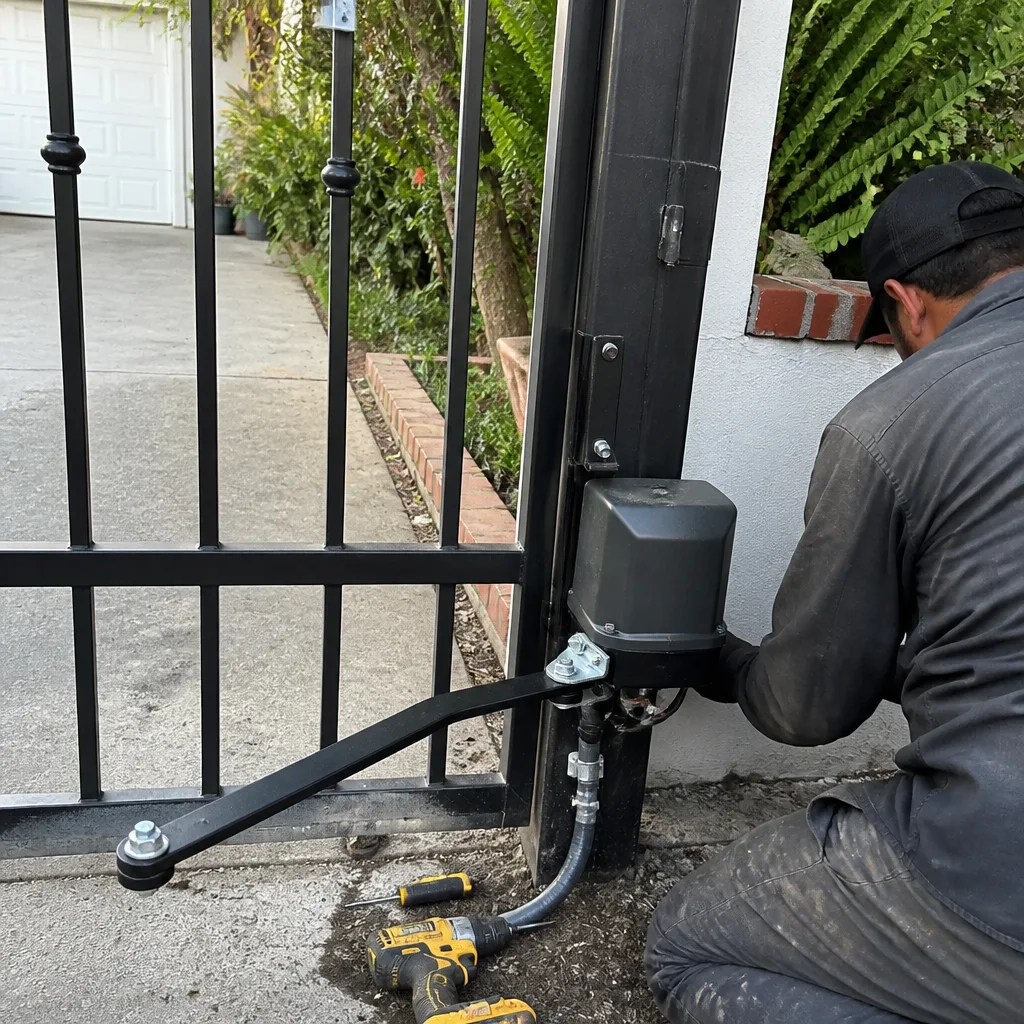 After
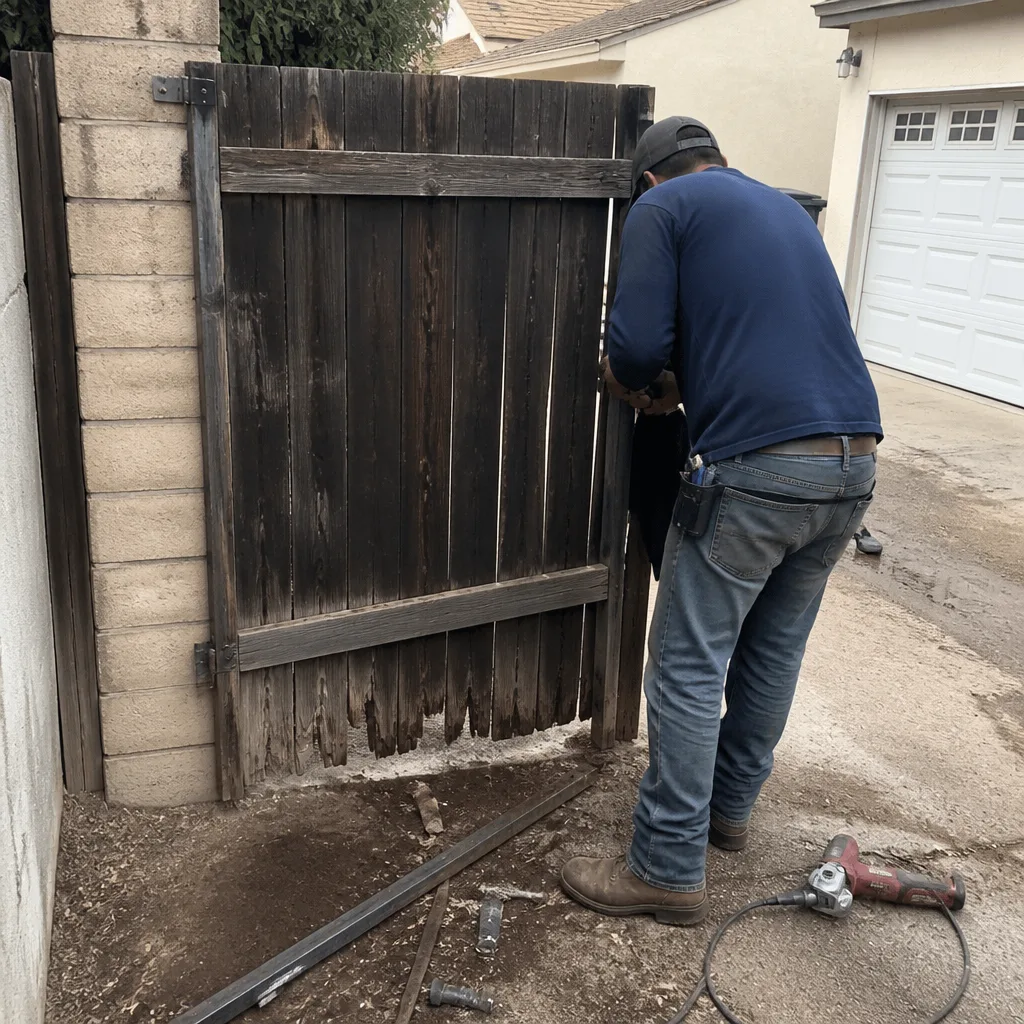 Before
 After
 Before
 After