Last updated October 30, 2026
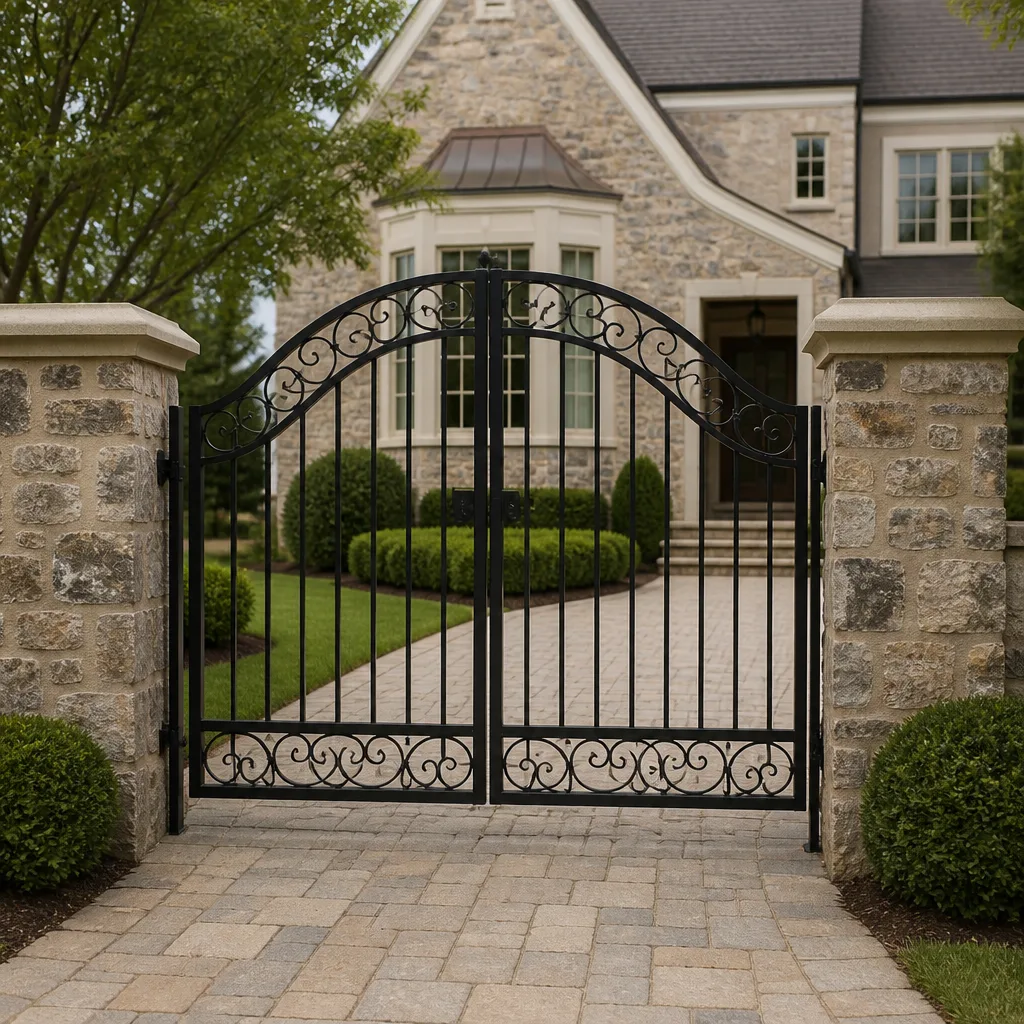 Wrought iron
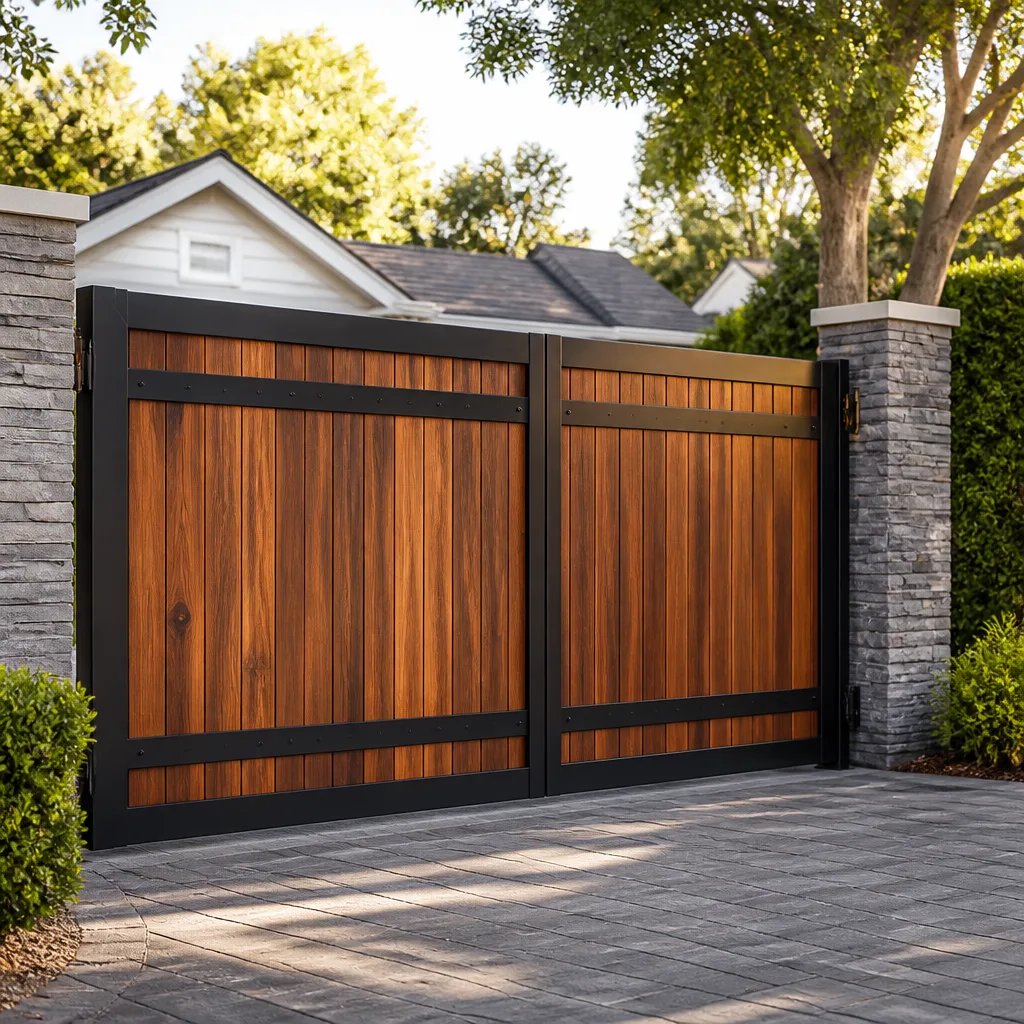 Wood & steel frame
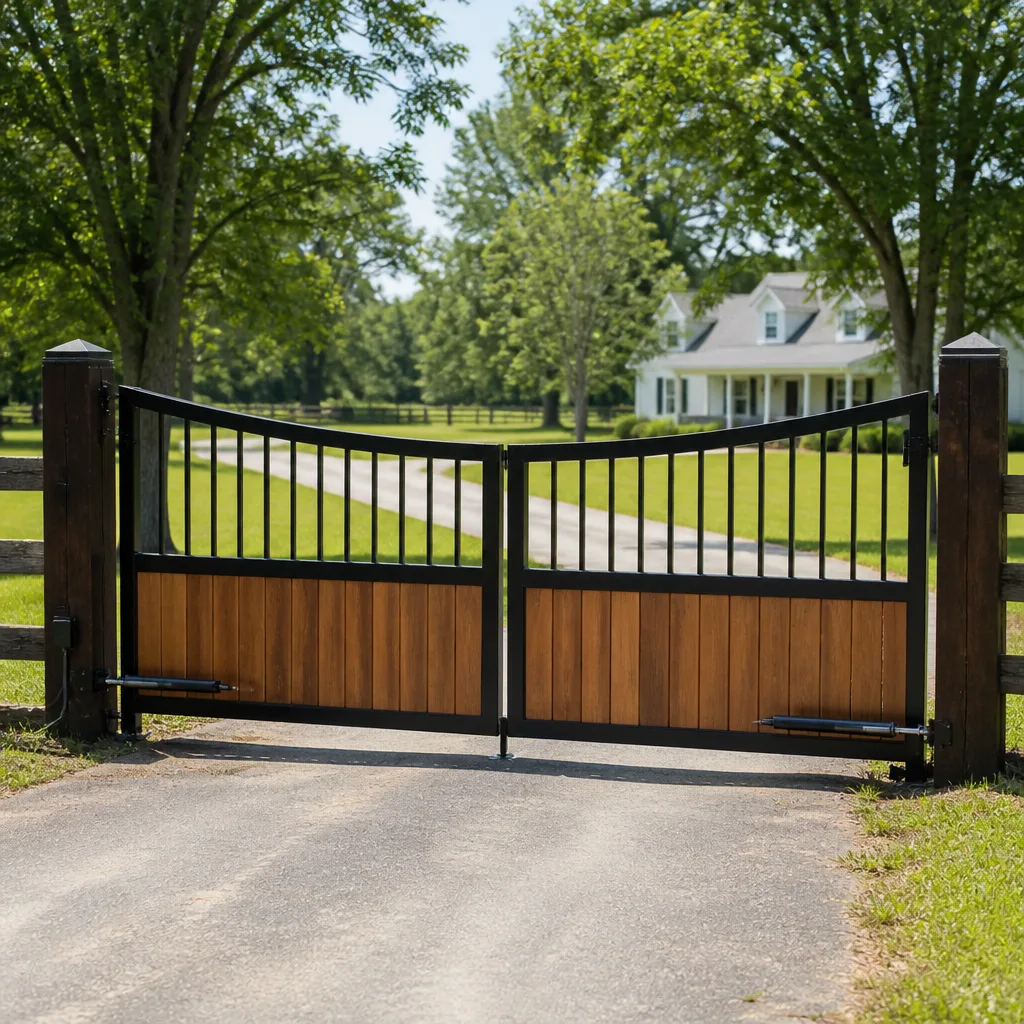 Farm & ranch
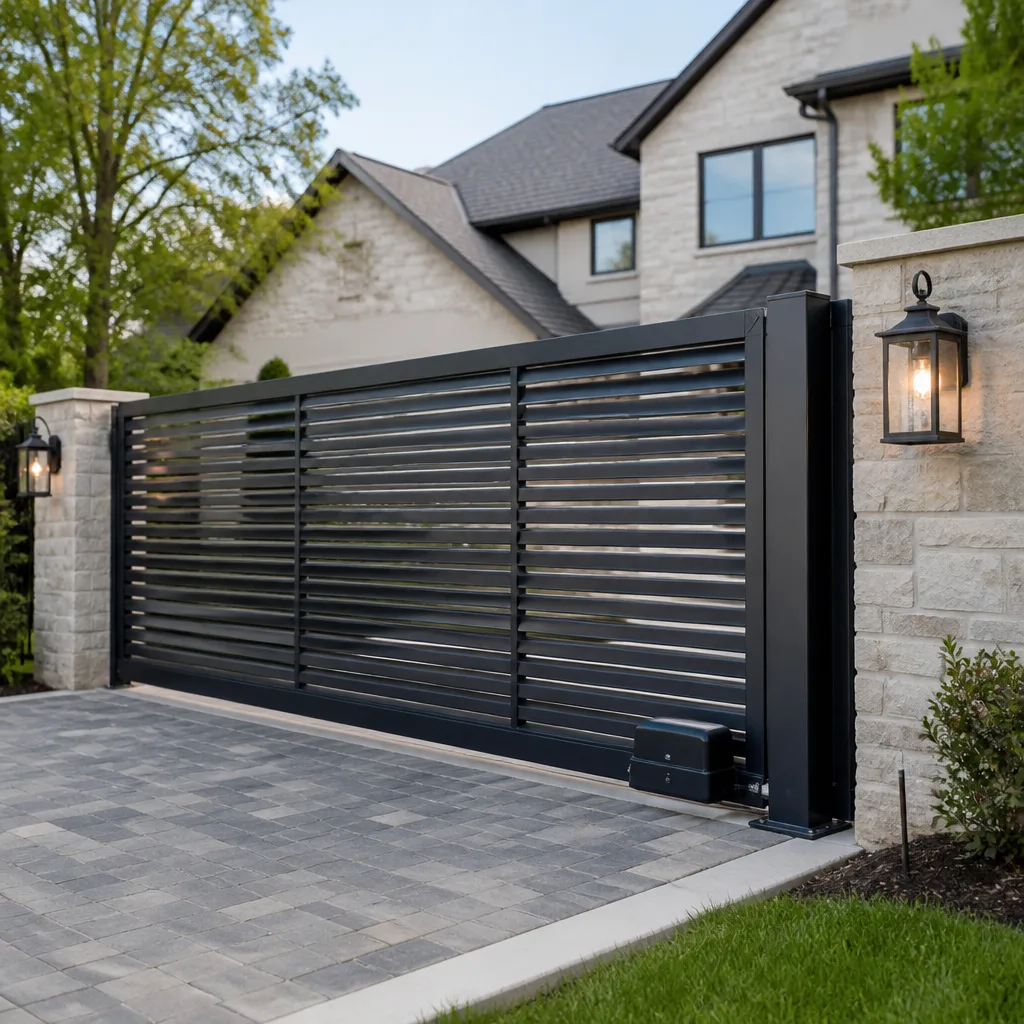 Sliding driveway gates
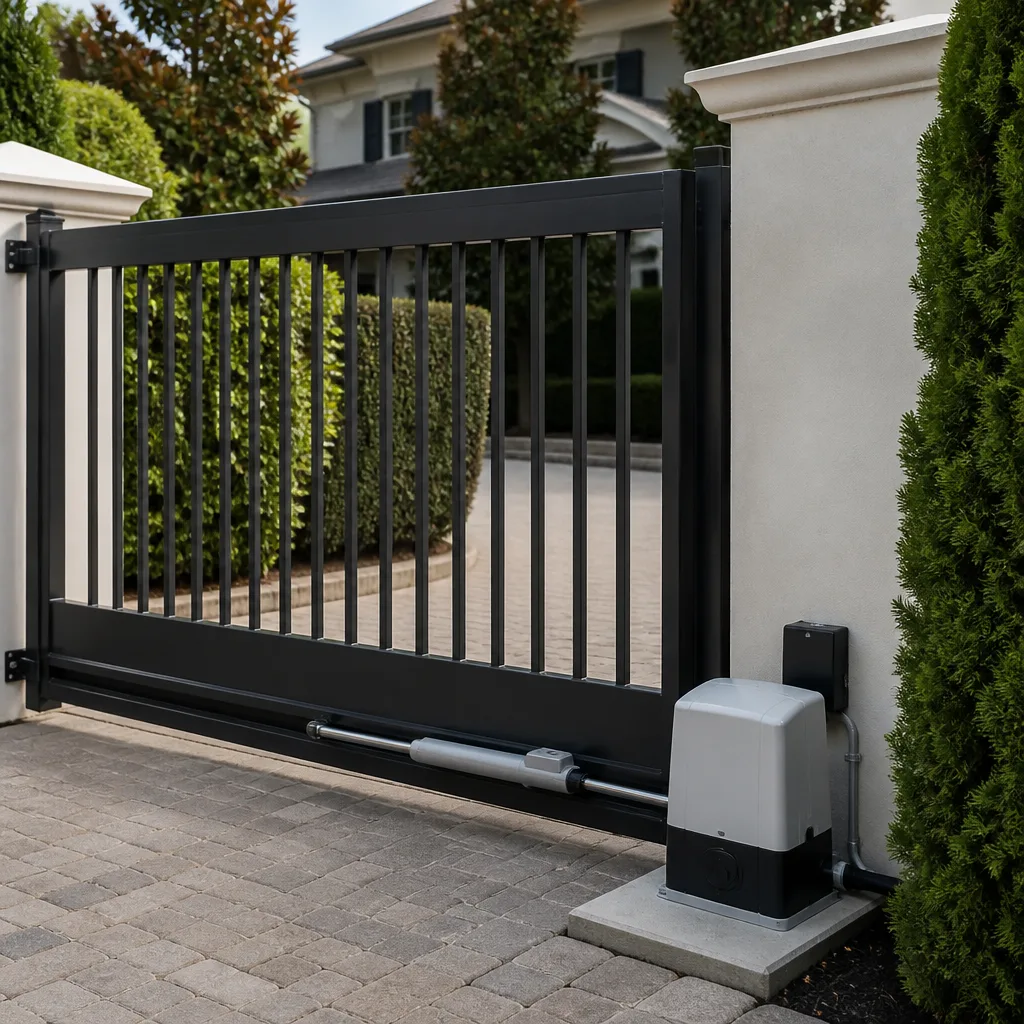 LiftMaster operators
Free on-site gate assessment - hinges, posts, and your LiftMaster or Nice gate operator checked before anything is quoted
The assessment is free and the quote is the invoice.
Get your free estimateChoosing the Right Gate Repair Brand: A Buyer’s Guide for Anaheim
The operator brand with the lowest install price often carries the longest parts lead time and the fewest local authorized technicians. That math doesn’t show up on the quote. It shows up two years later, when a circuit board fails on a Tuesday morning and your driveway gate sits half-open for eleven days while a factory order crawls toward Anaheim from a warehouse in Ohio. This guide is built for homeowners and property managers in Anaheim who want to make a ten-year parts and service decision, not a purchase decision. For more detail, see The Complete Gate Repair Guide for Anaheim Homeowners. We’ll walk through which brands actually hold up in Southern California’s climate, which ones have real service depth in Orange County, and how to match an operator to how your gate actually gets used.
Quick Answer
For most Anaheim residential gates, LiftMaster and Viking offer the strongest combination of local parts availability, broad authorized service networks, and forgiving duty-cycle ratings. FAAC and BFT are excellent for commercial and high-cycle applications, but parts lead times run longer and authorized technicians are fewer. Ghost Controls, Mighty Mule, and DoorKing serve specific niches well, though each comes with service-network tradeoffs in Orange County. The single most important factor isn’t the brand name on the housing: it’s whether someone in Anaheim can diagnose it, stock the part, and finish the Gate Repair within a day or two.
Styles & brands we work with
Table of Contents
- Parts Availability and Lead Time Realities in Southern California
- Head-to-Head: The Operator Brands Most Common in Anaheim
- Duty Cycle Ratings: Why a Residential Operator on a Commercial Gate Fails Early
- Dealer and Service Network Density in Orange County
- Upgrade Compatibility: When Existing Infrastructure Limits Your Brand Choices
- How Anaheim’s Climate Affects Gate Operator Longevity
- Total Cost of Ownership: What the Sticker Price Doesn’t Show
- Common Mistakes to Avoid
Parts Availability and Lead Time Realities in Southern California
Here’s what we know from working on gates across Anaheim, Fullerton, Orange, and Santa Ana: the brand you choose determines whether a failed control board is a two-day repair or a two-week repair. Southern California is not a uniform parts market. Some manufacturers maintain regional distribution centers in the Inland Empire or northern Los Angeles County. Others ship everything factory-direct from Texas, Georgia, or the Midwest.
LiftMaster operates the deepest parts pipeline in Southern California. Its residential and light commercial lines, including the LA400 and CSW200 series, have broad wholesale distribution. A failed board or limit switch for a LiftMaster operator is frequently available same-day from a local supplier or within a day through a distributor. That’s a meaningful difference when your gate is stuck open at an apartment complex on Chapman Avenue, or a home off Lincoln Avenue has a gate that won’t close.
Viking sits close behind. The company’s G-5 and X-9 series operators have enough install base in Orange County that supply houses keep common parts in stock. Sensors, loop detector harnesses, and capacitor kits are typically available locally. Less common components, like a specific revision of a Viking control board, may require a one-to-two-day distributor transfer.
FAAC and BFT are different stories. Both are Italian manufacturers with strong engineering and excellent hydraulic and electromechanical products. But their parts distribution in the U.S. is thinner. A FAAC 770 or BFT Deimos control board often ships from a national warehouse, not a regional one. Depending on the part, lead time can run five to ten business days. For a commercial property manager in Anaheim, that’s the difference between a quick fix and a temporary security plan with a chained gate and a posted notice.
What This Means for Your Buying Decision
- If minimizing downtime matters most, choose LiftMaster or Viking. Parts are stocked or quickly transferred in Southern California.
- If you’re installing a high-end commercial system and can schedule maintenance proactively, FAAC and BFT are excellent choices. Just plan for parts lead time on unusual failures.
- If you’re buying a used or older operator, verify parts availability for that exact model first. Discontinued boards from any brand can take weeks, regardless of distribution strength.
Head-to-Head: The Operator Brands Most Common in Anaheim
Anaheim’s gate market splits along familiar lines. Residential homes in Anaheim Hills and the Colony tend to run lift-and-slide or swing operators from LiftMaster, Viking, Ghost Controls, and Mighty Mule. Commercial properties, HOAs, and industrial lots lean toward LiftMaster commercial units, FAAC, BFT, DoorKing, and occasionally Elite. Each brand has a personality, and they’re not interchangeable.
LiftMaster (LA400, LA500, CSW200, SL3000)
LiftMaster is the volume leader for a reason. The company’s residential slide and swing operators are reliable, parts are abundant, and most gate technicians in Orange County know them cold. The LA400 and LA500 are common on Anaheim Hills driveways. The CSW200 is a workhorse for light commercial slide gates. The SL3000 handles heavier commercial applications. Limitations: LiftMaster’s high-cycle commercial line is solid but not as refined as FAAC or BFT for very heavy gates or very high traffic. For a homeowner, though, LiftMaster is hard to beat on serviceability.
Viking (G-5, X-9, L-3)
Viking builds operators that tolerate abuse. The G-5 swing and X-9 slide operators are common on rural properties and commercial lots across Orange County. Viking’s strength is simplicity: fewer proprietary components, straightforward diagnostics, and broad parts distribution. In our experience, a Viking operator that’s properly sized for its gate will outlast several control boards from cheaper residential brands. Trade-off: Viking’s aesthetic and control features are more utilitarian than polished. That matters less on a commercial gate and more on a high-end Anaheim Hills property where the operator housing is visible.
FAAC (770, 390, S800)
FAAC is the standard for hydraulic and heavy electromechanical operators. The FAAC 770 hydraulic swing operator is a fixture on estate gates and commercial entries throughout Southern California. FAAC machines are smooth, quiet, and built for high cycle counts. The issue is service depth: while several shops in Orange County can install FAAC, far fewer are factory-trained to diagnose FAAC-specific fault codes and hydraulic pressures. Parts often ship from an out-of-state warehouse. For a homeowner with a FAAC-equipped property, the brand is excellent. For a property manager needing a next-day fix, it demands a specialist with FAAC experience, not just any gate tech.
Apollo (835, 1500, 3500)
Apollo is a fixture in the Southern California market, especially on agricultural and large residential properties in eastern Anaheim and unincorporated Orange County. Apollo’s swing and slide operators are built in the U.S., with a loyal contractor following. Parts are generally available, though not as instantly as LiftMaster. Apollo’s strength is torque: these operators move heavy gates without strain. Trade-off: Apollo control boards have gone through several generational changes, and matching a replacement board to an older operator can be tricky for a technician who doesn’t work on them regularly.
Duty Cycle Ratings: Why a Residential Operator on a Commercial Gate Fails Early
Here’s a failure pattern we see repeatedly in Anaheim, especially at small office complexes, church parking lots, and gated communities. A property owner installs a residential-rated operator on a commercial-traffic gate to save money, and the operator burns out in eighteen months. The problem isn’t the brand. It’s the duty cycle.
Duty cycle defines how many times an operator can cycle per hour without overheating. A residential swing operator is typically rated for 10 to 20 cycles per hour, with a continuous-duty rating only on premium models. A gate at an Anaheim medical building or a busy apartment complex might cycle 40 to 80 times per hour during peak periods. Put a residential operator in that environment and you’ll cook capacitors, bake the motor windings, and fry the control board no matter which brand name is on it.
How to Match Duty Cycle to Your Actual Gate Usage
- Count real cycles, not theoretical ones. Spend two hours observing your gate at peak traffic. Count every open and close. Multiply by the busiest traffic pattern you expect.
- Residential gate, low traffic (under 20 cycles/hour): Most quality residential operators work fine. LiftMaster LA400-class, Viking G-5, Apollo 835, Ghost Controls, and Mighty Mule all fit this range.
- Light commercial or busy residential (20 – 50 cycles/hour): Step up to a light commercial operator with a continuous-duty motor option. LiftMaster CSW200, Viking X-9, or Apollo 1500.
- Heavy commercial (50+ cycles/hour): You need a true commercial operator with a continuous-duty rating, often hydraulic. FAAC 770 or 400, BFT Deimos, or equivalent.
- Factor in gate weight and wind load. A 20-foot, 800-pound gate in an Anaheim canyon with afternoon Santa Ana winds needs more torque than the same gate in a sheltered neighborhood. Bigger gate, heavier wind load: size up the operator, not down.
The lesson for a First Light Gate Repair home customer: duty cycle failure is brand-agnostic. A well-matched residential operator from Ghost Controls will outlast an under-spec’d commercial operator from any manufacturer. Match the operator to the gate and the traffic, then choose the brand.
Dealer and Service Network Density in Orange County
The brand on your gate only matters as much as the person who can fix it. Orange County has a dense gate-service market by national standards, but that density isn’t evenly distributed across brands. Understanding who can actually repair your operator in Anaheim is more important than comparing feature charts.
LiftMaster has the broadest service ecosystem. Most gate repair companies in Orange County, including ours, work on LiftMaster products daily. The diagnostics are standardized, the install base is enormous, and the parts are reachable. That means competitive pricing on repairs and short diagnostic times. There’s no single-source dependency risk.
Viking and Apollo both have loyal service communities. Independent gate techs who’ve worked in Orange County for a decade or more are typically fluent in both. The caveat is depth: a generalist might know Viking’s swing operators but not its newer slide line, or vice versa. When you call a Viking or Apollo repair, ask whether the technician works on that specific model regularly.
FAAC and BFT present the biggest service-network challenge in Anaheim. Installation is common, especially on higher-end properties and commercial campuses. But factory-trained service providers are fewer. A general handyman or a gate installer who mostly does LiftMaster will struggle with FAAC fault codes and hydraulic pressures. When a FAAC board fails, many generalists refer the job out, which adds time and cost. That’s not a quality problem with the brand; it’s a service-depth reality. If you’re considering FAAC or BFT for a new installation, confirm that the installing company has factory training on that specific line before you sign.
Ghost Controls and Mighty Mule are primarily DIY-oriented brands. They’re sold through retail channels, and many homeowners install them themselves. The service consequence is twofold: professional gate technicians may have limited experience with these models, and replacement parts sometimes require retail-channel sourcing rather than commercial distribution. That’s not to say they’re bad products. Ghost Controls builds solid residential swing and slide operators. Mighty Mule’s entry-level openers are inexpensive and functional. They just occupy a different service model than a professionally installed LiftMaster or Viking.
Gate repair in Anaheim is most predictable when the operator is a brand that local techs see weekly, not yearly. That’s a criterion worth weighing before you choose a brand for a new install.
Upgrade Compatibility: When Existing Infrastructure Limits Your Brand Choices
Replacing a gate operator isn’t always a blank slate. Your existing gate equipment, access control, and even your site’s power configuration narrow or expand your realistic brand options. Understanding those constraints before you choose is the difference between a clean one-day install and a multi-trade project.
What Limits Your Brand Choices
- Existing loop detectors and safety edges. Most gate operators from major brands accept standard dry-contact inputs from loop detectors and safety edges. If your current loops and edges are functional, any quality brand should integrate. If they’re failing, repouring a loop or replacing a safety edge adds cost regardless of brand.
- Access control systems. DoorKing, Linear, and other access control panels use standard relay outputs that work with most operators. But if your system is a proprietary integration (common on some cellular-entry platforms and commercial access systems), the new operator must be compatible with the panel’s communication protocol. In practice, that rarely locks you out of major brands. It does mean your gate technician and your access-control vendor need to coordinate.
- Existing mounting pads and conduit. Different brands have different footprint dimensions. A Viking slide operator’s mounting footprint differs from a FAAC slide operator’s. If you’re replacing a unit and want to avoid cutting concrete or rerunning conduit, match the new operator’s footprint to the old one or accept a modest concrete work cost.
- Power constraints. Most residential gates in Anaheim run on 115V single-phase power. Commercial operators, especially hydraulic units, sometimes require 208V or 230V. If your site only has residential power and you want a commercial-grade operator, you’ll need an electrician to pull a new circuit. That’s an infrastructure cost, not a gate cost, and it applies to any brand in the commercial class.
- Gate weight and type. Some brands are simply better at certain gate configurations. Viking and Apollo handle heavy cantilever slide gates well. FAAC’s hydraulic swing operators are superb for massive ornamental gates. LiftMaster’s residential line is ideal for standard tubular steel swing gates. The gate itself is the biggest constraint: a mismatched operator will fail early no matter the brand reputation.
For most gate installation in Anaheim, the practical answer is that any of the major brands can be made to work with your existing infrastructure. The question is whether the additional work required for a particular brand is worth it. If a FAAC install requires new power and concrete work while a LiftMaster install drops onto the existing pad and circuit, the total project cost isn’t close, even if the operator prices are similar.
How Anaheim’s Climate Affects Gate Operator Longevity
Anaheim’s climate is gentler than most of the country: mild winters, dry summers, modest temperature swings. But it’s not neutral, and it affects gate operators in specific ways.
The biggest factor is sun exposure. An operator housing that sits in direct afternoon sun on an Anaheim Hills hillside can hit internal temperatures well above ambient air. Control boards and capacitors degrade faster in sustained heat. We see more capacitor failures and board thermal cracks on gates with full western sun exposure than on shaded installs, regardless of brand. The fix isn’t brand switching; it’s installation quality: proper ventilation, a sun shield if needed, and mounting orientation that deflects direct radiation.
Santa Ana wind events matter, too. A 16-foot solid-panel gate acting as a wind sail puts enormous transient load on the operator, hinges, and mounting hardware. Operators with robust gear trains and torque overload protection handle this better than entry-level residential units. Viking and Apollo have reputations in wind-prone Orange County foothill areas for good reason: their gear sets and torque delivery hold up under gust loads that make lighter operators strain.
Salt air isn’t a meaningful factor in Anaheim, unlike coastal Newport or Huntington Beach. But Anaheim’s fall and winter morning marine layer can push moisture into exposed operator housings, especially those with failing gaskets. Electrical components dislike condensation. A well-sealed operator from any brand lasts longer than a poorly sealed one from a premium brand. Installation quality is a component of climate resilience, not just a labor line item.
Climate Takeaways for Anaheim Buyers
- Choose an operator with a metal housing and gasketed covers, not plastic, for Anaheim’s sun and occasional damp.
- Consider a sun shield or shaded mounting for west-facing gates in Anaheim Hills.
- If your gate is a large solid panel in a wind corridor, favor a torque-rated operator like Viking G-5, Apollo 835, or FAAC 770.
- Battery backup is a worthwhile add-on in an area with periodic Santa Ana-driven outages.
Total Cost of Ownership: What the Sticker Price Doesn’t Show
A $900 Mighty Mule install that needs a $250 board replacement and two service calls in year two can cost as much as a $2,400 professionally installed LiftMaster that runs untouched for six years. An operator purchase is a ten-year commitment to parts availability, service accessibility, and failure frequency. The upfront price is a line item, not the decision.
Five Costs That Arrive After the Install
- Control board replacement. The most common post-install failure. Board prices vary by brand from $150 to over $800. Availability varies more: LiftMaster boards are often local; FAAC boards sometimes aren’t.
- Sensor and safety-edge replacement. Photo eyes and safety edges fail from sun, moisture, and impact. These are mostly brand-generic components, but some brands use proprietary sensor protocols that force brand-specific replacements at higher prices.
- Gear and drive-train wear. Resi operators have plastic gears that wear. Upgrading to a metal-gear operator costs more upfront and rarely needs gear replacement.
- Diagnostic labor. A technician who knows the brand diagnoses in 30 minutes. One who doesn’t charges two hours to reach the same conclusion, if they reach it at all. Brand service depth is a real cost line.
- Downtime cost. A gate that won’t close is a security failure. For an Anaheim apartment complex, a week of an open gate is a liability and resident-satisfaction problem. Brand parts lead time converts directly to exposure.
A Realistic Cost Comparison for a Standard Anaheim Residential Swing Gate
- DIY retail operator (Ghost Controls, Mighty Mule): $600 – $1,200 installed by homeowner. Parts via retail chain. Limited professional service support. Best for handy homeowners with simple gates.
- Professional-grade residential (LiftMaster LA400, Viking G-5): $1,800 – $3,000 installed. Local parts. Broad technician familiarity. The workhorse sweet spot for most Anaheim homes.
- Premium residential/light commercial (FAAC 770, LiftMaster CSW200): $3,500 – $6,000 installed. Superior duty cycle and lifespan. Check FAAC parts lead times before committing.
The right electric gate repair in Anaheim partner will tell you the total-cost truth before you buy, not after something fails. That’s the only way to evaluate a gate operator brand honestly.
Common Mistakes to Avoid
- Choosing by sticker price alone. The lowest install price often becomes the highest five-year cost once parts lead times and service availability enter the picture. In Anaheim, LiftMaster and Viking’s local parts depth makes their slightly higher upfront prices cheaper over time.
- Ignoring duty cycle. A residential operator on a busy commercial gate will fail early, no matter the brand. Count your real cycles before you choose.
- Self-installing a commercial-grade gate. Commercial operators involve safety loop systems, edge sensors, and sometimes higher-voltage power. A DIY install that skips safety loops puts you at legal and physical risk. This is professional territory.
- Buying from a brand with no local service depth. If the only authorized service for your operator is a company 60 miles away, every future repair includes a travel premium and a longer wait. Verify Orange County service before you buy.
- Overlooking the existing infrastructure. The new operator has to fit the existing pad, conduit, loops, and access control. Assuming any brand drops in cleanly is a common and expensive assumption.
- Treating all gate companies the same. A general handyman that also does gate repair and a gate-only specialist are not interchangeable. Brand depth comes from working on that brand weekly, not occasionally.
- Skipping battery backup. Anaheim’s occasional Santa Ana outages leave electric gates dead. A battery backup keeps your gate operational and your property secure when the grid blinks.
See the difference
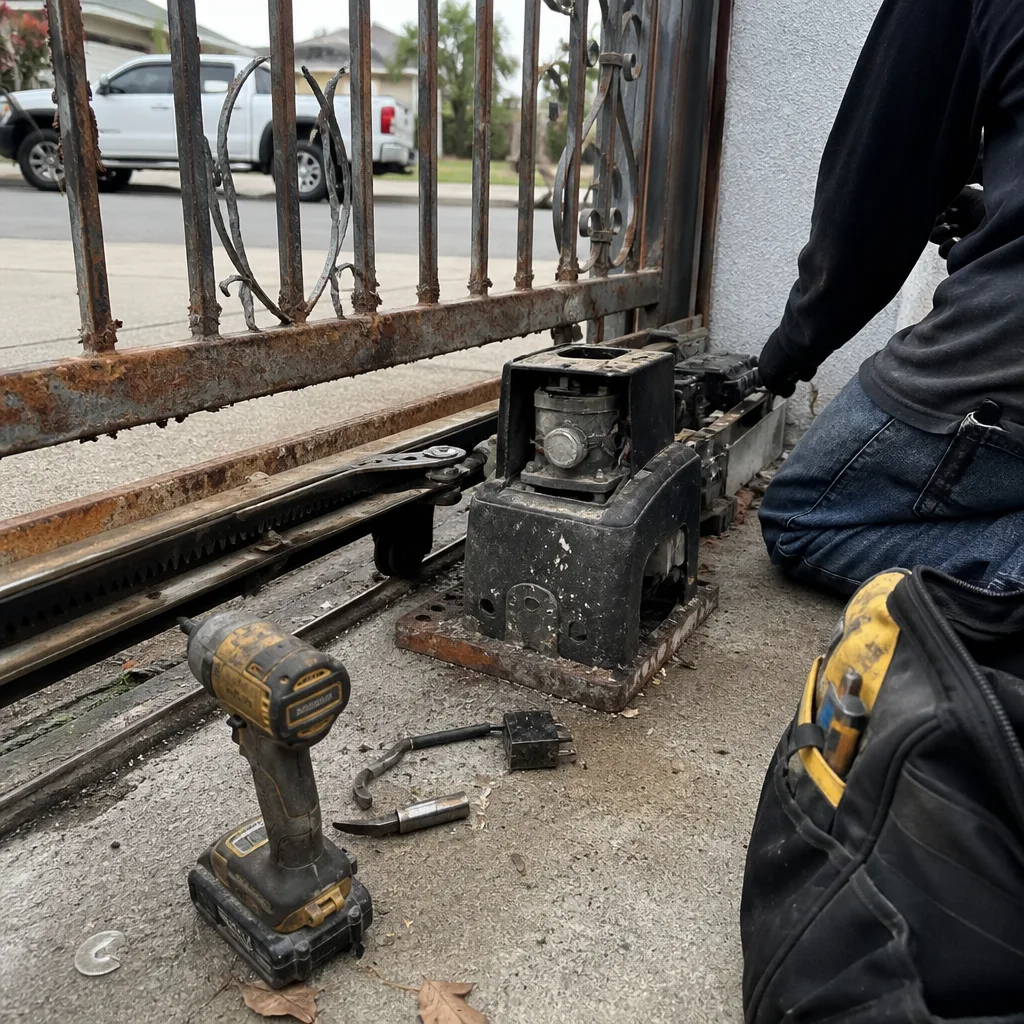 Before
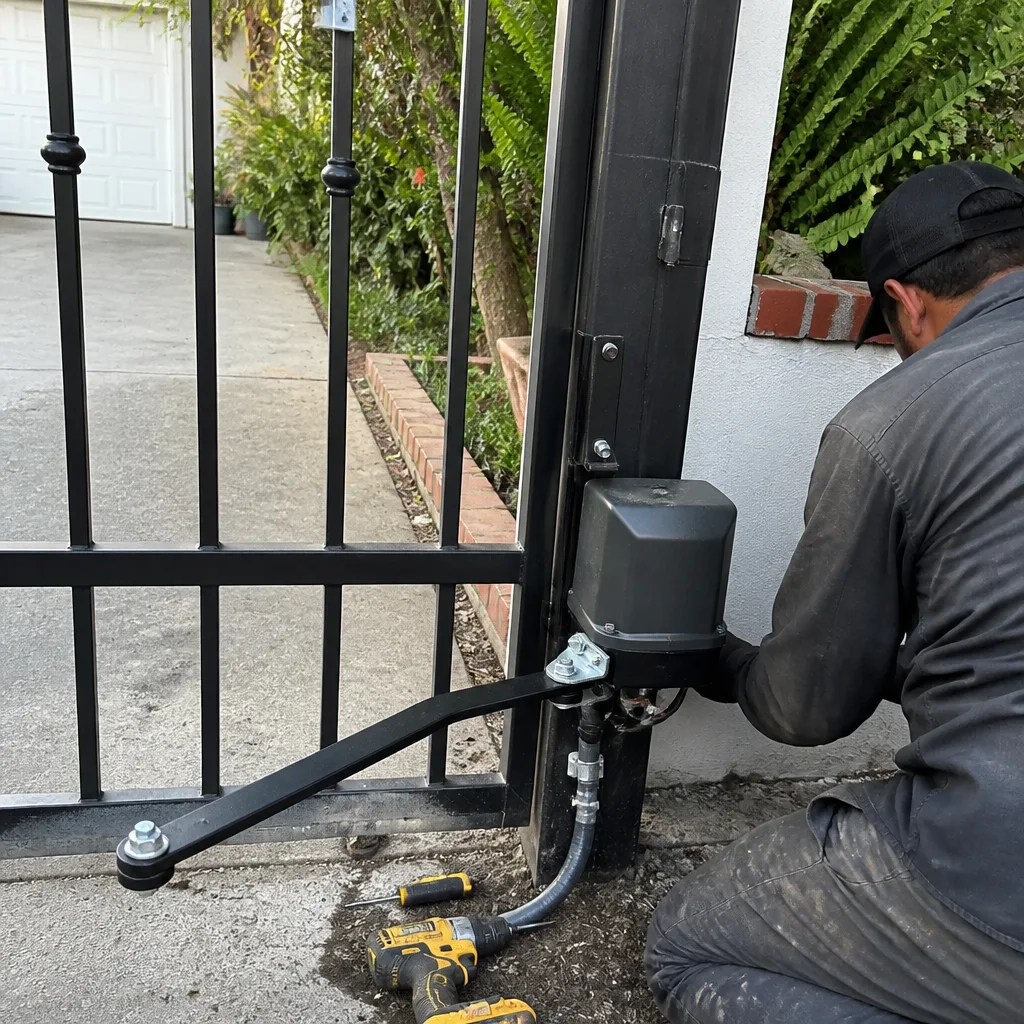 After
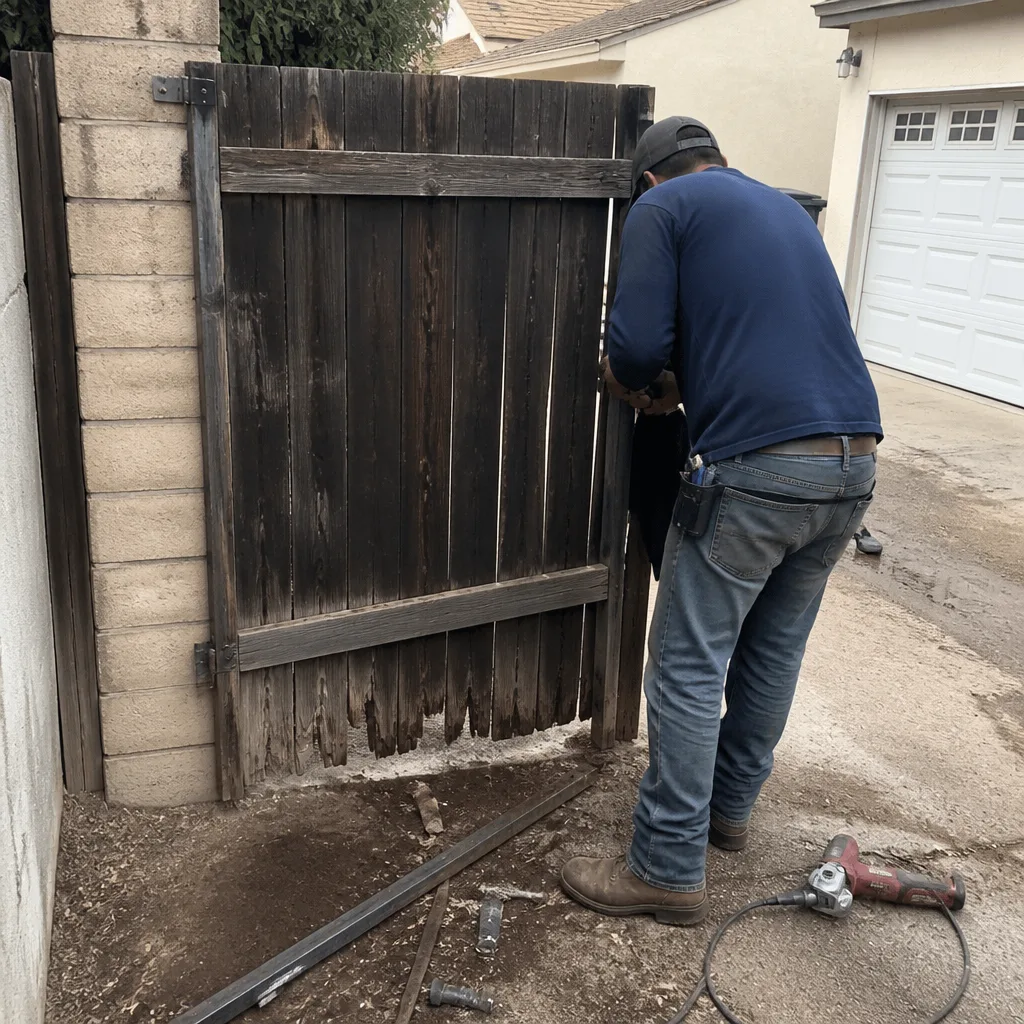 Before
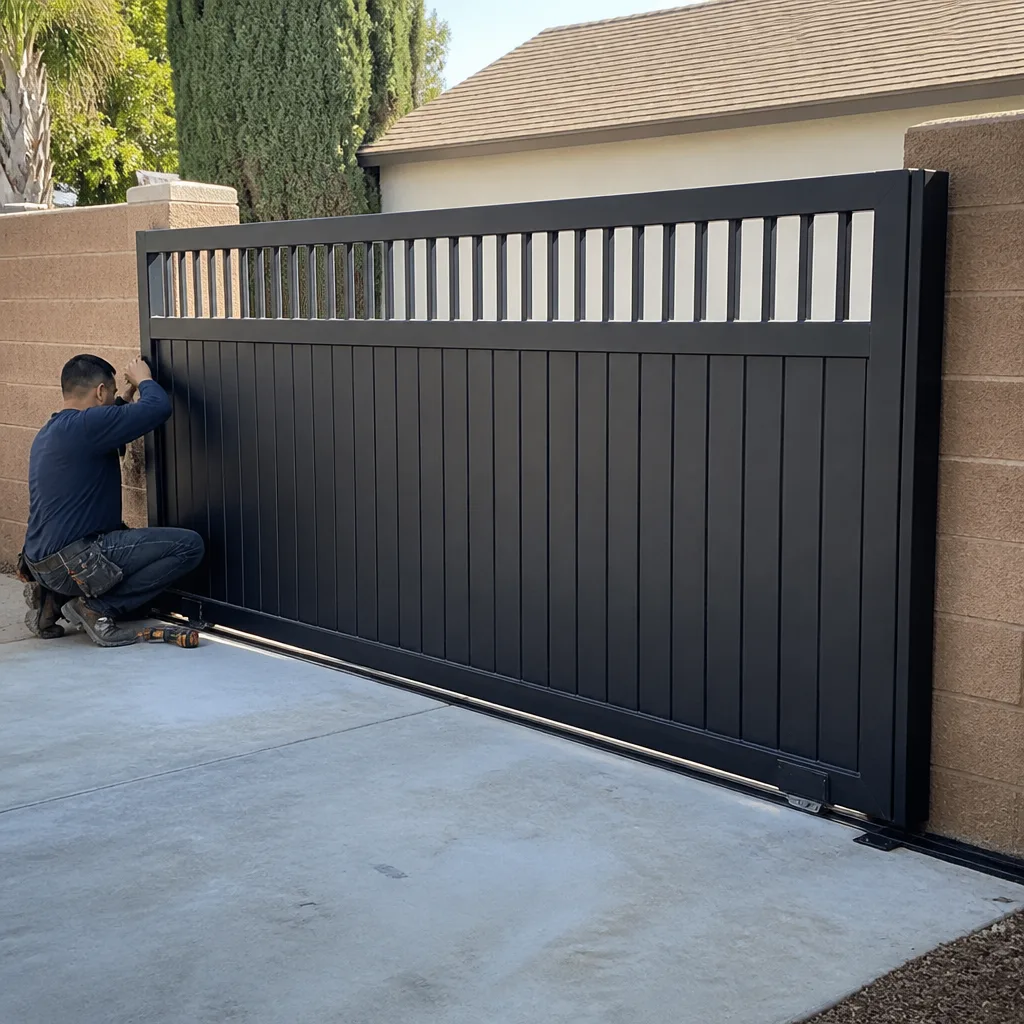 After
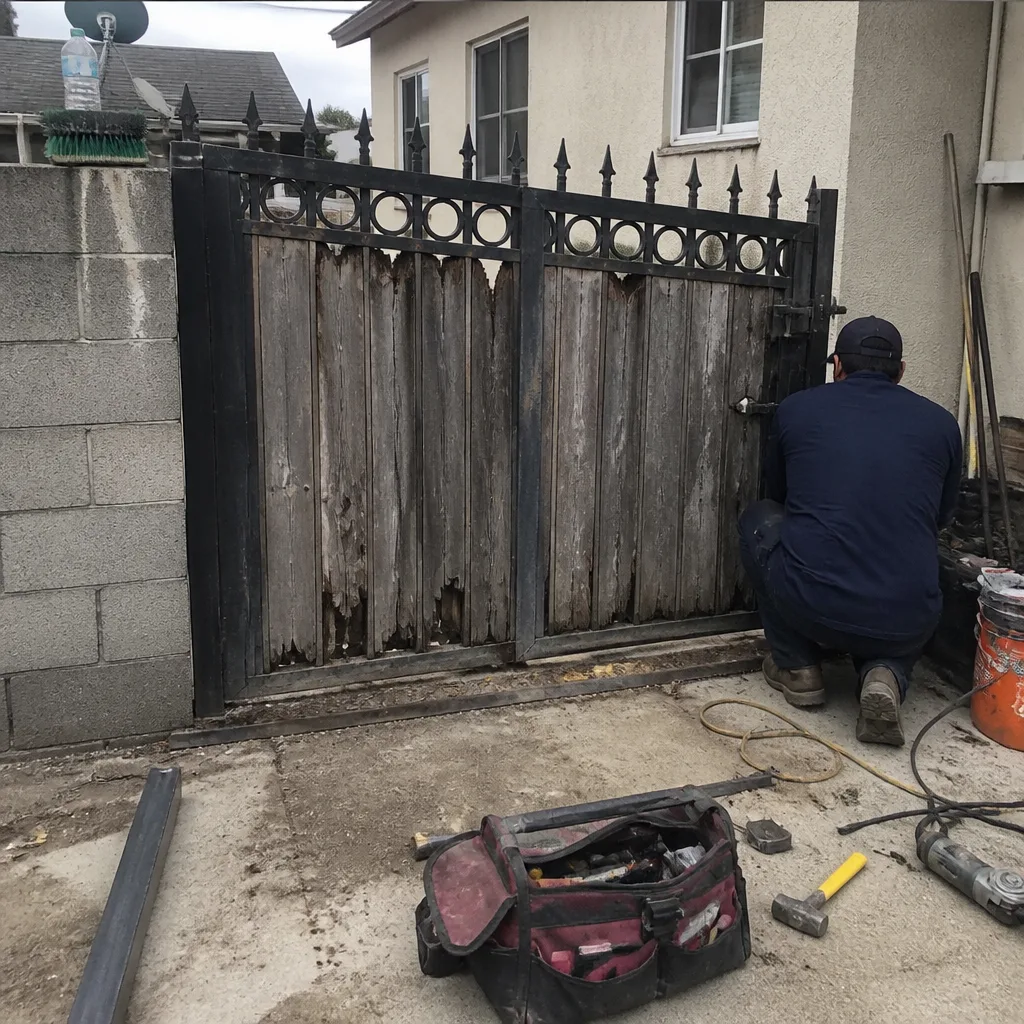 Before
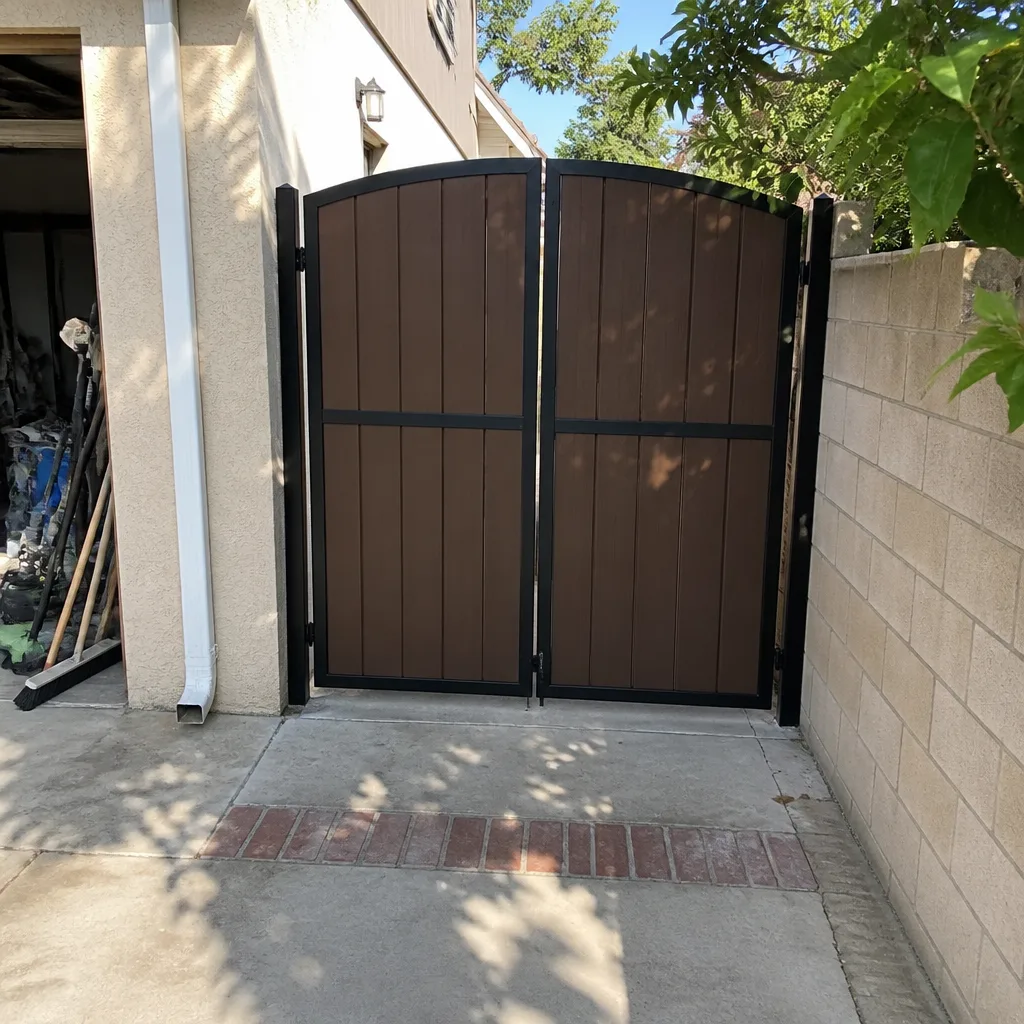 After
When to Call a Professional
Some gate problems are safe and sensible to investigate yourself: a tripped breaker, a gate out of alignment from a bumper tap, a photo eye blocked by overgrown bougainvillea. But the moment you’re opening an operator housing, probing a control board, or touching capacitor connections, you’re in territory where a wrong move means equipment damage or injury. Gate operators store significant electrical charge even when unplugged. Capacitors can discharge violently. And any gate that moves under power is a safety risk if the safety loops and edges aren’t functioning correctly.
Call a professional when the operator hums but doesn’t move, when the gate reverses unexpectedly, when you smell burning from the housing, when error codes persist after a power cycle, or when a gate has physically jumped its track or mount. First Light Gate Repair offers free estimates in Anaheim – call (833) 734-5599. Your gate is the only thing we fix, and we work on LiftMaster, FAAC, BFT, Linear, Viking, Ghost Controls, DoorKing, Elite, and Mighty Mule systems.
Frequently Asked Questions
LiftMaster and Viking are the best overall choices for Anaheim residential gates because both have deep local parts availability, strong service familiarity among Orange County technicians, and duty-cycle ratings that comfortably cover residential traffic. FAAC is excellent for premium and heavy gates, with the trade-off of longer parts lead times and a smaller local service network. The best brand for you depends on your gate type and traffic pattern. Call (833) 734-5599 for a recommendation based on your specific gate.
A professionally installed residential gate operator in Anaheim typically runs $1,800 to $3,000 for a LiftMaster or Viking unit, with premium options like FAAC or light-commercial LiftMaster units running $3,500 to $6,000. DIY retail operators from Ghost Controls or Mighty Mule can cost under $1,200, but they rarely include safety loops, professional-grade mounting, or the same parts and service support. Every installation includes a written quote before work begins. Call (833) 734-5599 for an exact quote on your gate.
LiftMaster has the fastest parts availability in Orange County, with most common components locally stocked or available same-day. Viking follows closely, with common parts available within one to two days. FAAC and BFT parts typically ship from national warehouses, creating five to ten business day lead times on less common components. When downtime matters, choose a brand with regional parts depth.
Yes, our technicians work on Ghost Controls and Mighty Mule gates, though these DIY brands sometimes require retail-channel parts sourcing rather than commercial distribution, which can add a day or two to repairs. We diagnose problems across all nine major brands we service. The advantage of working with a multi-brand shop is that we’re not tied to one manufacturer’s limitations.
Look for gate-only specialization, not a general handyman who does gates as a side service. Confirm the company works on your specific brand and model regularly, not just occasionally. Ask about parts sourcing: a company with local distributor relationships fixes faster than one ordering everything factory-direct. And verify that pricing is quoted and agreed before work starts. First Light Gate Repair is a gate-only shop serving Anaheim and surrounding Orange County cities. For more guides & resources, visit our blog.
In Anaheim’s market, a functional, well-maintained automatic gate adds curb appeal and security value. An unreliable gate or one that’s perpetually broken detracts from it. The brand itself matters less to appraisers than the gate’s condition and functionality. A mid-range LiftMaster or Viking that works reliably beats a premium FAAC that’s been down for two weeks waiting on parts.
The Bottom Line
Choosing a gate operator brand in Anaheim is a service and parts decision, not a sticker-price decision. LiftMaster and Viking deliver the strongest combination of local parts access, technician familiarity, and residential-duty reliability. FAAC and BFT are excellent for premium and commercial applications, with parts lead times and service depth as the trade-offs. Match the operator’s duty cycle to your real traffic, factor in Anaheim’s sun and Santa Ana winds, and choose a repair partner who works on your brand weekly, not yearly. The right brand keeps your gate moving for a decade. The right service partner keeps it moving when something eventually fails. Call (833) 734-5599 for a free estimate on any gate project in Anaheim.
Written by the team at First Light Gate Repair, serving Anaheim since 2014.