
Last updated October 30, 2026
 Wrought iron
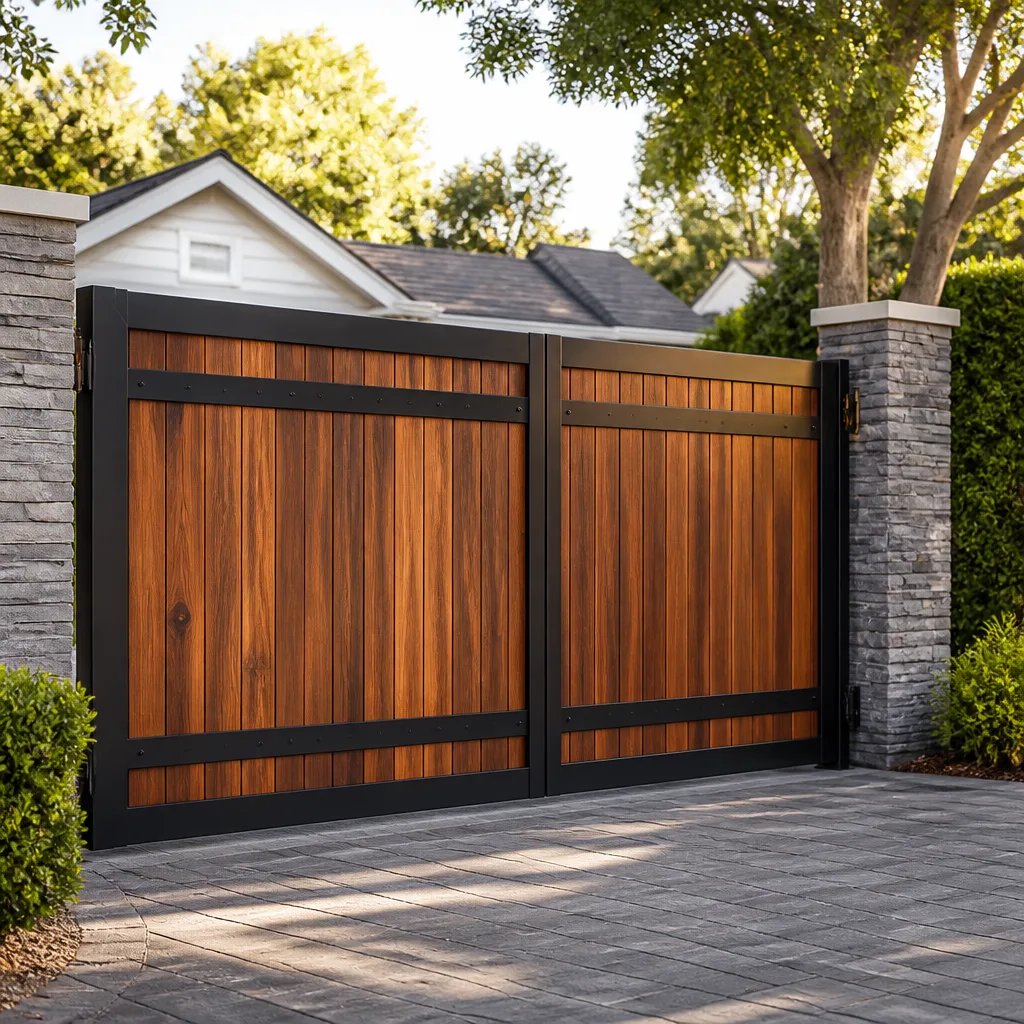 Wood & steel frame
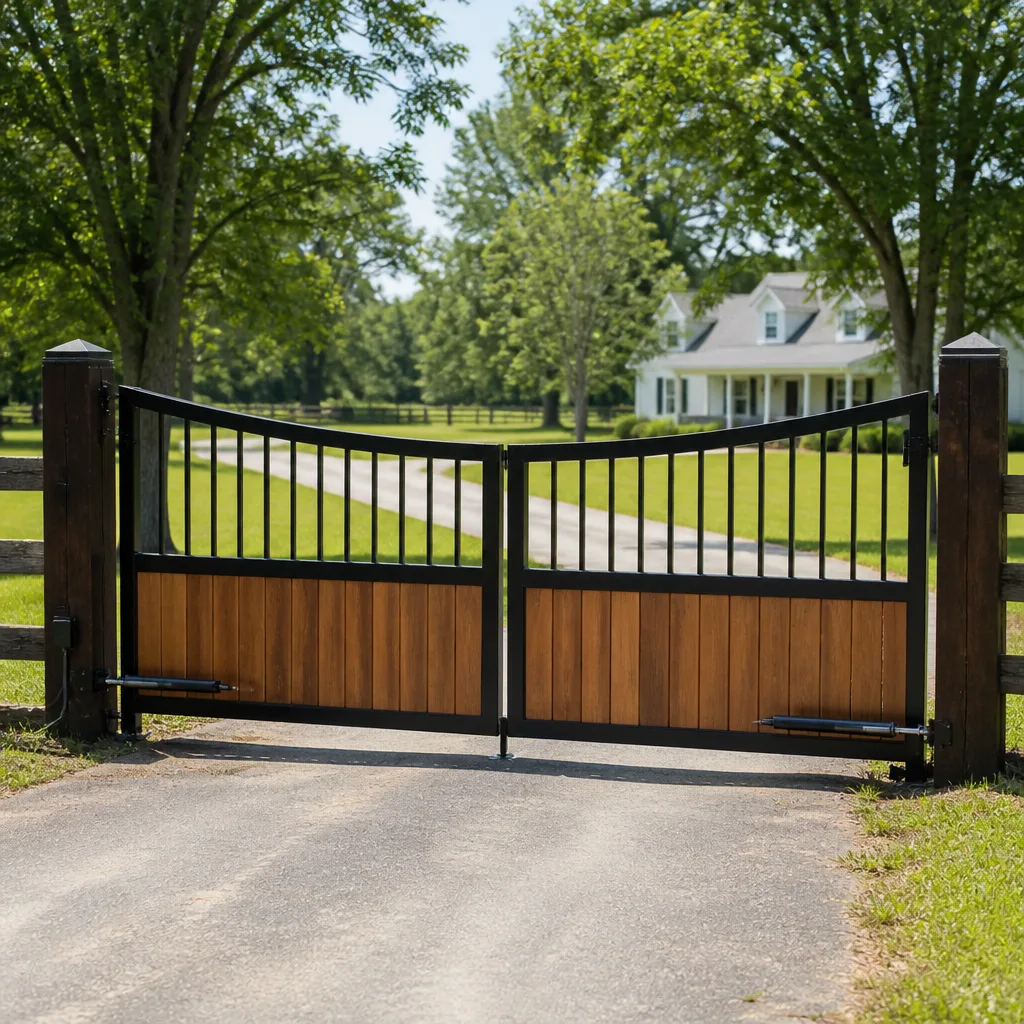 Farm & ranch
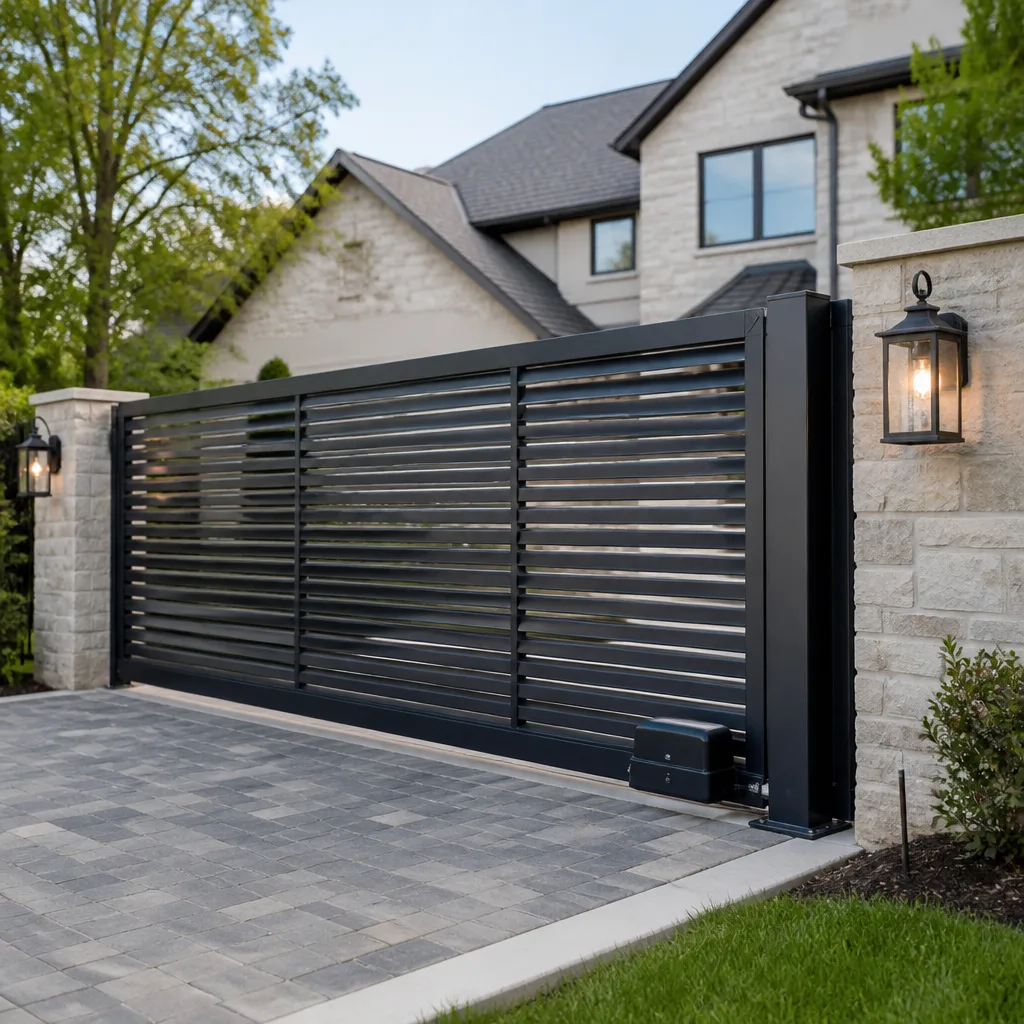 Sliding driveway gates
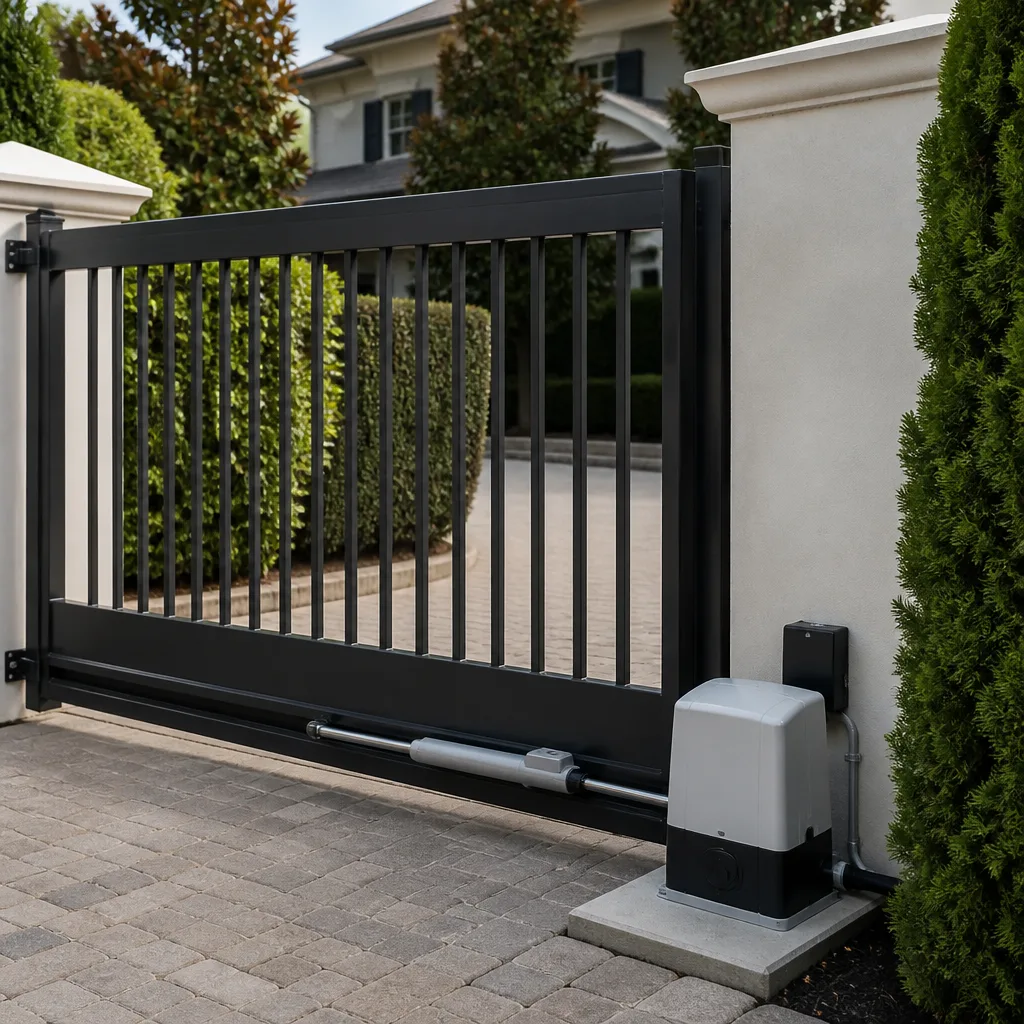 LiftMaster operators
Free on-site gate assessment - hinges, posts, and your LiftMaster or Nice gate operator checked before anything is quoted
The assessment is free and the quote is the invoice.
Get your free estimateDIY vs Professional Gate Repair: The Anaheim Homeowner’s Decision Guide
Replacing a gate hinge yourself is reasonable. Adjusting your operator’s limit switches without knowing the UL 325 entrapment zones you’re affecting is a liability decision, not a technical one. Most Anaheim homeowners don’t fail at gate repair because they lack mechanical skill. They fail because nobody told them which components sit on the safe side of the line and which ones carry electrical, code, or warranty consequences that turn a $40 fix into a $1,400 replacement. This guide draws that line at the component level, so you’ll know exactly what to grab a wrench for, what to leave alone, and why the difference matters more in Anaheim than it does in most cities.
Quick Answer
DIY gate repair in Anaheim is safe and smart for mechanical adjustments like hinge tightening, battery swaps, photo eye realignment, and remote reprogramming. It crosses into professional territory when you’re touching the operator’s internal wiring, limit switches, or any component governed by UL 325 entrapment standards or California electrical code. The line is not “how hard is it” – it’s “what happens if I get it wrong.” For anything motorized or wired, call a gate repair specialist in Anaheim at (833) 734-5599. For hinge bolts and dead remote batteries, your toolbox is fine.
Styles & brands we work with
Table of Contents
- Know Your Gate: What’s Actually Attached to What
- Safe DIY Repairs: Four Tasks Any Anaheim Homeowner Can Handle
- The Danger Zone: Where DIY Gate Repair Crosses the Line
- UL 325 Compliance: The Liability Nobody Talks About
- Warranty Realities: What Owner Repairs Actually Do to Coverage
- The Real Cost Comparison: DIY Savings vs. Corrective Labor
- Anaheim-Specific Factors: Heat, Salt Air, and Gate Longevity
- Common Mistakes to Avoid
- When to Call a Professional
- Frequently Asked Questions
Know Your Gate: What’s Actually Attached to What
Before you decide whether to fix something yourself, you need to know what you’re looking at. Automatic gates in Anaheim are not one machine. They’re four systems bolted together, and each one has a different risk profile.
A residential sliding gate or swing gate breaks down into four layers. The structural layer is the gate itself: the steel or iron panel, the hinges, the wheels or track, the post mounts. This layer is almost entirely mechanical, and it’s the safest place for a homeowner to work. The operator layer is the motor unit – the box that drives the gate open and closed. Inside that box are the motor, the control board, the limit switches, and the capacitor. This layer is where DIY repairs start to carry real risk. The safety layer is made up of photo eyes, contact edges, and warning signage. These components exist to prevent the gate from crushing a person, a pet, or a car. The access control layer is the keypad, the intercom, the loop detector under the driveway, and the remote receiver board. This layer is low-voltage but deeply annoying to diagnose without the right tools.
We’ve repaired gates in Anaheim’s Colony District that were installed in the 1980s and gates in Anaheim Hills that were three months old. In both cases, the homeowner’s original complaint almost never matched the actual failure point. A gate that “won’t close” might be a blocked photo eye, a failed capacitor, a bent track bracket, or a control board that’s receiving power but not sending it. Knowing which layer you’re dealing with determines whether you should touch it at all. This is the same diagnostic process we use at First Light Gate Repair home – and it’s the reason so many “simple fixes” turn into multi-hour jobs for someone who’s never seen the inside of an operator before.
Safe DIY Repairs: Four Tasks Any Anaheim Homeowner Can Handle
Let’s start with what’s genuinely safe. These four tasks require basic tools, carry no electrical risk, and won’t void your operator’s warranty. If you’re handy and the gate is not currently pinning anyone against a fence, go ahead.
- Tightening loose hinge bolts and post brackets. Over time, Anaheim’s temperature swings cause metal to expand and contract. Bolts loosen. A gate that sags or drags on the ground is often just a matter of re-torquing the hinge bolts and checking that the post brackets are still seated. Use a socket set, not an adjustable wrench, and check both the hinge side and the latch side.
- Replacing dead remote batteries. If your Mighty Mule or LiftMaster remote works only when you’re standing three feet from the receiver, it’s a battery. Open the case, note the battery type, and swap it. Reprogramming after a battery change is rarely necessary on modern units, though some older boards lose their memory when fully drained.
- Cleaning and realigning photo eyes. Photo eyes get dirty, and Anaheim’s dry months coat them in fine dust faster than you’d expect. Wipe both lenses with a dry cloth. If the gate still reverses or refuses to close, check the alignment: each eye has a small LED that should be solid lit when the beam is aligned. A misaligned beam is the single most common cause of a gate that won’t close, and it’s a five-minute fix.
- Lubricating hinges and track rollers. Use a silicone or lithium spray (not WD-40, which attracts grit). Apply lightly to pivot points, wheel bearings, and the track. Do this every six months in Anaheim’s climate and you’ll extend the life of the mechanical hardware meaningfully.
These four tasks cover maybe 20% of the repair calls we see in Anaheim. The other 80% involve the operator, the safety circuit, or the access control system – and that’s where the decision changes entirely.
The Danger Zone: Where DIY Gate Repair Crosses the Line
Here’s the line, stated plainly: if the repair requires opening the operator housing, splicing a wire, or bypassing a safety device, you’re no longer doing a homeowner task. You’re doing electrical and safety-system work that falls under professional territory.
California’s electrical code treats gate operators as permanently installed electrical equipment. That means any modification to the line-voltage side of the operator – the power feed, the capacitor, the wiring from the breaker – is legally required to be performed by a licensed electrical contractor or a qualified gate technician working under that umbrella. Homeowners in Anaheim who open an operator and start moving wires are not just risking a shock. They’re performing unpermitted electrical work. If that work later contributes to a fire, an injury, or a failed inspection, the insurance implications are serious. This isn’t theoretical. We’ve opened operators in Fullerton and Anaheim where a homeowner’s handiwork left bare copper twisted together inside a metal box, inches from the control board. It worked for a month, then arced and fried the board.
Any gate operator installed after 2000 is also governed by UL 325, the national safety standard for automated gate systems. DIY work that changes limit settings, removes or bypasses safety edges, or alters the auto-close timing settings can take the gate out of UL 325 compliance. The gate may still open and close. It may work perfectly for months. And if someone is injured by that gate, the person who altered it bears the liability. This is why we don’t give step-by-step instructions for limit switch adjustment or safety circuit bypasses. A professional who does this work is trained on the entrapment zones, the force settings, and the test requirements – and their work product carries the documentation needed if something goes wrong later.
For electric gate work that touches wiring, motors, or control boards in Anaheim, electric gate repair from First Light covers the diagnosis and the correction in one visit. Our technicians work across LiftMaster, FAAC, BFT, Linear, Viking, Ghost Controls, DoorKing, Elite, and Mighty Mule systems – so the repair isn’t tied to one brand’s playbook.
UL 325 Compliance: The Liability Nobody Talks About
If you read nothing else in this guide, read this section.
UL 325 is a safety standard published by Underwriters Laboratories that governs every automatic gate operator sold in the United States. It sets requirements for entrapment protection, force limits, and the specific devices that must be present on any automated gate. The standard requires that a gate operator include at least two independent means of entrapment protection. On most Anaheim residential gates, that means a pair of photo eyes plus a reversing mechanism that detects resistance and reverses the gate when it contacts an obstruction.
When a gate operator is installed professionally, the installer sets the force limits, configures the photo eye circuit, tests the reverse function, and records those settings. When a homeowner adjusts the limit switches to make the gate close a little further or open a little wider, they’re often unknowingly changing the force the motor applies. A gate that closes with too much force can break a child’s arm. It can crush a dog. It can damage a car. And because the homeowner adjusted it, the manufacturer’s compliance is voided and the homeowner’s liability is on the hook.
We see this most often with DIY limit adjustments on FAAC and LiftMaster swing operators in Anaheim Hills, where grade changes make gates need slightly different travel. The homeowner adjusts the limits to stop the gate precisely at the post. What they don’t adjust is the force feedback circuit. The gate now applies full motor torque until it hits the post every single time. That’s not a gate closing normally – that’s an entrapment hazard waiting for a person instead of a post.
Professional repair exists precisely because of UL 325. A trained technician knows the difference between travel limits and force limits, knows how to test the reverse circuit under load, and documents the settings after the work is done. That documentation matters if there’s ever an incident.
Warranty Realities: What Owner Repairs Actually Do to Coverage
Here’s a comparison most homeowners never see. It matters, because the cost of a voided warranty often dwarfs the cost of the repair itself.
Mighty Mule and Ghost Controls (both residential-focused brands) take a relatively homeowner-friendly stance. Their published policy allows owner maintenance like battery replacement, photo eye cleaning, hinge lubrication, and remote programming. They explicitly void warranty only when the operator housing is opened and internal components are modified or replaced. So a homeowner who replaces a Mighty Mule remote battery is fine. A homeowner who opens the control board housing and re-solders a connection has voided it.
LiftMaster and FAAC take a stricter line. LiftMaster’s warranty explicitly excludes damage caused by “installation, adjustment, alteration, or modification by anyone other than a qualified professional.” FAAC’s language is similar: the warranty covers defects in materials and workmanship, and any service or modification performed by unqualified personnel voids it. For a LiftMaster LA400 swing operator or a FAAC 400 sliding operator – both common in Anaheim residential applications – a control board replacement runs $300 to $700 for the part alone. Voiding warranty on a $700 board to save $150 on a repair call is not a good trade.
Elite, which we service frequently on Anaheim’s commercial perimeter gates, requires that all warranty service be performed by an authorized dealer. Owner-repaired Elite operators lose warranty protection immediately, and since Elite parts are less widely distributed than LiftMaster or Mighty Mule, the replacement cost is usually higher.
The practical takeaway: read your operator’s warranty language before you open any housing. If the manual says “qualified personnel” or “authorized dealer” anywhere in the repair section, your DIY work is a warranty forfeiture. If the manual has a maintenance section that lists owner-serviceable tasks, stick to exactly those tasks and nothing else.
The Real Cost Comparison: DIY Savings vs. Corrective Labor
Let’s be honest about the math, because most DIY-versus-pro comparisons are dishonest in one direction or the other. Here is the actual cost picture for common Anaheim gate repairs.
Hinge tightening or replacement
- DIY cost: $15 to $60 for heavy-duty hinges and bolts at a hardware store. Two hours of your time.
- Pro cost: $120 to $250 including parts and labor for a standard residential swing gate.
- Verdict: DIY is reasonable if the post is solid and the hinge swap is straightforward. If the gate is heavy or the post needs re-setting, the risk of an uncontrolled gate swing tips toward professional.
Remote battery replacement
- DIY cost: $3 to $10 for the battery.
- Pro cost: We don’t charge for a battery swap during a service call. It’s diagnostic-level work.
- Verdict: DIY always. This is a non-decision.
Photo eye realignment
- DIY cost: $0. Ten minutes.
- Pro cost: $90 to $160 service call if that’s the only issue.
- Verdict: DIY first. Clean the lens, check alignment, retest. If the LED stays off or the gate still refuses, there’s a deeper electrical issue – call a pro.
Control board replacement
- DIY cost: $250 to $600 for the board, plus your time, plus the risk of damaging the new board during installation. No warranty coverage on the part after self-installation for most brands.
- Pro cost: $550 to $1,100 including a warranty-backed part and the diagnostic work that confirmed the board was actually the failure point.
- Verdict: Professional, full stop. The diagnostic risk here is enormous. Homeowners frequently replace a board, find the gate still doesn’t work, and learn the real problem was a shorted safety loop or a failed capacitor. They’re out $500 and still have the original problem.
Operator limit switch adjustment
- DIY cost: $0, plus the UL 325 liability exposure we covered above.
- Pro cost: $90 to $180, typically folded into a service call if it’s adjusted during a broader repair.
- Verdict: Professional. The cost is small, the liability is real, and the adjustments require a force gauge to do properly.
The pattern should be clear. DIY wins when the task is mechanical, visible, and reversible. Professional wins when the task is electrical, hidden, or safety-related. And in Anaheim, where a weekend DIY gate project often gets interrupted halfway through by a call back to work or a family obligation, the half-finished repair is frequently the most expensive kind.
For a full replacement or new installation, the question isn’t DIY versus professional at all – it’s about getting a written quote. Our gate installation services in Anaheim include a free site measure and a fixed price before any work starts.
Anaheim-Specific Factors: Heat, Salt Air, and Gate Longevity
Gate repair problems in Anaheim don’t look like gate repair problems in Seattle or Minneapolis. The local environment shapes what breaks, how fast it breaks, and what a homeowner can realistically handle.
Heat is the biggest factor. Anaheim regularly hits 90+ degrees for months, and that heat concentrates inside metal operator housings. A black operator box in direct sun can reach 140 degrees internally. An operator with adequate ventilation handles this. An operator with a fading capacitor or a worn motor brushes does not. Heat-sensitive components fail faster here than they do in coastal or cooler climates. This is why we see so many failed capacitors in Anaheim operators during the first few hot weeks of summer. It’s not a coincidence when three neighbors on the same block have gate failures in the same week.
The marine layer matters too. If your Anaheim property sits within a few miles of the Santa Ana River corridor or in the western part of the city where ocean air reaches, you’ll see more corrosion than homes further inland. Salt air accelerates rust on hinges, eats the finish on unsealed metal gates, and corrodes electrical contacts. Homeowners close to the moisture influence should plan on more frequent hinge lubrication and photo eye cleaning than the citywide average.
Grade and slope affect swing gates specifically. Anaheim Hills properties with sloped driveways put asymmetric load on swing operators. The motor works harder opening uphill than it does closing downhill. That means the operator wears unevenly, and the limit and force settings need to be dialed in for that specific grade. A gate operator set up for flat ground will fail early on a slope. This is a setup issue that only shows up in hilly parts of the city, and it’s one of the stronger arguments for professional installation or adjustment in Anaheim Hills and other elevated neighborhoods.
Permit realities: most residential gate repairs in Anaheim do not require a permit. Structural changes – new posts, larger gates, changes to the footprint – can trigger permit requirements through the city’s building department. If your repair involves pouring concrete or moving the gate’s mounting points, check before you start. The city’s inspection process is not punitive, but a failed inspection costs time and often means redoing the work with a licensed contractor anyway.
Key Takeaways
- Heat kills capacitors first. If your gate fails in June or July in Anaheim, start with the operator, not the hinge.
- Coastal humidity accelerates rust; inland heat accelerates electrical failure. Your location in the city changes what you should watch for.
- Sloped driveways in Anaheim Hills demand different operator settings than flat lots in the Colony District.
- Permits apply to structural changes, not routine repairs. Know the difference before you dig.
Common Mistakes to Avoid
- Adjusting limit switches without a force gauge. The gate “works” but now applies enough closing force to injure someone. We’ve seen this exact scenario on a LiftMaster swing operator in Anaheim’s Platinum Triangle. The homeowner was proud of his fix. The gate was a liability.
- Replacing the wrong component. You buy a $400 control board, install it, and discover the problem was a $25 photo eye. We see this multiple times a month. The diagnostic step is where professionals earn their fee, and skipping it is the most expensive DIY mistake there is.
- Using the wrong lubricant. WD-40 on hinges and rollers solves a squeak for two weeks, then attracts dirt and becomes a grinding paste. In Anaheim’s dust, this accelerates wear. Use silicone or lithium spray on mechanical parts.
- Bypassing a safety device to “get it working.” Jumping out a photo eye or disconnecting a safety edge makes the gate close again. It also makes the gate dangerous, and if there’s an injury, the homeowner who bypassed the device is the one answering questions. Never do this.
- Ignoring the gate’s sound. A squeal, a grind, or a click that wasn’t there before is early-stage failure. Addressing it takes minutes. Ignoring it turns a $150 repair into an $800 replacement. Anaheim operators run a lot of cycles – gates used multiple times daily wear faster than gates used twice a week.
- Opening the operator housing without disconnecting power. A 120-volt line inside an operator will hurt you. If you’re opening any housing, kill the breaker first. And if you’re not comfortable doing that, that’s already a sign the job is professional work.
When to Call a Professional
Call a professional when the gate is electric and the problem isn’t a remote battery or a dirty photo eye. That’s the short version. The slightly longer version: call when you hear grinding, when the gate stops mid-travel, when the safety reverse isn’t working, when the keypad doesn’t respond, or when the gate works intermittently enough that you can’t trust it. Intermittent problems are diagnostic puzzles – they require tools, pattern recognition, and experience with what fails on specific brands. First Light Gate Repair offers free estimates in Anaheim – call (833) 734-5599 and we’ll diagnose the problem before you spend anything. For urgent situations, review our Gate Repair Emergency Preparedness Guide for Anaheim Homes.
Frequently Asked Questions
Most Anaheim gate repairs run between $120 and $650 depending on the component. Simple fixes like photo eye realignment or hinge tightening are at the low end. Control board replacement, motor rebuilds, and operator replacement run $400 to $1,200. A free estimate from a gate specialist will pin the number down before work starts. Call (833) 734-5599 for a quote specific to your gate.
You can handle remote batteries, photo eye cleaning, hinge lubrication, and light bolt tightening yourself. Any repair that requires opening the operator, touching wiring, or adjusting limit switches should be done by a professional – both for your safety and for UL 325 compliance. The electrical and safety-system work on an automatic gate is not homeowner territory.
It depends on the brand. Mighty Mule and Ghost Controls allow owner maintenance but void warranty if you open the operator housing and modify internal components. LiftMaster and FAAC void warranty on any repair performed by non-qualified personnel. Elite requires authorized dealers for all warranty work. Check your specific operator’s warranty language before doing anything beyond basic maintenance.
Photo eye misalignment and dirty lenses are the most common issues we see across Anaheim, followed by failed capacitors during the summer heat. Both are easy to diagnose. The photo eye you can often fix yourself; the capacitor requires opening the operator and is professional work.
In Anaheim’s climate, a residential gate operator typically lasts 8 to 12 years with proper maintenance. Operators in direct afternoon sun, on sloped driveways, or close to the coast’s salt air can fail significantly sooner. Regular lubrication and photo eye cleaning extend life meaningfully.
No permit is required for routine repairs like replacing a control board, an operator, hinges, or photo eyes. Structural changes – new posts, moved mounting points, larger gates, or any concrete work – can trigger permit requirements. If your repair changes where the gate mounts or how it’s supported, check with Anaheim’s building department first.
The Bottom Line
The DIY-versus-professional gate repair question in Anaheim breaks cleanly into two camps. Mechanical work you can see – hinges, bolts, batteries, photo eyes, lubrication – is yours to handle. Electrical and safety work you can’t see – wiring, limit switches, control boards, force settings, UL 325 compliance – is a professional’s job, and the consequences of getting it wrong are worse than the cost of the service call. Use the money you save on DIY maintenance to pay for professional diagnostics on the heavy stuff, and explore more guides & resources to keep your system running smoothly. That’s the formula that keeps an Anaheim gate working correctly, safely, and for years.
Written by the team at First Light Gate Repair, serving Anaheim since 2014.
See the difference
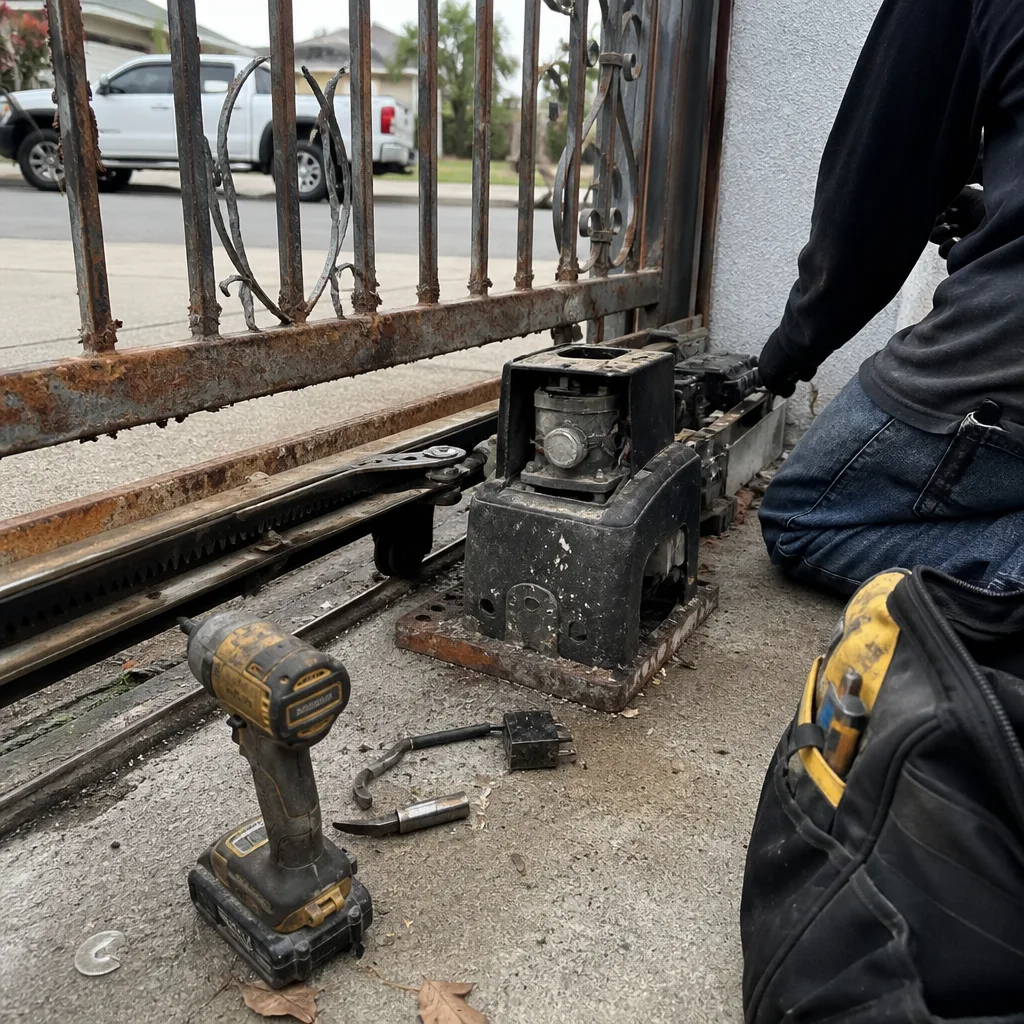 Before
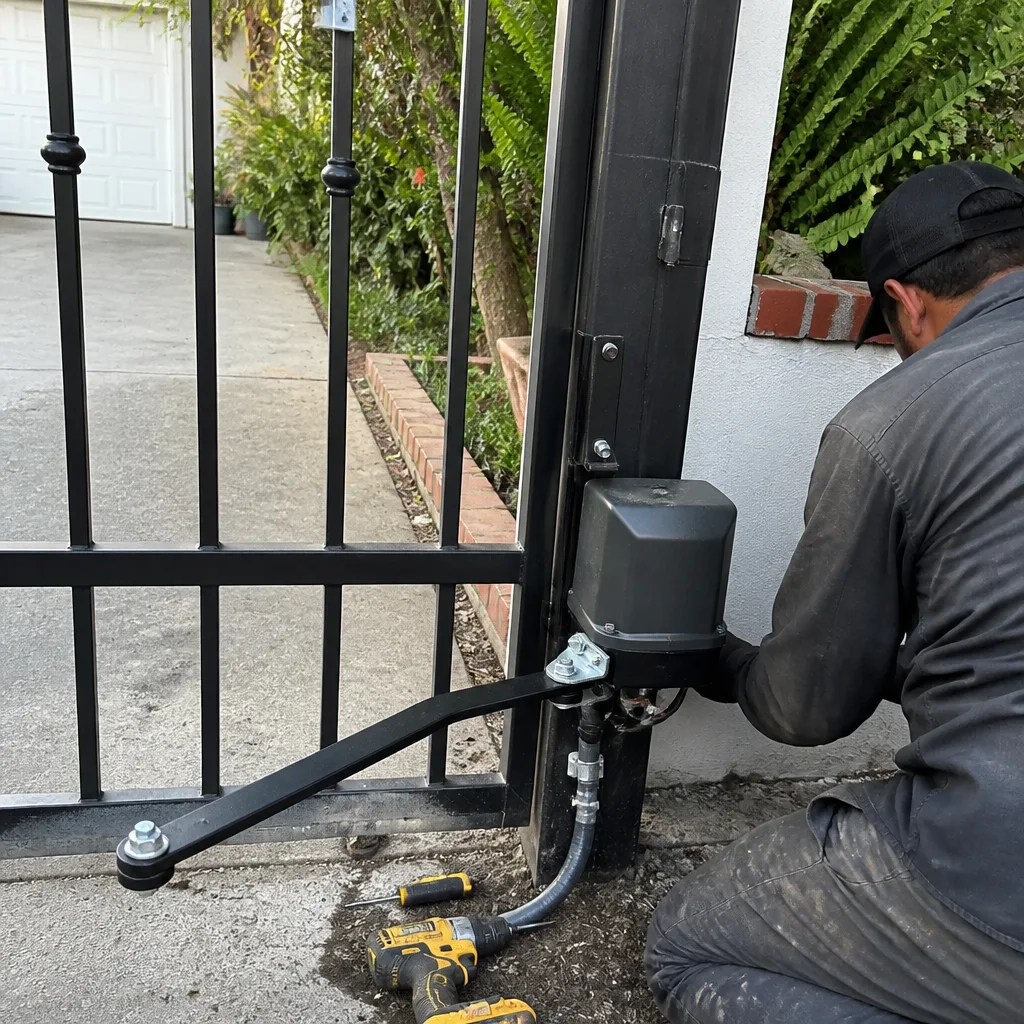 After
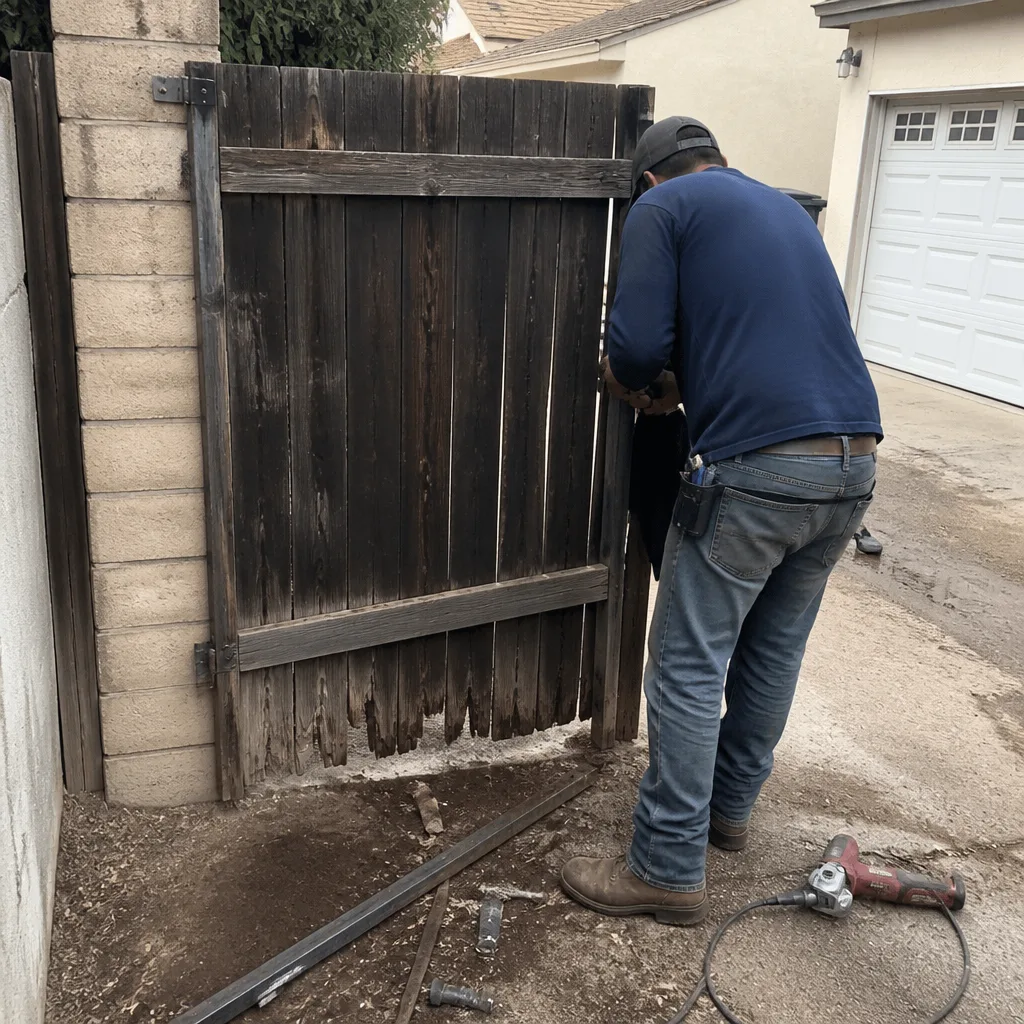 Before
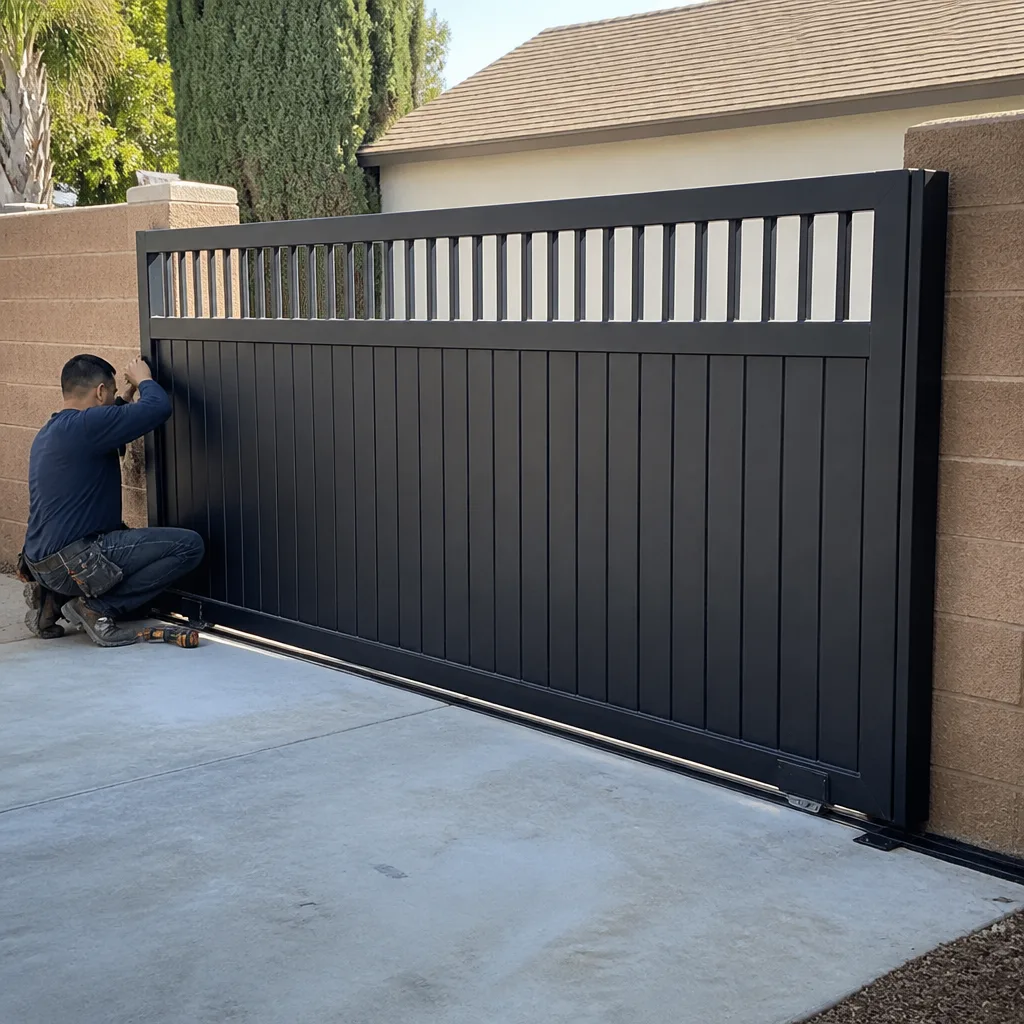 After
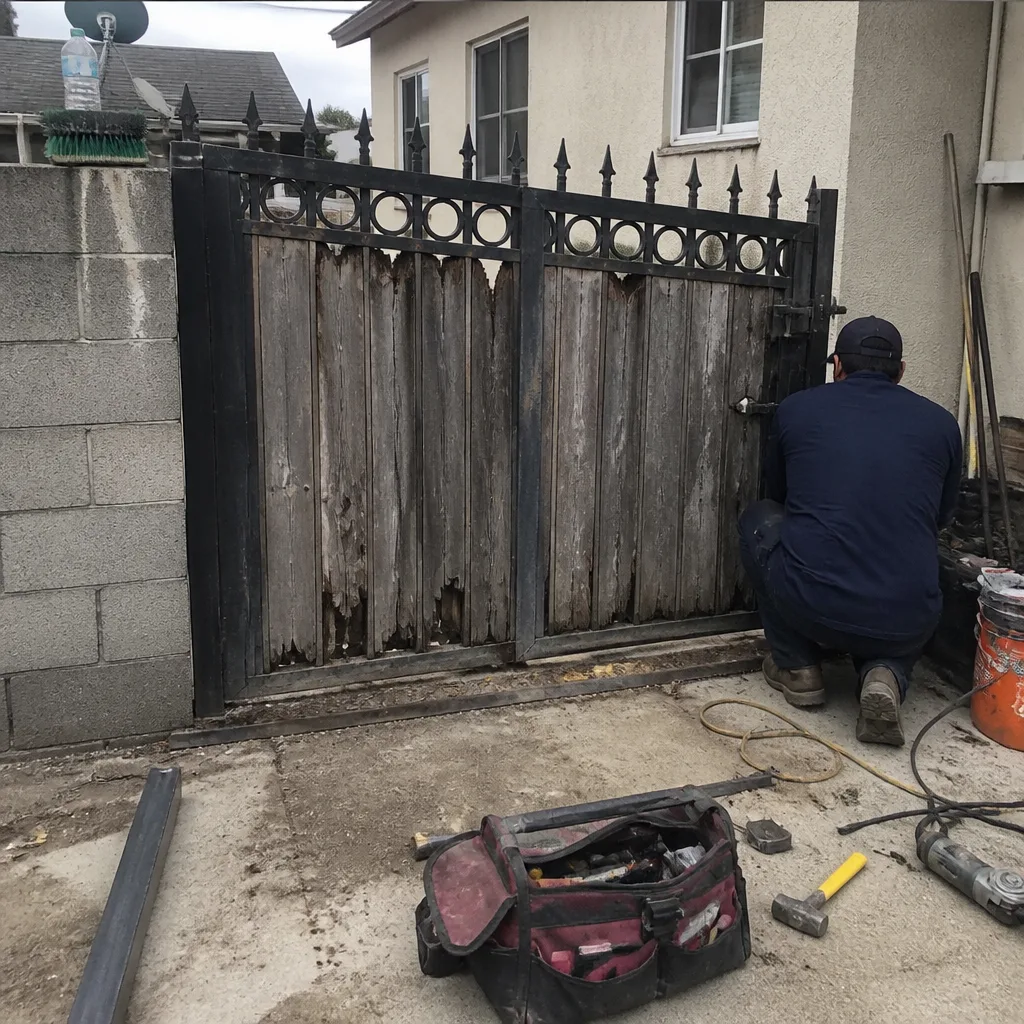 Before
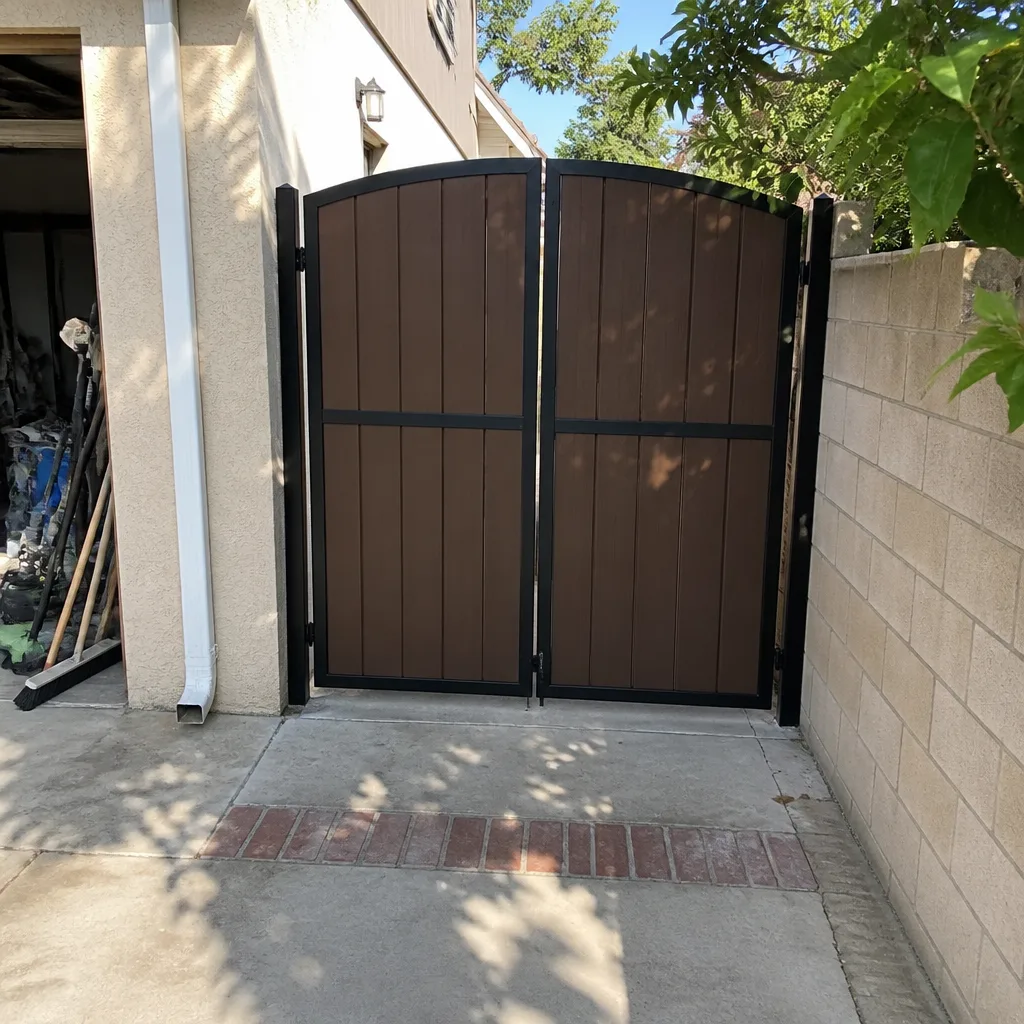 After