
Last updated October 30, 2026
 Wrought iron
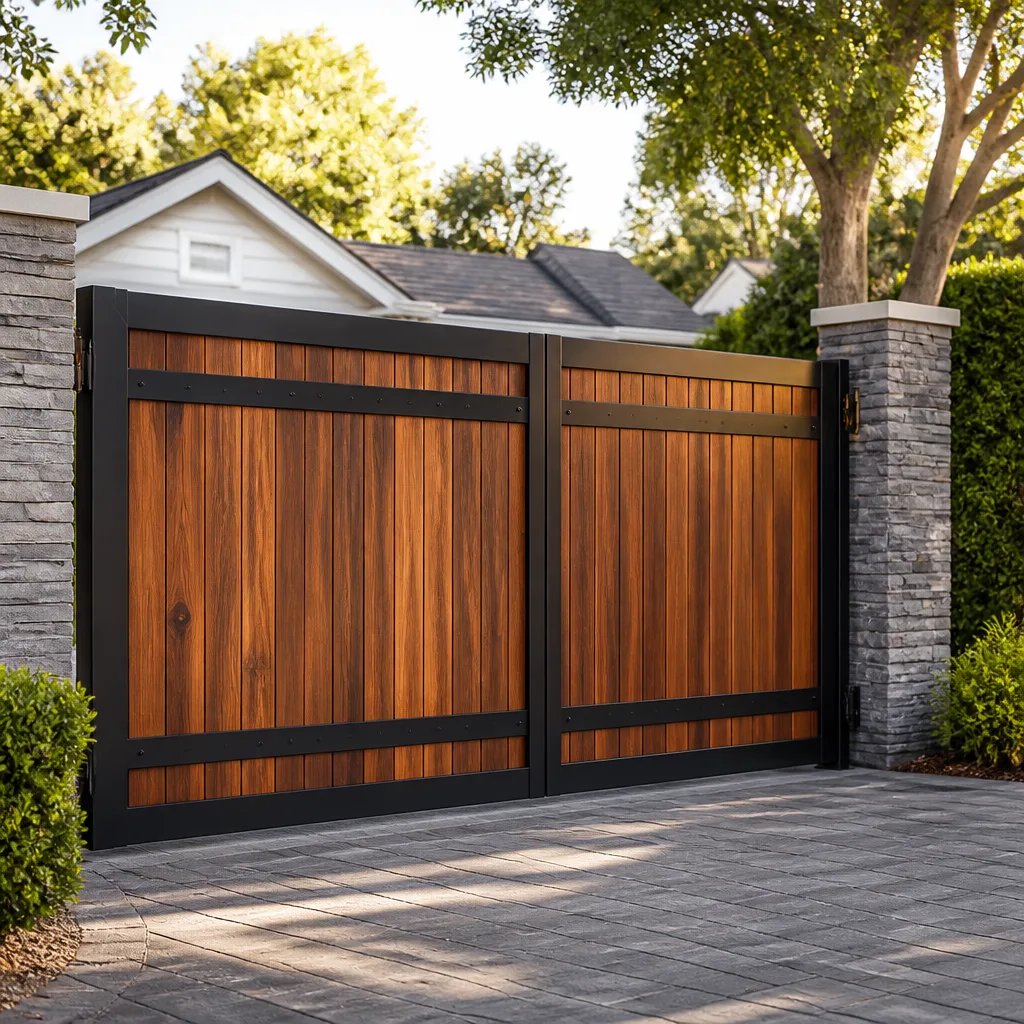 Wood & steel frame
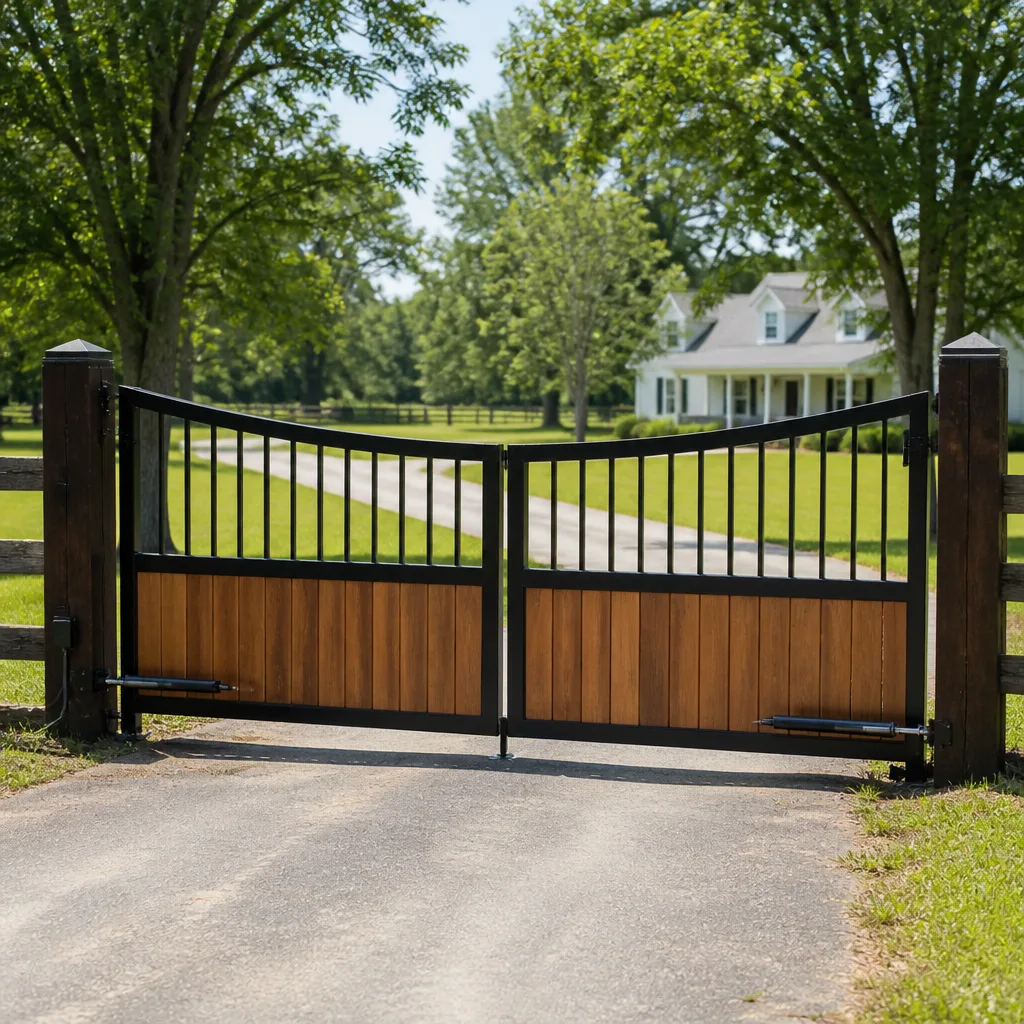 Farm & ranch
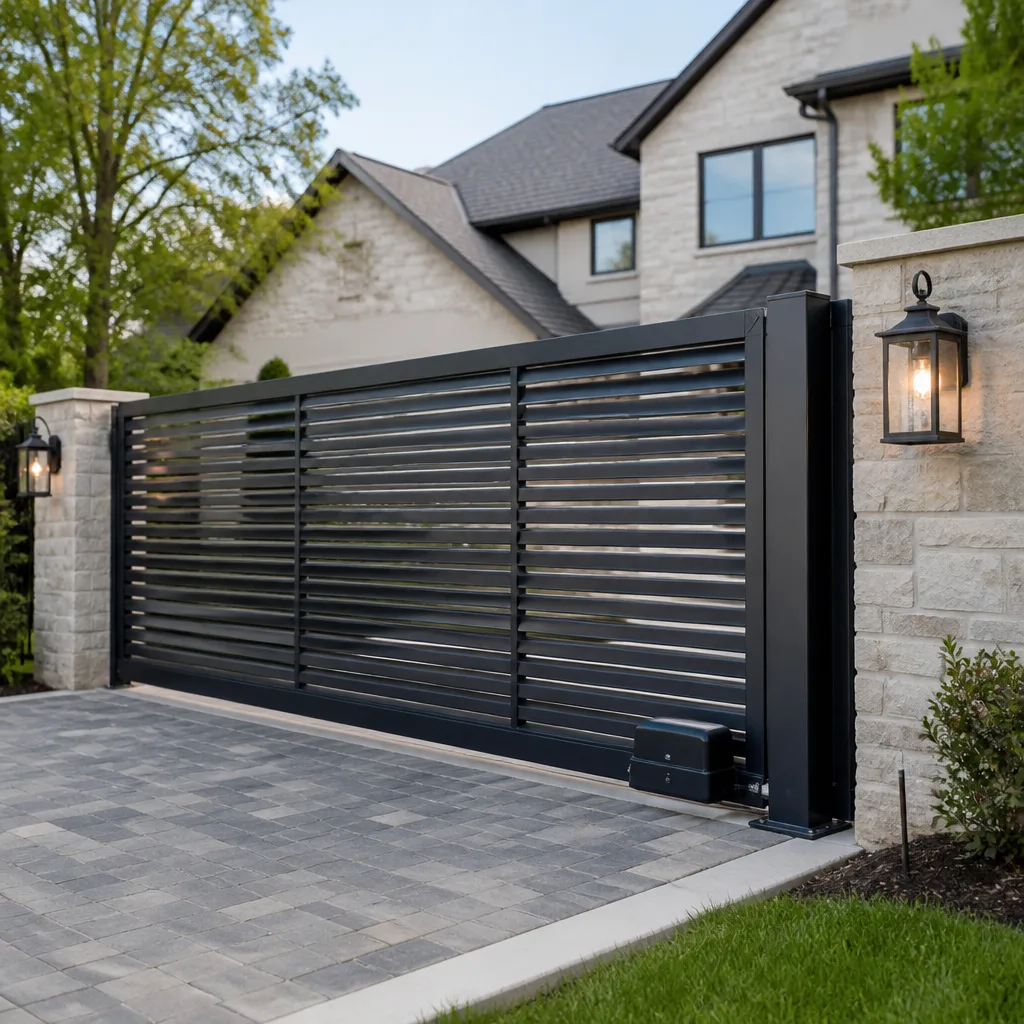 Sliding driveway gates
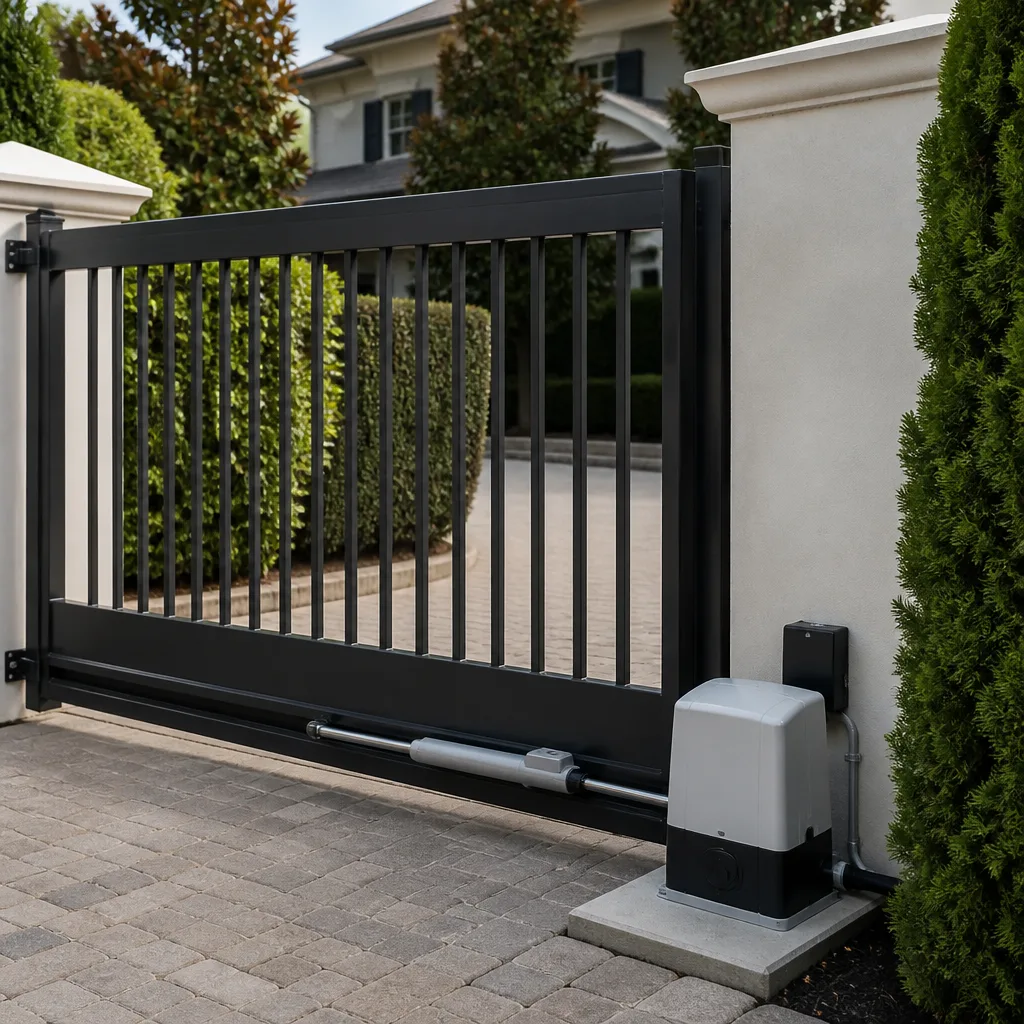 LiftMaster operators
Free on-site gate assessment - hinges, posts, and your LiftMaster or Nice gate operator checked before anything is quoted
The assessment is free and the quote is the invoice.
Get your free estimateGate Repair Emergency Preparedness Guide for Anaheim Homes
During the 2017 Thomas Fire evacuations, automated gates in private communities created documented bottlenecks because residents didn’t know their manual release procedure – and some operators require tools most people don’t keep accessible. An electric gate that fails in the closed position during a Southern California emergency isn’t just an inconvenience; it’s a documented evacuation risk. Anaheim homeowners with automated driveway gates need a specific action plan before they need it, not after the power’s already out and the gate won’t move. This guide builds that plan by gate type and failure mode, so you’ll know exactly what to do when the moment comes.
Quick Answer
Every Anaheim home with an automated gate needs three things before an emergency: the manual release procedure for your specific operator practiced at least twice a year, a battery backup plan with realistic runtime expectations, and a documented secondary access route that your household and local emergency services both know about. This guide walks you through each of those, organized by the gate brands most common in Anaheim neighborhoods.
Styles & brands we work with
Table of Contents
- Understand Your Gate System Before the Emergency
- Manual Release Procedures by Brand: LiftMaster, FAAC, and Viking
- Battery Backup Runtime: What It Actually Means
- Secondary Access Planning for Single-Gate Properties
- Coordinating with Anaheim Emergency Services
- Post-Power-Outage Restart Procedures That Prevent Operator Damage
- Common Mistakes to Avoid
- When to Call a Professional
- Frequently Asked Questions
Understand Your Gate System Before the Emergency
Most Anaheim homeowners don’t know what kind of gate operator they have until it stops working. That’s a problem, because the emergency procedure for a LiftMaster swing gate is completely different from a Viking slide gate or a FAAC hydraulic operator. In our experience, the single most important preparedness step is taking fifteen minutes this week to identify your operator and locate its manual release mechanism. You don’t need to be a technician to do this. You need to know the brand, the model, and where the release is.
Start by looking at the operator housing. The brand name is almost always printed on the cover or the control board inside. Write down what you find. Keep that information taped inside your garage or on the inside of the gate control box, because when the power is out and you’re trying to explain your gate to a dispatcher or a technician, you won’t want to be guessing. Homeowners in Anaheim neighborhoods like Anaheim Hills and the Colony have gate systems ranging from simple Mighty Mule residential openers to commercial-grade DoorKing and Linear units, and the procedures vary significantly between them. Our gate repair services in Anaheim routinely include showing homeowners exactly where their manual release is located and how to operate it, because it’s the thing most people never think to ask about until the gate won’t open.
Once you’ve identified your operator, check whether it has a battery backup system installed. Many electric gates in Anaheim have the wiring for battery backup but never had the batteries connected. That’s a discovery you want to make before an emergency, not during one. A gate with dead or missing backup batteries is effectively a manual gate the moment grid power drops, and the manual release won’t help you if you don’t know where it is.
Start here:
- Identify your gate operator brand and model. Write it down. Keep it accessible.
- Locate the manual release mechanism. It’s usually a handle, lever, or pull chain on or near the operator.
- Check for a battery backup. Open the operator housing and confirm whether batteries are present and connected.
- Test the gate once in manual mode. You want to know how heavy it is and whether it moves freely before you actually need it.
- Photograph the setup. A picture of your operator and control board helps a technician diagnose problems faster.
We work on LiftMaster, FAAC, and Viking operators – three brands with three very different manual release designs. The next section breaks down each one. If your gate uses a Ghost Controls, Linear, or DoorKing unit, the general principles still apply, but the specific release location will differ. The key point is to know your system before you’re standing in front of it in the dark.
Manual Release Procedures by Brand: LiftMaster, FAAC, and Viking
Every automated gate operator has a manual release – a mechanical way to disengage the motor so you can push or pull the gate by hand. But each manufacturer designs this differently, and some require tools. That last part is what catches Anaheim homeowners off guard: a manual release that requires a wrench or a specific key isn’t something you can operate with your bare hands in an emergency. Here’s what you need to know for the three brands we see most often in the area.
LiftMaster Manual Release
LiftMaster residential and light commercial swing gate operators typically use a simple pull chain or lever release located on the side of the operator housing. The chain is usually red or yellow and hangs within reach. In most LiftMaster models, pulling the release disengages the drive gear from the swing arm, allowing you to push the gate manually. The release is designed to be operated by hand without tools, which is the good news. The bad news is that LiftMaster operators vary by model line – an LA400 release looks different from a CSW200U release – so you need to locate it on your specific unit. Look for a small metal handle or a chain near where the swing arm connects to the operator. Our gate installations in Anaheim always include a walkthrough of this exact mechanism, because knowing where it is on day one means you’ll remember it on the day you actually need it.
FAAC Manual Release
FAAC operators are common on residential and commercial properties across Anaheim, and their manual release is one of the more tool-dependent designs in the industry. Most FAAC hydraulic and electromechanical swing gate operators use a key-based release system – a small metal key or hex key that inserts into a release port on the operator housing. Without that key, you cannot manually release the gate. This is exactly the scenario that created problems during the Thomas Fire evacuations: residents with FAAC operators who hadn’t kept the release key accessible found themselves trapped behind their own gates. If you have a FAAC operator, find the release key today. Store it in a marked location near the gate, not in a drawer inside the house. Some FAAC models use a lever instead of a key, but you need to verify which one you have before assuming the release is tool-free.
Viking Manual Release
Viking gate operators are widely used in Anaheim commercial and multi-family settings, and their manual release design reflects that heavier-duty application. Most Viking slide gate operators use a mechanical release bar or lever located on the drive unit, but Viking also produces swing gate operators with a pull-chain style release similar to LiftMaster’s approach. The critical distinction with Viking slide gates is weight: a commercial slide gate can weigh several hundred pounds, and releasing it manually does not mean it will slide easily by hand. Some Viking operators have a crank mechanism that lets you move the gate in manual mode without fighting the full weight, but that crank is often stored separately. If your Anaheim property has a Viking slide gate, locate both the release mechanism and the crank handle, and keep them together.
Action steps:
- Identify your brand: LiftMaster, FAAC, Viking, or another manufacturer.
- Locate the manual release mechanism on your specific model.
- If it requires a tool or key, store that key or tool in a weatherproof container within five feet of the gate.
- Practice releasing the gate once. Push or pull it through its full travel path.
- Re-engage the motor and confirm the gate operates normally in automatic mode.
- Label the release location with reflective tape or a small sign so anyone in the household can find it in the dark.
The manual release is the single most important thing to know about your gate. It’s also the thing most gate owners never practice until they’re in an emergency. Ten minutes of practice today buys you a calm exit when it matters. If you’re not sure where the release is on your operator, we can identify it during our Gate Repair services on a routine service call. Your gate is the only thing we fix, and this is exactly the kind of preparation work we do every week across Anaheim.
Battery Backup Runtime: What It Actually Means
Battery backup on an electric gate is not an unlimited power source. It’s a limited buffer that keeps the gate operating for a bounded number of cycles after grid power fails. Anaheim homeowners who assume their battery backup will carry them through a multi-day outage are setting themselves up for a locked gate on day two. Here’s what battery backup actually means in operational terms, based on the operator types we service throughout Anaheim.
Most residential swing gate operators with properly sized battery backup will run somewhere between 20 and 60 complete open-close cycles before the batteries are depleted. That’s under normal traffic load: a couple of cars coming and going per day. A busy household with four vehicles, or a commercial property with delivery traffic, will drain backup batteries much faster. The runtime also depends on gate weight and travel distance. A heavy wrought-iron swing gate on a long arm drains more current per cycle than a lightweight aluminum gate on a short post. In Anaheim, where many homes in neighborhoods like Platinum Triangle and Anaheim Hills feature custom metal gates, weight is often higher than the operator was originally spec’d for, which shortens backup runtime without anyone realizing it until the power’s out.
Realistic battery backup expectations by operator type:
- Residential swing gate (Light LiftMaster, Ghost Controls, Mighty Mule): 20-40 cycles on backup power, or roughly 1-3 days of normal single-family use.
- Heavier residential or light commercial swing gate (FAAC, Viking): 15-30 cycles, depending on gate weight and battery condition.
- Commercial slide gate (Linear, DoorKing, Viking): 10-25 cycles per battery bank, less if the gate sees frequent traffic.
- Systems with solar-charged batteries: Runtime extends during daylight hours, but Anaheim’s overcast winter days and marine layer mornings reduce charging even when the sun is technically up.
Battery health is the quiet variable here. Gate batteries in Anaheim sit in metal housings exposed to full sun and high ambient heat, and heat is what kills lead-acid and AGM batteries. A battery that tested fine two years ago may hold half its capacity today. If you don’t know the age or condition of your backup batteries, assume the worst and plan manually. For homes that depend on gate access, replacing backup batteries every 2-3 years is cheap insurance compared to a dead gate during a power outage or fire evacuation warning. Our electric gate repair work across Anaheim regularly involves swapping out backup batteries that homeowners didn’t know were failing, because the operator gives no warning until the power’s already out and the gate won’t cycle.
Here’s the practical rule: if your gate has battery backup, treat it as a bridging solution to get you through a short outage or to move the gate manually until power returns. Do not treat it as a source of unlimited operation. Know how many cycles it should handle, know when the batteries were last replaced, and plan your evacuation route accordingly.
Secondary Access Planning for Single-Gate Properties
Many Anaheim properties have exactly one automated gate controlling access to the property. When that gate fails in the closed position, there is no secondary entry point. That’s a problem for emergency services, for household members coming and going, and for evacuation scenarios where seconds matter. A secondary access plan isn’t just a good idea; it’s a practical necessity for any single-gate property.
Start by answering one question: if your automated gate were stuck closed right now, how would a fire engine or ambulance get to your front door? If the answer is “they couldn’t,” you have a single point of failure that needs a plan. For some Anaheim properties, the solution is a pedestrian gate adjacent to the vehicle gate – a simple manually operated gate that remains functional even when the automated gate is down. If you have a pedestrian gate, make sure everyone in the household knows where its key or latch is, and make sure it’s not blocked by landscaping or storage. In our experience, pedestrian gates get ignored because they’re used less often, and then they’re overgrown or locked with a key no one can find.
For properties with no pedestrian gate, the secondary access plan has to be more deliberate. Some homeowners install a manual bypass on the automated gate itself – a separate release accessible from outside the property line. This is not a DIY modification. It’s a retrofit that a gate specialist should handle, because drilling into an operator housing or modifying a gate leaf incorrectly can compromise the gate’s structural integrity and the operator’s function. We’ve installed external manual release points on gates across Anaheim for exactly this reason: so a homeowner or an emergency responder can release the gate from outside without needing a key or a special tool.
Your secondary access plan should be documented. Write down where the external release is, how to operate it, and who in the household has practiced using it. Share that information with everyone who lives at the property and anyone who might need to access it in an emergency. If you have a property manager or a regular house sitter, they need this plan too. And if your Anaheim property is part of an HOA or a gated community, the community’s master gate plan should include provisions for individual home access when neighborhood gates are down. Homeowners in communities across Anaheim have learned this the hard way during power outages: the front gate works fine, but the individual driveway gate is dead, and no one planned for that.
Coordinating with Anaheim Emergency Services
Anaheim and Orange County emergency responders deal with locked gates on a regular basis. What they won’t have is a key to your gate or a diagram of your operator’s manual release. That’s why the most useful thing you can do is coordinate in advance: let emergency services know how to access your property when the gate is down. This is a real coordination process, not a hypothetical one, and it’s part of what makes a prepared Anaheim home genuinely prepared.
The Orange County Fire Authority (OCFA) serves Anaheim, and OCFA coordinates with commercial and multi-family properties on access plans. For residential properties, the most common coordination tool is a Knox Box. A Knox Box is a secure, tamper-resistant box mounted near the gate or entry point that holds keys, access codes, or other entry devices. Firefighters carry a master key that opens Knox Boxes, giving them access without breaking down the gate or calling a locksmith. For a single-family home in Anaheim with a locked front gate, a residential Knox Box is a practical investment. It typically holds a gate key, a door key, and a card with the operator’s manual release instructions. OCFA can access it without contacting you.
Beyond physical access, coordinate the communication side. If your gate has an emergency access code – a keypad code that opens the gate without a remote – provide that code to OCFA in advance, or note it inside the Knox Box. Emergency codes should be simple enough for a responder to enter under stress and unique enough that they aren’t the same as your regular access code. Many Anaheim homeowners don’t realize their gate keypad has the capability to program a separate emergency code. It’s a simple setup on most Linear, DoorKing, and Viking keypads, but it requires someone to actually program it. If your keypad predates 2010, it may not support multiple codes, and a replacement is worth considering.
Documentation matters here. Create a one-page gate access sheet that includes: the operator brand and model, the location of the manual release, whether a tool or key is required, the emergency keypad code (if programmed), battery backup status, and your contact information. Keep one copy inside the Knox Box, one posted near the gate in a weatherproof sleeve, and one stored with your important household documents. This is the exact kind of information that makes the difference between a two-minute access and a twenty-minute forced entry. If you don’t know how to program a separate access code on your existing keypad, we can walk you through it during a service visit or a repair call anywhere in Anaheim, or you can check our Gate Repair Maintenance Checklist for Anaheim Homeowners for additional preparation steps.
Post-Power-Outage Restart Procedures That Prevent Operator Damage
Here’s the scenario we’ve seen repeatedly across Anaheim after power outages: the power goes out, the homeowner manually releases the gate, pushes it open, and leaves it that way. Hours later, grid power returns. The operator, which was left in manual release mode, reconnects to the drive mechanism while the gate is in the wrong position. The result is a stripped gear, a bent swing arm, or a blown control board. The restart procedure matters, and it’s simpler than most people think.
The correct post-outage restart sequence is:
- Confirm the gate is fully closed or fully open – whichever position the operator expects for its normal cycle start.
- Re-engage the manual release mechanism so the drive gear reconnects to the gate.
- If your operator has a reset procedure or a limit re-learn function, run it before cycling the gate automatically. Most LiftMaster, FAAC, and Viking operators re-learn their travel limits with a simple button sequence or a series of remote commands.
- Cycle the gate once in automatic mode and watch the full travel path. Listen for grinding, clicking, or hesitation.
- If the gate hesitates or stops mid-travel, release it manually again and call a gate specialist before forcing it.
Forcing an operator through a cycle it doesn’t want to run is how small problems become full operator replacements. The control boards on modern gate operators are sensitive to voltage spikes and out-of-position starts, and a gate that starts in the wrong position can push past its limit switch and strip the drive gear against the motor. We’ve repaired that exact failure on FAAC and Viking units throughout Anaheim, and it’s almost always a post-outage restart issue, not a random mechanical failure.
If grid power returns while your gate is in manual mode, the operator may beep or flash an error code. Most operators use a specific flash sequence on the control board LED to indicate error state. You don’t need a service manual to interpret it – but you do need to take it seriously. A flashing error means the operator detected a fault and locked out. Cycling power to the operator sometimes clears it; forcing the gate often makes it worse. If you’re not certain what the error means, leave the gate in manual mode and call us. The repair is almost always cheaper before someone tries to force the operator back into service. Our First Light Gate Repair home services in Anaheim cover these exact restart scenarios, and we’d rather walk you through a restart on the phone than quote you for a new board afterward.
When Preparation Reveals You Need a New Gate
Sometimes the emergency preparedness audit reveals a truth you didn’t want to find: the gate system you have is too old, too undersized, or too unreliable to be worth preparing around. A gate that’s already failing in good weather isn’t going to behave better in an emergency. Anaheim homeowners with operators more than 15 years old, or gates that have been patched repeatedly, often reach a point where the preparedness plan is a new gate installation rather than a series of workarounds on a dying system. See Gate Repair Permits, Codes & Inspections in CA: What You Need to Know before planning major changes.
What does that look like in practice? If your operator’s manual release is rusted or seized, practicing it reveals that it doesn’t actually work. If your battery backup was disconnected years ago and the wiring is corroded, adding new batteries isn’t a simple drop-in. If your gate is visibly sagging or the swing arm is bent, the operator is fighting a losing battle and a failure is only a matter of time. These are situations where the honest answer is replacement, not another patch. Our gate installation services in Anaheim cover everything from a straightforward operator swap to a full custom gate and access system, and the conversation starts with what actually failed and why – not with a pitch for the most expensive option.
The value of a preparedness audit is that it tells you the truth about your gate system before an emergency does. Some gates need a new release mechanism. Some need new batteries. And some need to be replaced entirely. Knowing which one applies to your property is the difference between a plan that works and a plan that fails the first time you test it.
Common Mistakes to Avoid
- Never practicing the manual release. Knowing where the release is and operating it under stress are two different things. Practice it twice a year, the way you’d test smoke detectors. A release you’ve never pulled is a release you don’t actually have.
- Storing the release key inside the house. If your FAAC or another key-release operator requires a tool, that tool belongs at the gate, not in a kitchen drawer. When the power’s out and you’re evacuating, you won’t be running back inside for a hex key.
- Assuming battery backup means unlimited power. Battery backup on a gate operator covers a finite number of cycles. Count them. Know how many you have. Don’t plan for a three-day outage on a system that lasts for 30 open-and-close cycles.
- Not testing the gate’s full travel path manually. A gate that moves fine under motor power can be nearly impossible to push by hand if the hinge is seizing or the track is bent. Discover that before the emergency, not during it.
- Ignoring error codes after power restoration. A flashing LED on the control board is the operator telling you something’s wrong. Ignoring it and forcing the gate through a cycle is how minor faults become major repairs.
- Assuming emergency services can access your property without planning. Firefighters in Anaheim cannot open a locked gate without either a key, a Knox Box, or breaking the gate. Planning access in advance is the only way to avoid damage and delay.
- Treating a gate failure as “not a real emergency.” If your gate fails in the closed position during an evacuation warning, it’s already too late to start figuring out the manual release. Preparation is the only thing that works.
When to Call a Professional
Some gate issues are worth handling yourself: practicing the manual release, checking battery connections, documenting your operator model. Others need a specialist. Call a gate professional if your manual release is seized or won’t operate, if your operator shows an error code you can’t clear without forcing it, if the gate stops mid-travel or moves unevenly, if the operator is more than 15 years old and hasn’t been serviced recently, or if you’re preparing your gate for emergency access and need an external release point installed. We handle every one of these scenarios regularly across Anaheim, working on LiftMaster, FAAC, BFT, Linear, Viking, Ghost Controls, DoorKing, Elite, and Mighty Mule systems. First Light Gate Repair offers free estimates in Anaheim – call (833) 734-5599 to schedule a preparedness audit or service visit.
Frequently Asked Questions
Locate the manual release mechanism on your operator – a pull chain, lever, or key release depending on the brand – and disengage it to push the gate by hand. LiftMaster units typically use a pull chain, FAAC operators often require a key, and Viking slide gates need a release bar or crank. Practice the procedure before you need it by taking your gate out of automatic mode once and pushing it through its full travel path. If you can’t find the release or it won’t operate, call us at (833) 734-5599 and we’ll help you identify it.
Most residential gate batteries will run 20 to 60 open-close cycles depending on the operator, the gate weight, and the battery condition. That’s typically 1 to 3 days of normal single-family use, but heavy gates and older batteries shorten that window significantly. Know your battery age and replace backup batteries every 2-3 years. For an exact assessment of your system’s backup capacity, call us for a preparedness check.
The most useful things to provide are your operator brand and model, the manual release location and any tools required, an emergency keypad code if programmed, and a Knox Box with keys and instructions mounted near the gate. You can coordinate directly with the Orange County Fire Authority for Knox Box installation and residential access planning.
Yes, an external manual release point can be retrofitted to many automated gate systems, but it’s not a DIY modification. The work involves drilling or modifying the operator housing or gate leaf, and doing it incorrectly compromises the gate’s structural integrity and the operator’s function. We install external release points on gates throughout Anaheim as part of preparedness upgrades.
If your operator is more than 15 years old, the manual release has seized, the gate is sagging, or the system has been patched repeatedly, replacement is often a better investment than another repair. A preparedness audit will tell you whether you’re working around a few fixable issues or propping up a system that’s already failing. We’ll give you an honest answer either way – call (833) 734-5599 for a free estimate.
Practice the manual release at least twice a year, the way you’d test smoke detectors or change batteries in a carbon monoxide detector. Do it once in daylight and once in the dark, because finding a release by flashlight is different from finding it in full sun. Mark the release with reflective tape, keep any required tools at the gate, and document the procedure for everyone in the household.
The Bottom Line
An automated gate that fails in the closed position during a Southern California emergency is a real, documented evacuation risk – and it’s a risk that planning eliminates. Know your operator type, locate and practice the manual release, understand your battery backup’s real runtime, plan a secondary access route, coordinate with Anaheim emergency services, and restart your gate properly after power outages. Fifteen minutes of preparation today is the difference between a calm exit and a trapped household when the moment comes. If you’re not sure where to start, explore our more guides & resources or call us at (833) 734-5599 – we’ll walk you through your gate’s emergency procedures and make sure they actually work.
Written by the team at First Light Gate Repair, serving Anaheim since 2014.
See the difference
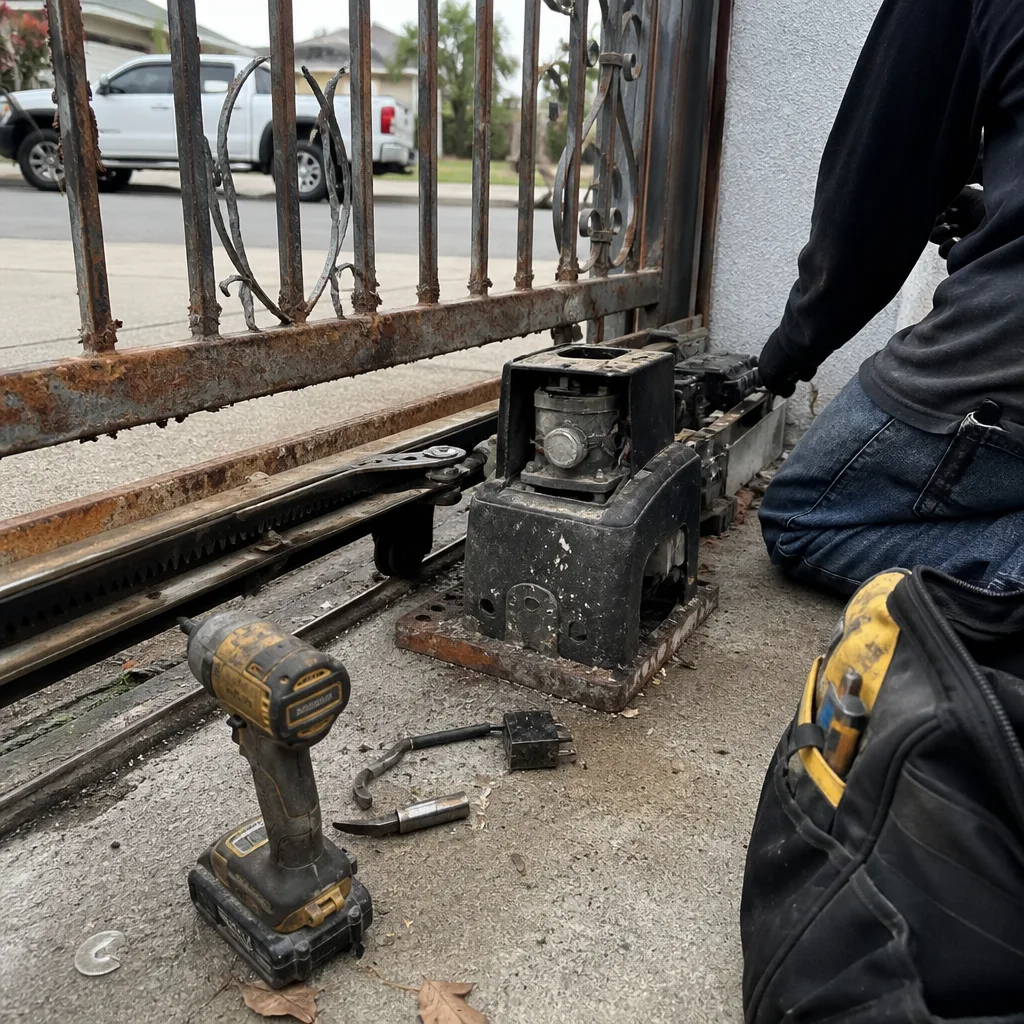 Before
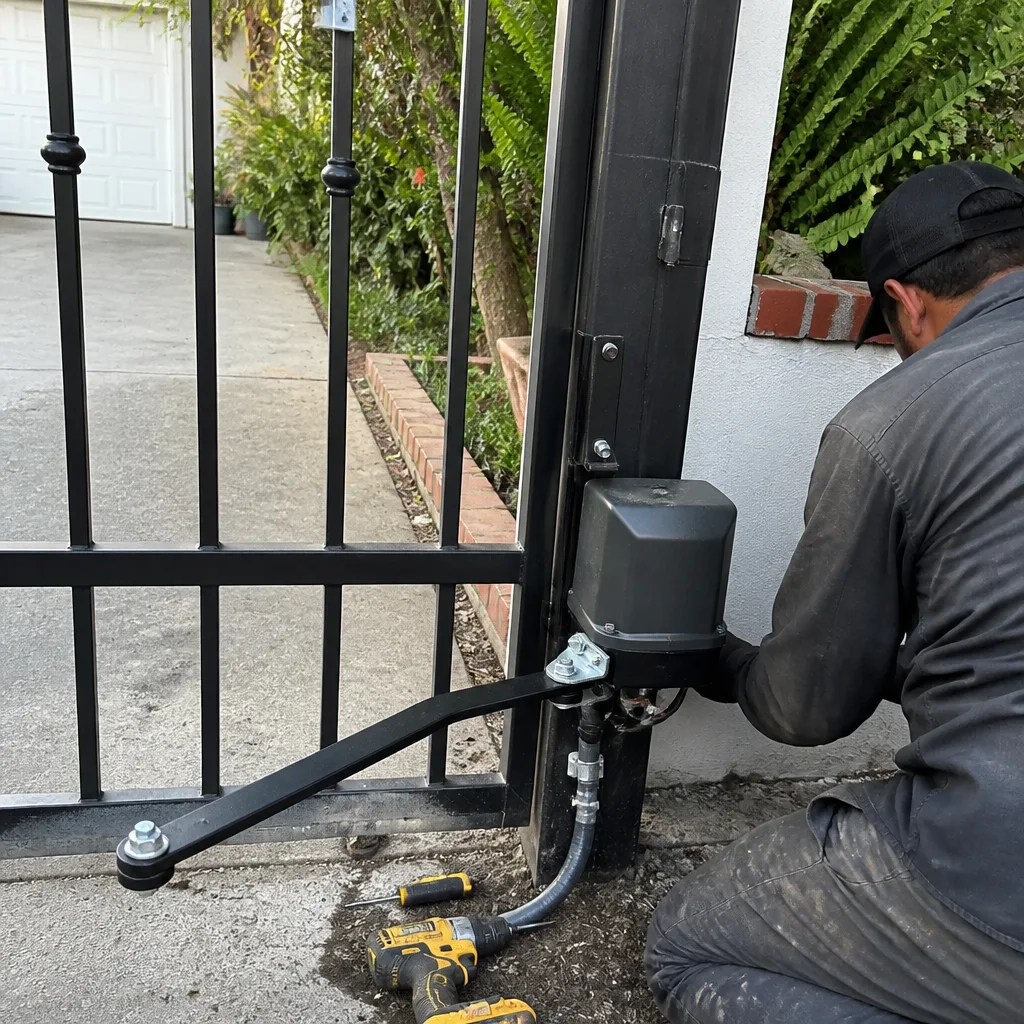 After
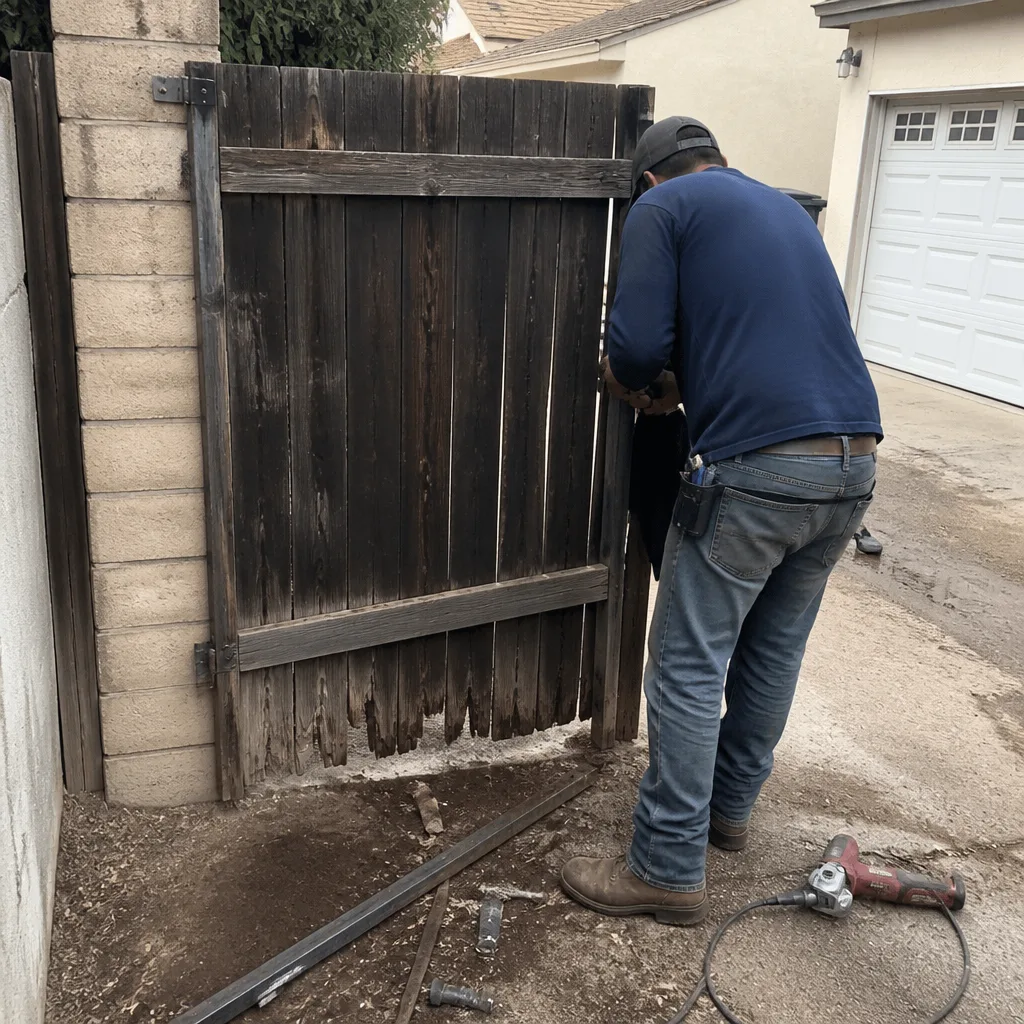 Before
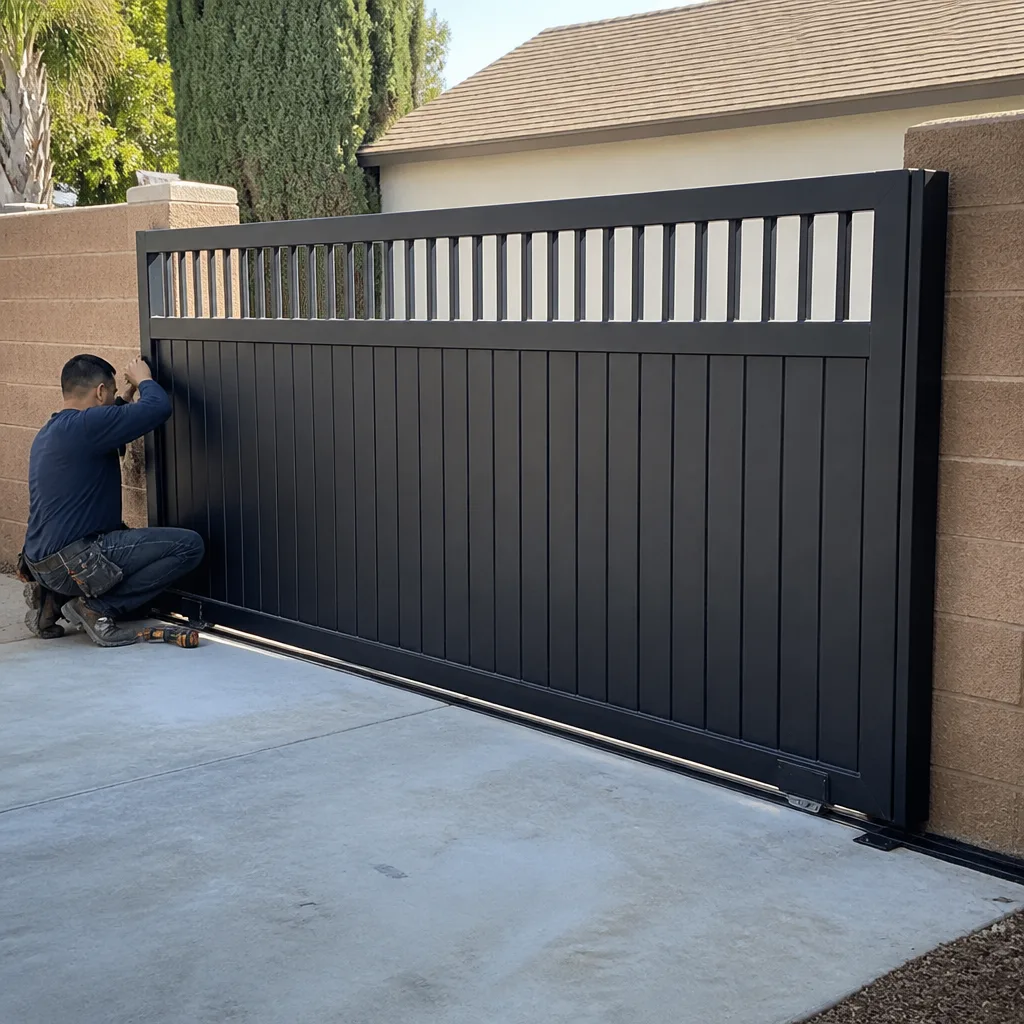 After
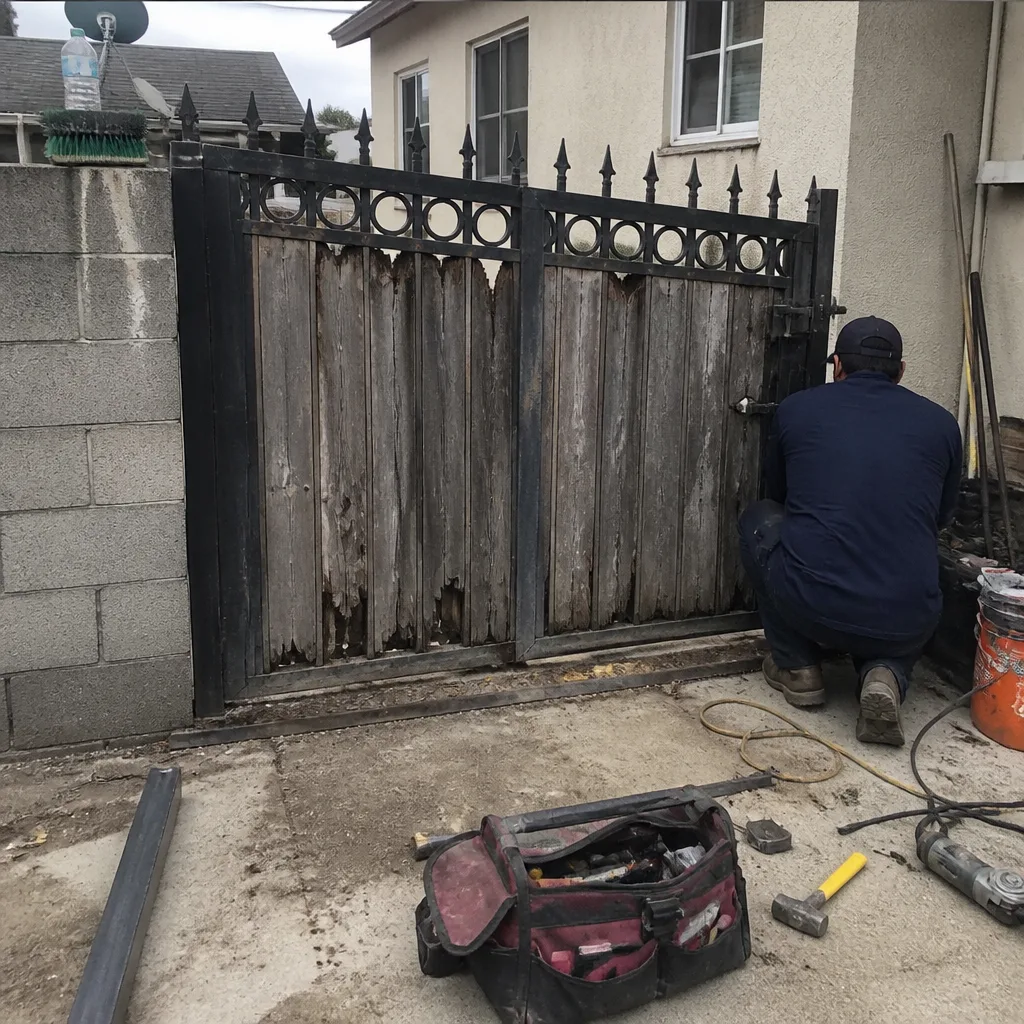 Before
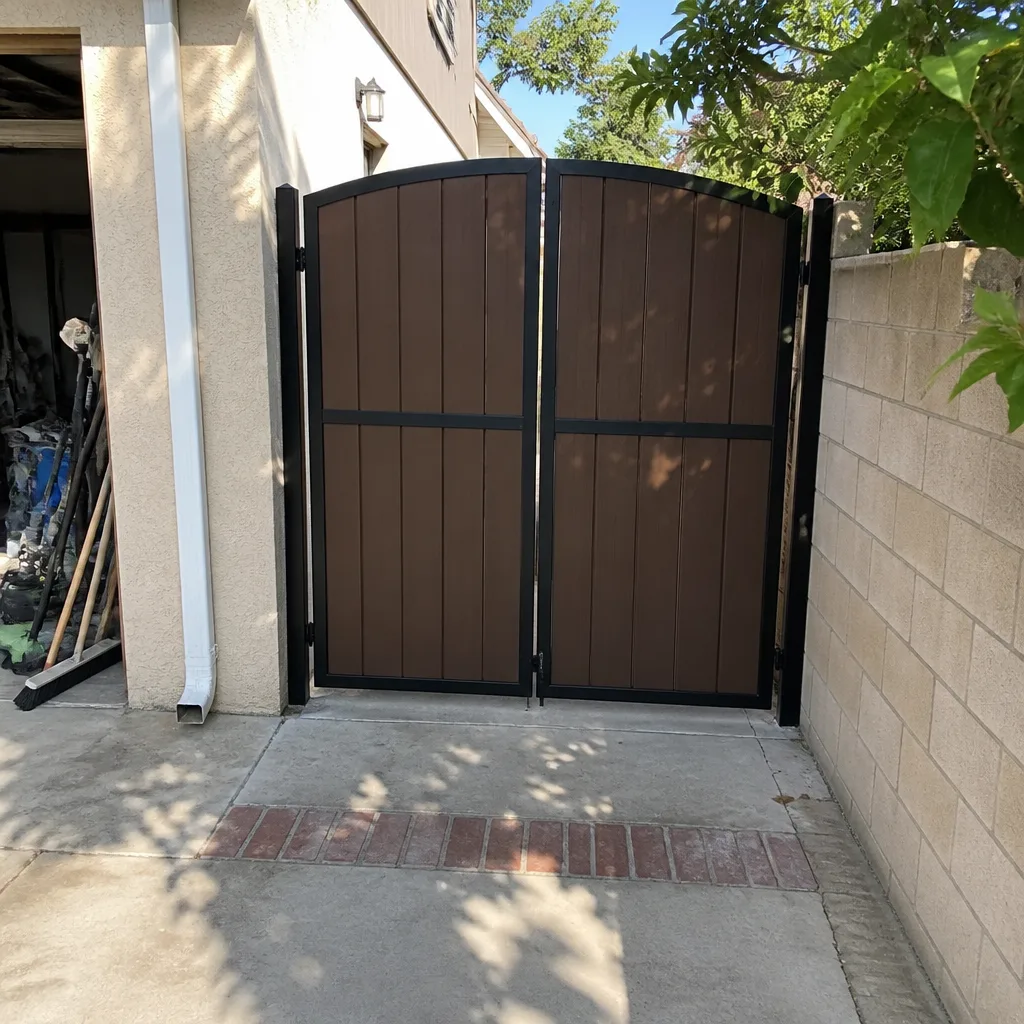 After