
Last updated October 30, 2026
 Wrought iron
 Wood & steel frame
 Farm & ranch
 Sliding driveway gates
 LiftMaster operators
Free on-site gate assessment - hinges, posts, and your LiftMaster or Nice gate operator checked before anything is quoted
The assessment is free and the quote is the invoice.
Get your free estimateGate Repair Permits, Codes & Inspections in CA: What You Need to Know
A gate without a compliant entrapment protection device isn’t just a code violation in California – it’s a documented liability if someone is injured, and your homeowner’s insurance may not cover it. That single sentence changes how you should think about every our Gate Repair services quote you receive. The difference between a $400 like-for-like part swap and a $4,000 code-compliant upgrade often comes down to two documents most Anaheim homeowners have never read: UL 325 and California’s Title 24. This guide walks through exactly when a permit is required, what the inspectors look for, and how to avoid buying a repair that creates more liability than it fixes.
Styles & brands we work with
Quick Answer
In California, most like-for-like gate repairs (replacing a hinge, a wheel, a circuit board, a motor with an identical model) do not require a permit, but any modification that changes the gate’s electrical footprint, entrapment protection system, or structural load path does. Automated gates fall under UL 325, which mandates specific safety devices depending on whether the gate slides or swings. Commercial and multifamily automated gates in Anaheim also trigger Title 24 accessibility reviews. When in doubt, the City of Anaheim Building Division answers permit questions over the phone, and a gate specialist can tell you in ten minutes whether your project is exempt (see our Gate Repair Warning Signs: A Anaheim Homeowner’s Reference Guide for related red flags).
Table of Contents
- Repair vs. Modification: Where the Permit Line Actually Sits in California
- UL 325 Entrapment Protection: What the Zones Demand by Gate Type
- How Title 24 Intersects With Automated Gates in Anaheim
- City of Anaheim Requirements vs. Orange County Unincorporated Areas
- The Inspection Process: Who Signs Off and What They Check
- What Permitting and Compliance Actually Cost in Anaheim
- Resale Disclosures and Insurance Implications of Non-Compliant Gates
- Common Mistakes to Avoid
- When to Call a Professional
- Frequently Asked Questions
- The Bottom Line
Repair vs. Modification: Where the Permit Line Actually Sits in California
California building codes draw a clean line between maintenance and construction, and that line determines whether your gate project needs a permit. Replacing a worn hinge, a cracked wheel, or a failed circuit board with an equivalent part is maintenance. The California Residential Code (CRC) and California Building Code (CBC) both treat like-for-like replacement of components as exempt from permit requirements, and this applies uniformly across the state, including in Anaheim.
Here’s where the line gets crossed:
- Installing a new gate where none existed before – always permitted, always inspected.
- Replacing a manual gate with an automated one – a permit-triggering modification because you’re adding a motor, control board, and electrical circuit.
- Converting from one automation type to another (articulated arm to underground operator, for example) – a permit is required because entrapment protection layouts change.
- Widening a gate opening or moving posts – structural work, always permitted.
- Adding or repositioning safety devices (photo eyes, edge sensors, loop detectors) – generally considered a modification, not a repair.
In our experience with Anaheim properties, homeowners most often trip over the third item. A Ghost Controls swing arm fails, the owner decides to upgrade to a Linear underground operator instead of the same model, and suddenly the job went from a $600 repair to a $4,500 permitted installation. The motor replacement itself wouldn’t have needed a permit. The operator type change does.
UL 325 Entrapment Protection: What the Zones Demand by Gate Type
UL 325 is the national standard governing automated gate safety, and California enforces it through both the CBC and, for existing installations, through liability exposure if something goes wrong. The standard divides entrapment protection into two categories: inherent (built into the operator, like obstruction-sensing motor reversal) and external (devices like photo eyes and edge sensors mounted on the gate).
What’s required depends on whether your gate slides or swings:
| Gate Type | Required External Entrapment Protection | Typical Anaheim Installation |
|---|---|---|
| Slide gate | Photo eyes on both the inside and outside of the post side; edge sensors covering the leading edge and trailing edge if reachable | Commercial and larger residential driveways, common in Anaheim Hills and East Anaheim |
| Swing gate (opening toward driveway) | Photo eye or edge sensor at the hinge pinch points; edge sensor on the leading edge where it approaches a fixed object | Most residential driveways throughout Anaheim, especially Colony and West Anaheim neighborhoods |
| Swing gate (opening toward street) | Edge sensor covering the area between the gate and any fixed structure behind it; photo eye across the full swing arc | Less common residentially, sometimes seen on multifamily properties |
The key point most homeowners miss: the standard applies to the entire gate system as installed, not just the parts you touched. If you replace a Viking operator on a swing gate but leave an old, cracked edge sensor in place, the system is no longer UL 325 compliant. You haven’t repaired it – you’ve created a liability. Inspectors in Anaheim check this specific issue because it’s the most common failure point on older properties.
How Title 24 Intersects With Automated Gates in Anaheim
California’s Title 24 energy and building standards are famous for solar mandates and insulation requirements, but they also reach automated gates through accessibility and lighting provisions. For single-family homes in Anaheim, the Title 24 impact is modest: the gate operator must not create a hazard to the public sidewalk, and any new electrical run from the house to the gate must meet current wiring standards, including proper conduit depth and GFCI protection.
For multifamily and commercial properties, Title 24 gets heavier:
- Accessibility standards (essentially CBC Chapter 11B) require that automated gates serving accessible routes meet clearance, force, and speed maximums. A gate that closes too fast or requires too much force to stop can fail an accessibility audit.
- Lighting requirements for gate areas on commercial properties tie into Title 24’s outdoor lighting provisions, including sensor controls and fixture efficiency minimums.
- Emergency access systems must interface with fire department key switch requirements and, on some Anaheim commercial properties, Knox box compliance for first responders.
None of this is optional once a permit is pulled. The County of Orange and the City of Anaheim both review gate applications against Title 24 before issuing an approval, and the inspector verifies the installed system matches the approved plans. If you’re doing gate installation in Anaheim on a multifamily lot, plan for this review to add a week or two to the timeline.
City of Anaheim Requirements vs. Orange County Unincorporated Areas
Anaheim operates its own building division, which means the city’s requirements can differ from what Orange County applies to unincorporated pockets. Most of the differences are administrative, but a few are substantive enough to affect cost and schedule.
City of Anaheim specifics:
- Electrical work on automated gates must be performed by a California licensed electrical contractor (C-10 license) or a C-13 contractor with electrical scope, or a general contractor pulling a combined permit with a licensed electrical sub. Homeowners doing their own electrical is not permitted for gate operators tied to a building’s electrical panel.
- Gate plans for any new or significantly modified automated gate must show entrapment protection device placement. The city’s plan check specifically reviews UL 325 compliance before approval.
- Inspections are scheduled in half-day windows, and the city allows a single re-inspection at no charge if the first inspection fails for minor, documented corrections. A second failure triggers a full re-permit.
Orange County unincorporated areas follow the same CBC baseline but route plan review through OC Development Services. The practical difference is timing: the county’s current plan review cycle for residential gate work runs about two to three weeks longer than Anaheim’s, based on our recent projects in areas like unincorporated Lincoln Avenue corridor and the industrial pockets near the 91. If your gate is in an unincorporated area, plan for a longer clock.
For most homeowners, the question is simpler than it sounds: if you’re inside Anaheim city limits, you deal with Anaheim. If your address is technically in Santa Ana, Orange, or an unincorporated zone but a mile from Anaheim’s downtown, the governing jurisdiction follows your actual address, not the nearest city. Our First Light Gate Repair home page covers service across these overlapping areas, and we always confirm jurisdiction before pulling permits.
The Inspection Process: Who Signs Off and What They Check
When a permit is required, an inspector from the City of Anaheim Building Division (or the County for unincorporated zones) will visit the property to verify the installed gate system matches the approved plans. The inspection is not a theoretical review – it’s hands-on, and the inspector will operate the gate repeatedly.
What the inspector checks on an automated gate:
- Entrapment protection function. Photo eyes must trigger reversal or stop within the required distance. Edge sensors must activate with light pressure. The inspector will physically obstruct the gate to confirm reversal.
- Force settings. The operator’s clutch or obstacle sensor must reverse when the gate encounters resistance within the UL 325 force limits.
- Warning signage. Every automated gate must display the required safety signage with legible wording and correct placement. This is a frequent failure point.
- Electrical compliance. Wiring must be in approved conduit where required, boxes must be weather-sealed, and GFCI protection must be in place where the circuit enters a wet location.
- Structural anchors. Posts, hinges, and operator mounts must be properly set. The inspector checks for slop, play, and signs of movement.
In our experience with electric gate repair in Anaheim, about 40% of first inspections on modified gates pass without corrections. The most common failure is missing or damaged safety signage, followed by incomplete entrapment protection coverage. Neither is expensive to fix, but both delay the job. A gate specialist who knows what the inspector will check can have the system ready before the first visit.
What Permitting and Compliance Actually Cost in Anaheim
Nobody budgets for permits and then discovers they’re pleasantly surprised. Here’s the realistic picture for Anaheim gate work:
- Like-for-like repair, no permit: $150 to $800 depending on the part. A BFT control board replacement runs higher than a Ghost Controls swing arm swap. No city fees apply.
- New automated gate, single-family residence, permit required: City permit fees in Anaheim typically run $300 to $700 depending on the valuation of the work, plus plan check fees of $150 to $400 if plans are required. The gate system itself adds $3,500 to $12,000 depending on brand and operator type.
- Commercial or multifamily automated gate, permit required: Permit and plan check costs often run $1,500 to $4,000 in Anaheim, driven by the additional reviews (structure, electrical, accessibility) and the higher construction valuation.
- Compliance corrections on an existing gate: $400 to $1,800 for adding or replacing photo eyes, edge sensors, signage, and correcting force settings. If the existing operator is old enough that safety features cannot be retrofitted, a full operator replacement runs $2,500 to $6,500.
Every price above is a range based on recent Anaheim projects, not a fixed quote. The one number you can count on from us: the total price is quoted and agreed before any work starts. If you’re comparing gate companies in Anaheim, ask for a written scope that itemizes the permit line separately. For additional help, browse our more guides & resources. If they can’t show you the permit trigger for the work they’re proposing, they may be planning to skip it.
Resale Disclosures and Insurance Implications of Non-Compliant Gates
California’s real estate disclosure requirements are brutal about unpermitted work. The standard Transfer Disclosure Statement asks sellers to disclose any work done without required permits, and gate projects are a common trap. If you installed an automated gate with a permit and then later modified it with unpermitted electrical changes, that modification is a disclosure item. Buyers in Anaheim – especially in the competitive East Anaheim and Anaheim Hills markets – increasingly request documentation showing gate systems are compliant.
The insurance angle is starker. Homeowner’s policies typically exclude coverage for injuries caused by unpermitted modifications if the modification contributed to the injury. If a person is hurt by a gate that lacked required entrapment protection and the gate was altered without a permit, the insurer can deny the liability claim. That leaves the homeowner personally exposed. The cost of a compliance correction starts to look like a bargain when measured against a personal injury settlement.
This applies to repair work too, not just installations. A repair that changes a system’s safety configuration creates the same exposure as an original installation. In our experience, approximately one in five Anaheim gate repairs involves correcting a safety issue the homeowner didn’t know existed. That’s not an upsell – it’s the repair.
Common Mistakes to Avoid
- Treating an operator brand swap as a “repair.” Replacing a Viking operator with a Linear unit changes the system’s electrical and entrapment profile. It’s a modification, not a like-for-like swap, and in Anaheim it triggers a permit.
- Overlooking safety signage. The small yellow warning label that comes with every operator is a UL 325 requirement. Missing signage is the single most common first-inspection failure we see in Anaheim, and it’s the cheapest thing to get right.
- Using a general handyman for electric gate work. In Anaheim, electrical work on gate operators must be performed by a licensed contractor. A handyman who “does gates too” is a code violation waiting to happen, and their work won’t fly if an inspector gets involved later.
- Upgrading the operator but skipping the edges. A new motor on old photo eyes and cracked edge sensors is a non-compliant system. The motor is only one component of a UL 325-compliant assembly.
- Failing to confirm jurisdiction before pulling permits. Anaheim and Orange County have different processes and timelines. Filing with the wrong jurisdiction costs weeks.
- Not keeping documentation. Every permit, inspection sign-off, and compliance certificate should stay with the house records. When you sell, the buyer’s agent will ask. If you don’t have it, the buyer assumes there’s a problem.
When to Call a Professional
Any time a gate repair crosses from part-swapping to system modification, you want a specialist with code knowledge before the first part gets ordered. That means any operator brand change, any entrapment protection addition, any post or hinge structural work, and any time a previous repair left the system without the safety devices UL 325 requires. A brand-agnostic specialist can diagnose the actual compliance gap – and since we work on LiftMaster, FAAC, BFT, Linear, Viking, Ghost Controls, DoorKing, Elite, and Mighty Mule, we’re not tied to one manufacturer’s workaround. We’re also not pushing a brand upgrade when a simpler fix solves the problem. Gate repair in Anaheim with First Light starts with a code review, not a sales pitch. Call (833) 734-5599 for a free estimate – we’ll tell you whether your project needs a permit before we quote a single dollar.
Frequently Asked Questions
For like-for-like parts replacement – a new hinge, a new wheel, an identical circuit board, an identical operator – no permit is required anywhere in California, including Anaheim. A permit is required when the repair changes the gate’s electrical configuration, entrapment protection layout, or structural load path, or when a manual gate becomes automated. Call us at (833) 734-5599 if you’re not sure which category your project falls into – we’ll tell you in five minutes.
UL 325 is the national safety standard for automated gate operators, and it applies to every automated gate in Anaheim, residential and commercial alike. The standard specifies which entrapment protection devices – photo eyes, edge sensors, reverse functions – must be installed based on whether the gate swings or slides and where pinch points exist (detailed in our Gate Repair Troubleshooting: Common Problems and How to Fix Them). A gate that doesn’t meet the standard is a safety and liability problem even if a permit was never pulled for it.
Residential automated gate permits in Anaheim typically run $300 to $700 for the permit itself, plus $150 to $400 in plan check fees if structural or electrical plans are required. Commercial and multifamily gate permits run $1,500 to $4,000 including plan review. These are city fees only – the gate system and labor are separate. For an exact quote on your project, call First Light Gate Repair at (833) 734-5599.
No, not if the work involves the electrical system. The City of Anaheim requires gate operator electrical work to be performed by a licensed electrical or gate contractor. A handyman replacing a hinge is fine. A handyman touching wiring, circuit boards, or operator internals is performing work that won’t pass any future inspection and creates insurance exposure on the property. When in doubt, use a gate specialist with an electrical scope of work.
The inspector operates the gate repeatedly, checks entrapment protection function and force settings, verifies warning signage is in place and legible, and reviews electrical compliance including conduit, sealing, and GFCI protection. Structural anchors and post rigidity are also part of the inspection. Most first-inspection failures in Anaheim come down to signage and incomplete entrapment protection coverage.
No. UL 325 has no grandfather clause. An automated gate installed before the current standard exists may have been compliant at the time, but once any component is modified, the modified system must meet current requirements. Even without a modification, a gate with missing entrapment protection creates ongoing liability and disclosure exposure for the property owner. Compliance correction is often less expensive than people expect – call (833) 734-5599 and we’ll look at it with you.
The Bottom Line
California’s gate code framework comes down to two questions: does the work trigger a permit, and does the finished system meet UL 325? Like-for-like repairs are the quiet majority of gate work in Anaheim and mostly stay under the radar. But the moment you change an operator, add automation, or touch safety devices, the code engages. Skip that, and the cost shows up later – at inspection, at resale, or in the worst case, in a liability claim. The good news is that compliance is cheaper and faster to fix before the inspector looks at it. If your gate needs work and you want the code side handled correctly the first time, call First Light Gate Repair at (833) 734-5599. Free estimates, honest permit guidance, and a gate that works.
Written by the team at First Light Gate Repair, serving Anaheim since 2014.
See the difference
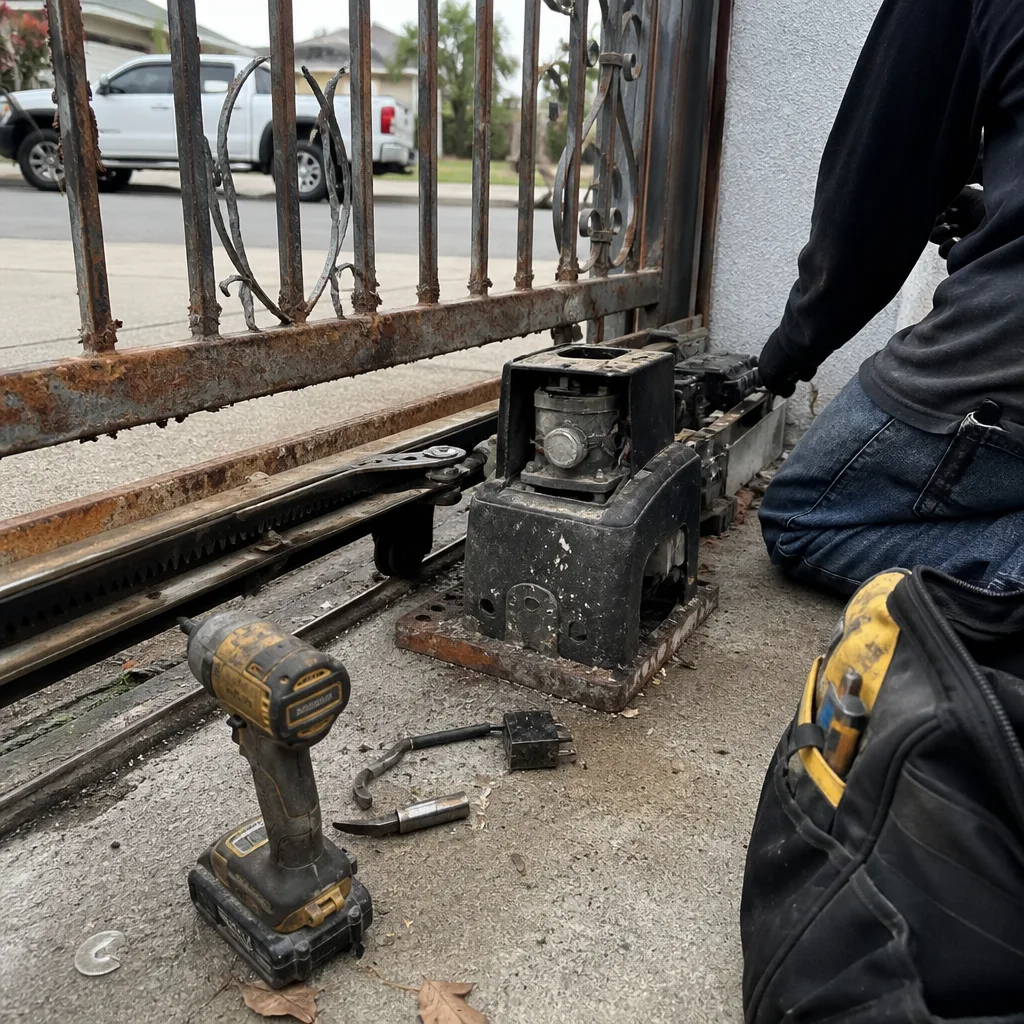 Before
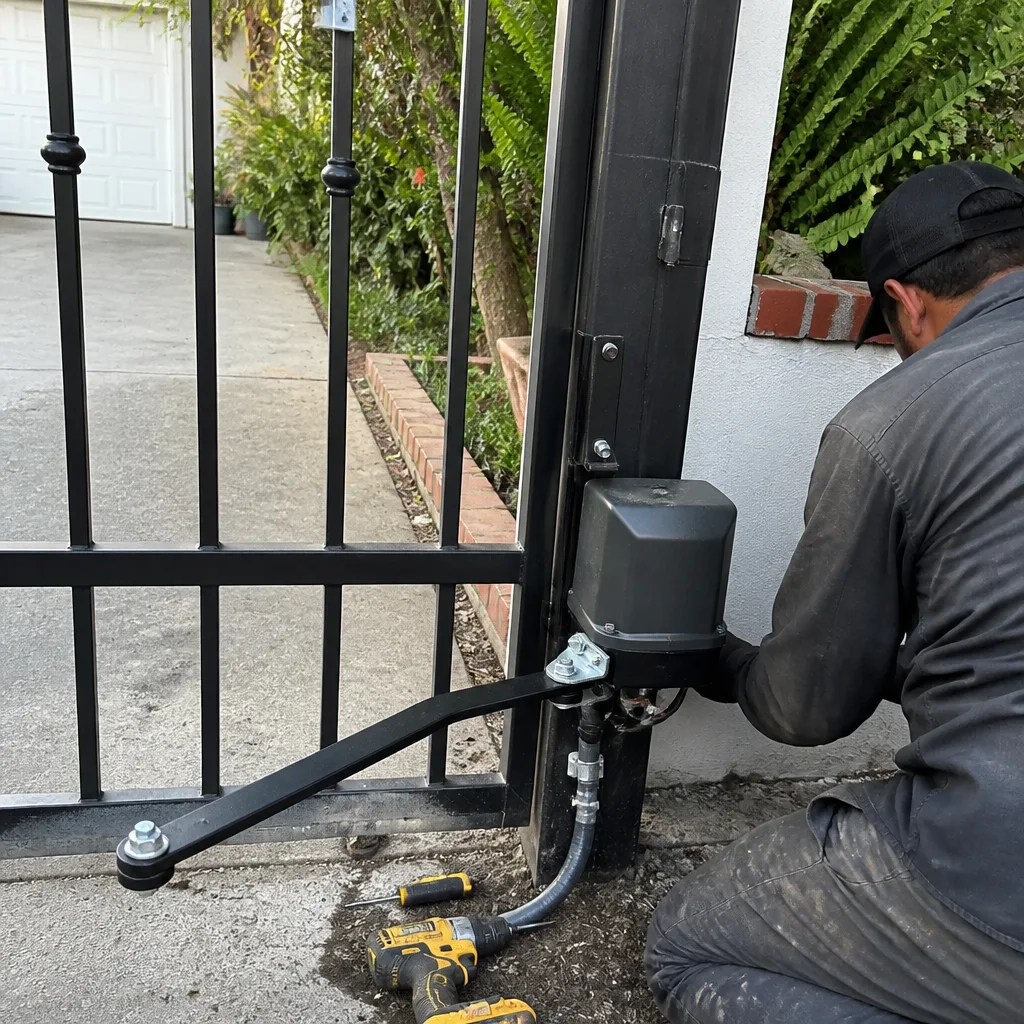 After
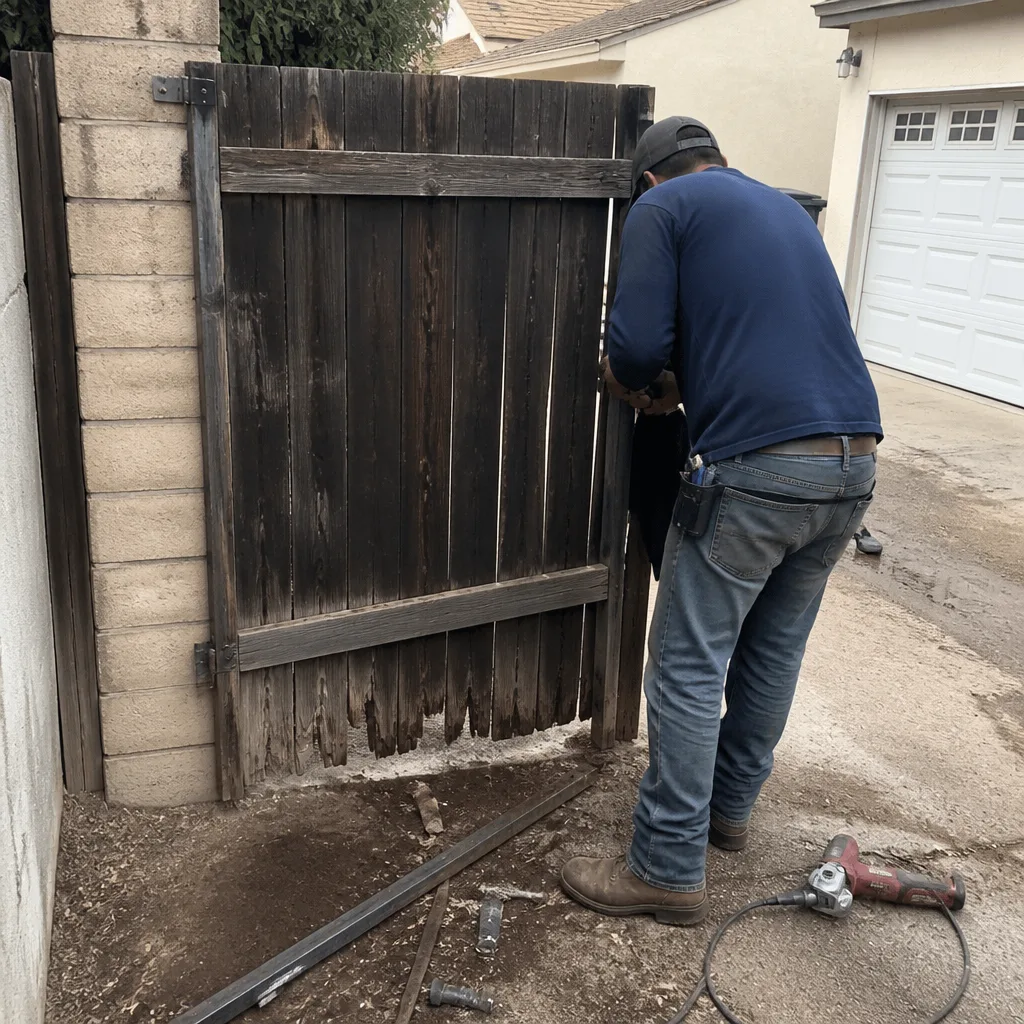 Before
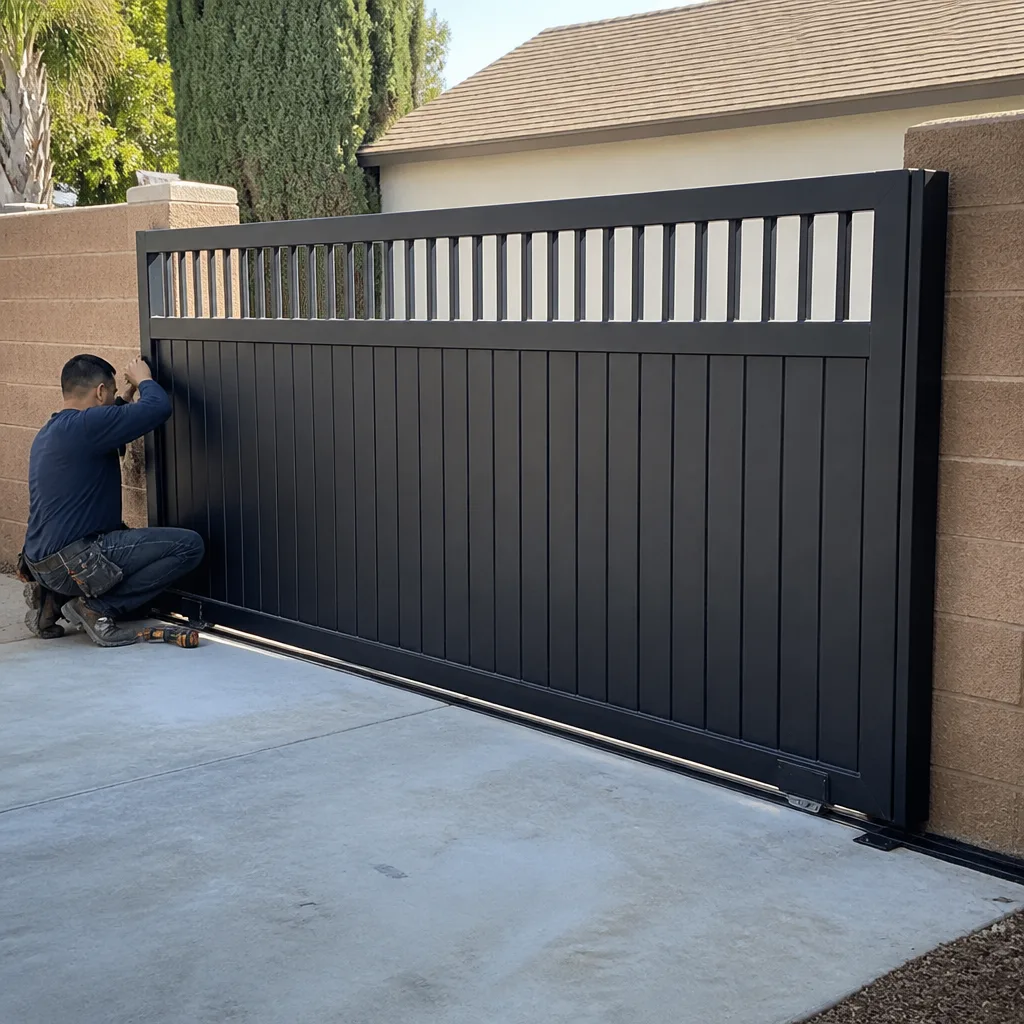 After
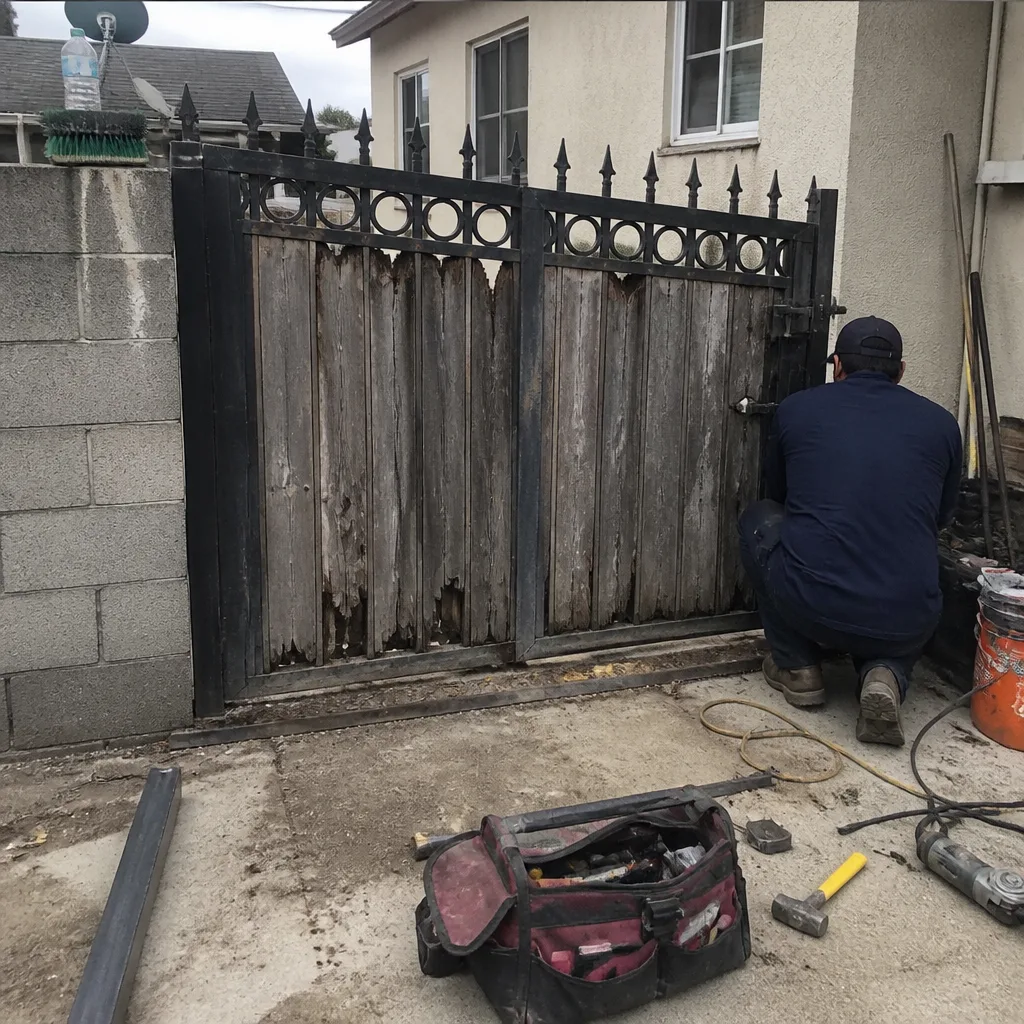 Before
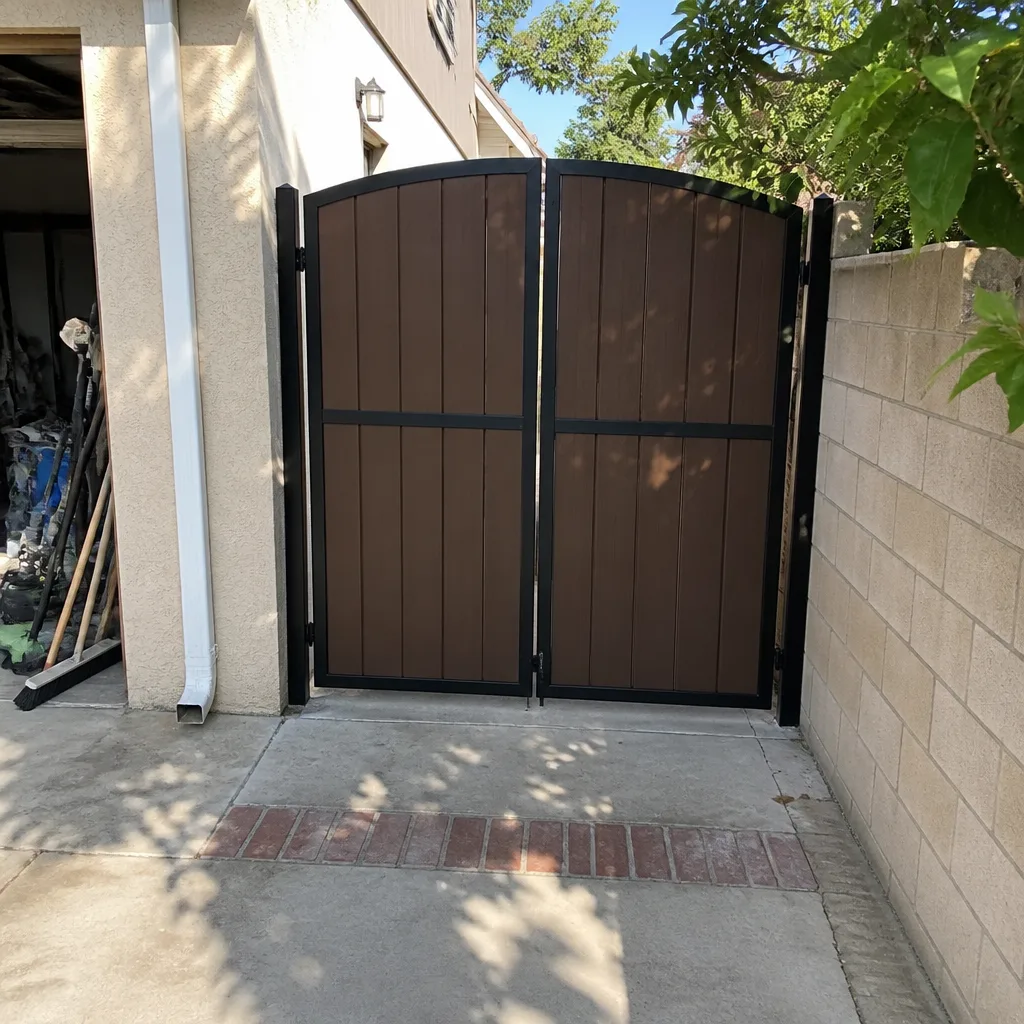 After