Last updated October 30, 2026
 Wrought iron
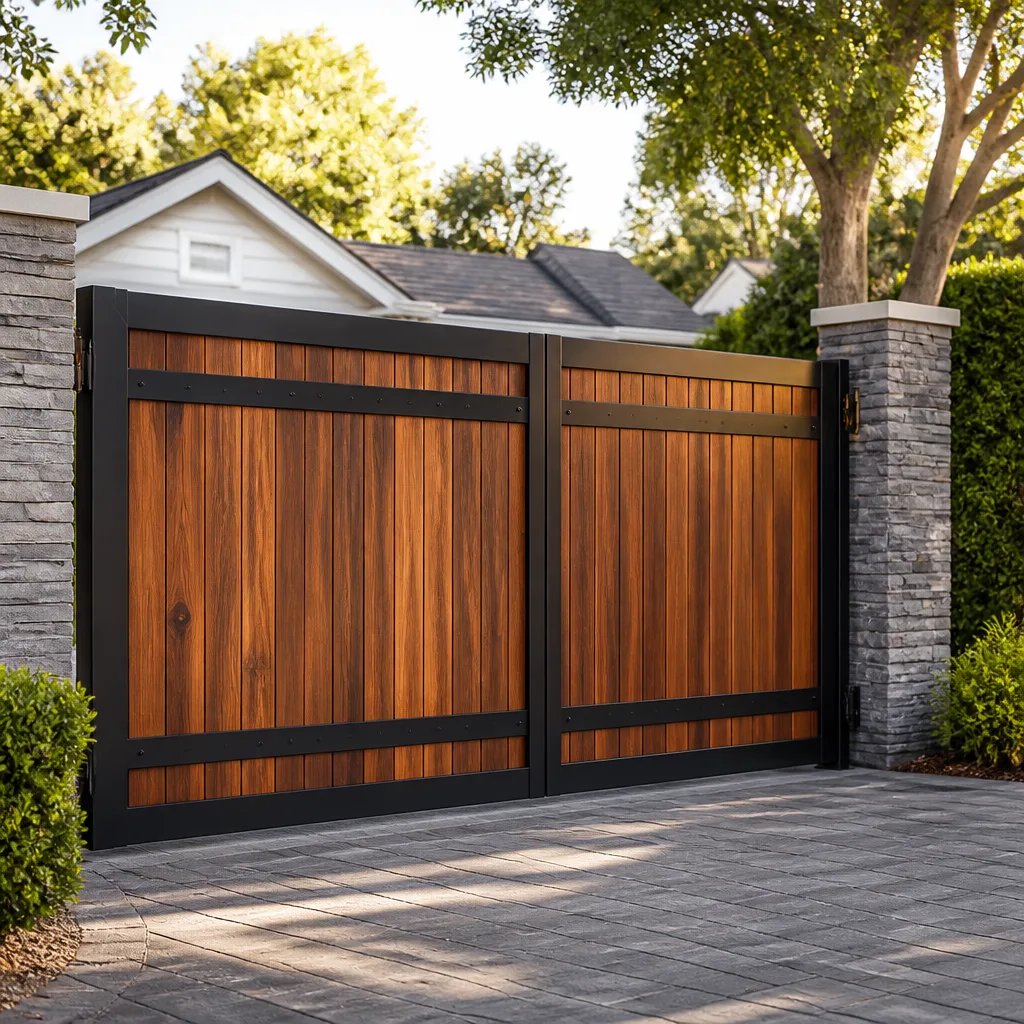 Wood & steel frame
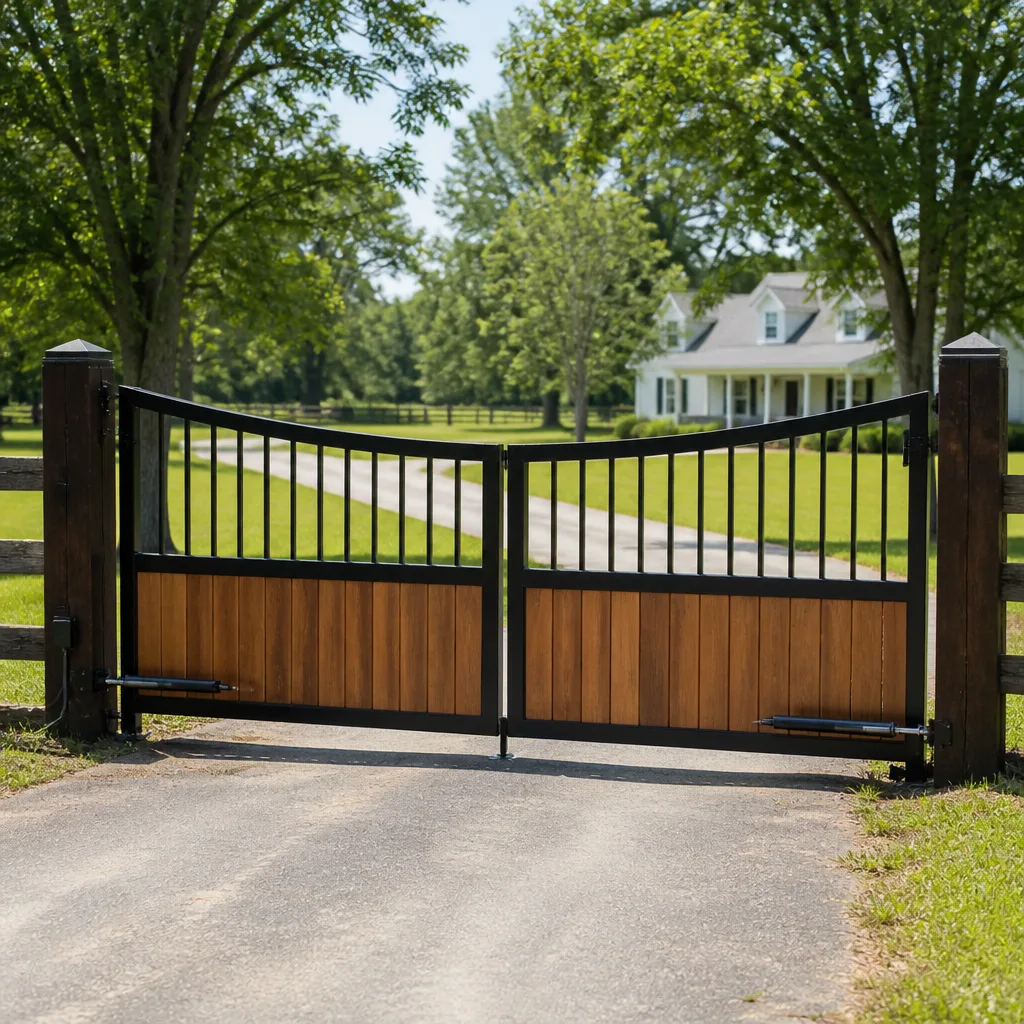 Farm & ranch
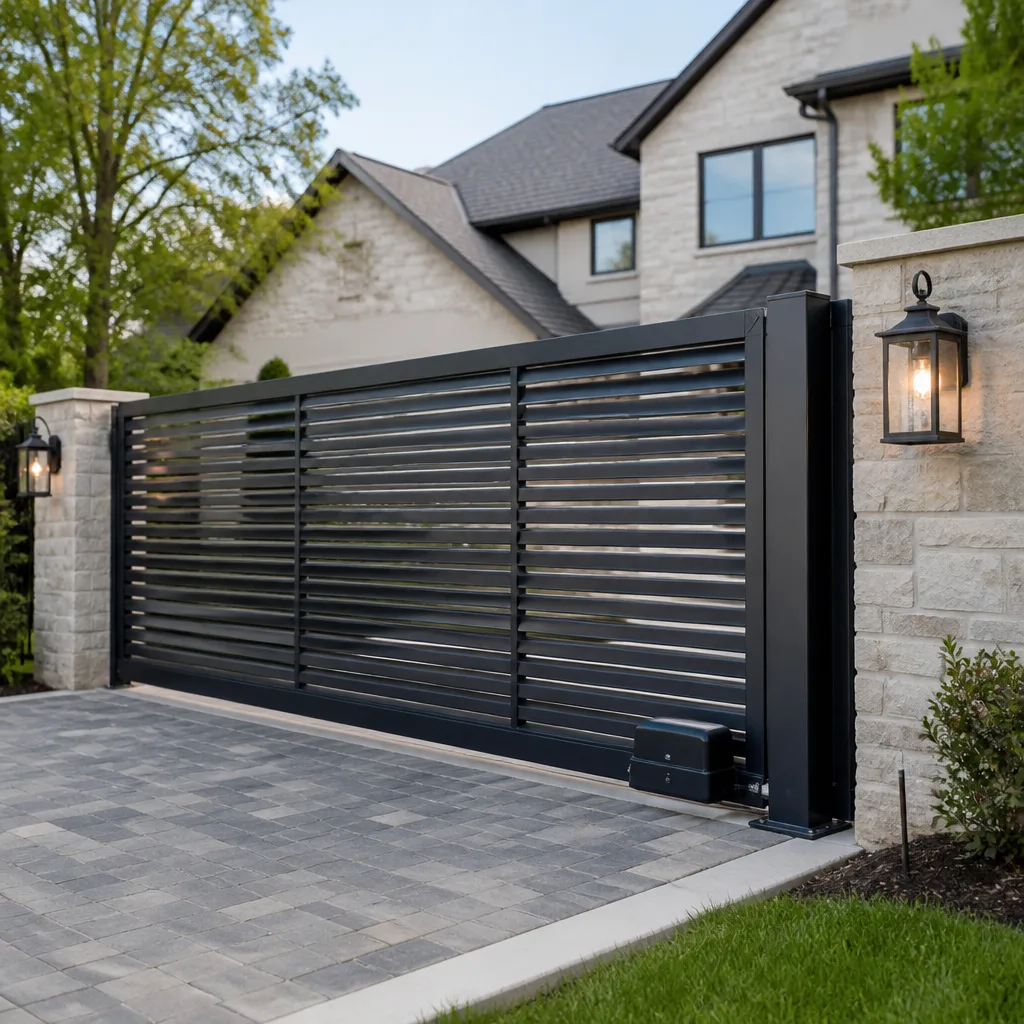 Sliding driveway gates
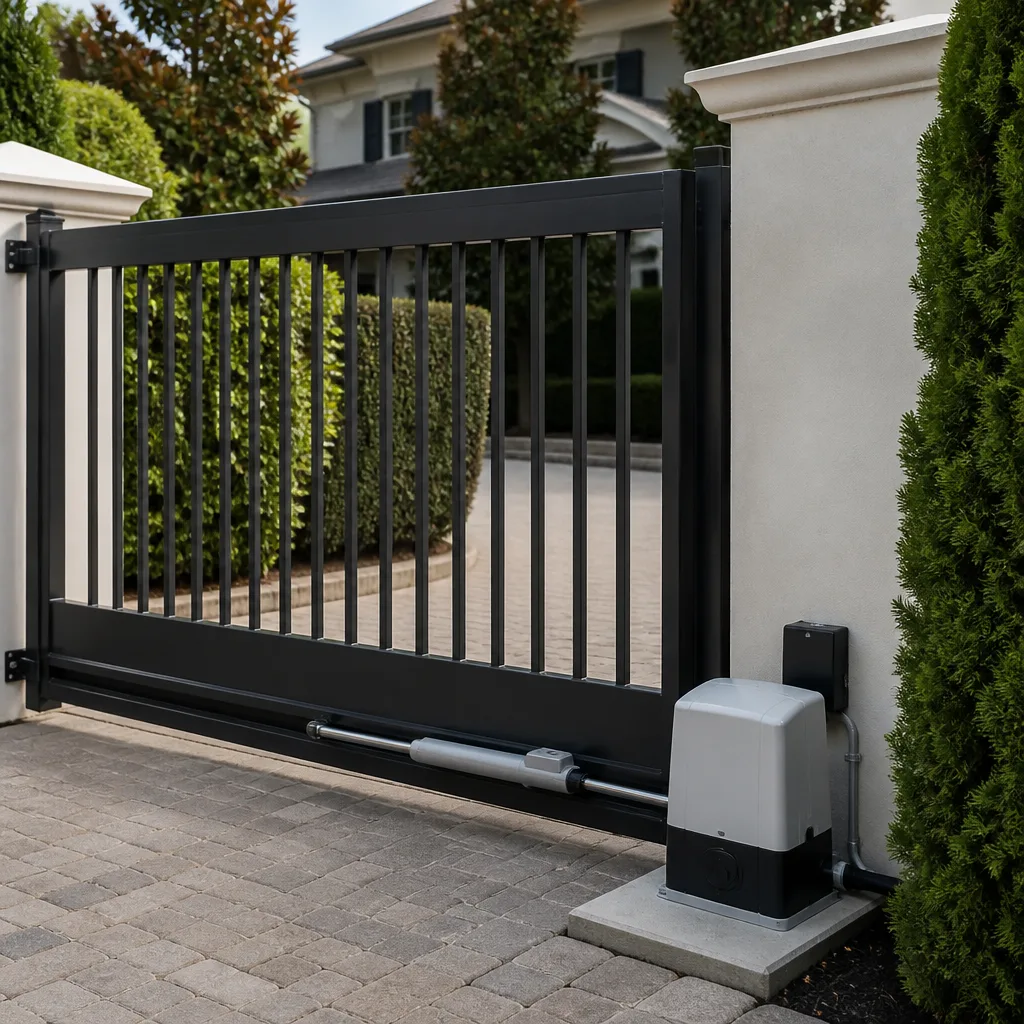 LiftMaster operators
Free on-site gate assessment - hinges, posts, and your LiftMaster or Nice gate operator checked before anything is quoted
The assessment is free and the quote is the invoice.
Get your free estimateHow to Hire a Gate Repair Contractor in Anaheim: A Step-by-Step Guide
Ask any gate company which operators they’re authorized to service. Most will pause, then say something vague about “all major brands.” That pause is the whole story. In Anaheim, where hundreds of homes in neighborhoods like Anaheim Hills and the Colony have automated driveway gates, the difference between a specialist and a generalist often comes down to one thing: factory authorization. This guide gives you the specific vetting questions that expose that gap before you sign anything.
Quick Answer
To hire a gate repair contractor in Anaheim, verify three things before you book: their California contractor license (with a C-10 electrical classification for automated gates), their factory authorization or documented training on your specific operator brand, and an itemized quote that separates diagnostic fees from parts and labor. A legitimate specialist will produce all three without hesitation.
Styles & brands we work with
Table of Contents
- What Factory Authorization Actually Means
- Why a C-10 License Matters in California
- Red Flags in Gate Repair Bids
- OEM vs. Aftermarket Parts: Questions to Ask
- How to Evaluate a Gate Repair Quote
- Anaheim-Specific Considerations
- The Verification Checklist
- Common Mistakes to Avoid
- When to Call a Professional
- Frequently Asked Questions
What Factory Authorization Actually Means
Factory authorization is not a certificate you frame. It’s a standing relationship with the manufacturer that gives a contractor access to technical service bulletins, proprietary diagnostic software, direct parts ordering, and warranty processing. Without it, a technician is working from public manuals and guesswork.
Take LiftMaster as an example. LiftMaster runs a dealer program with tiered access. An authorized dealer can plug into LiftMaster’s myQ diagnostic portal, order OEM circuit boards directly, and file warranty claims on your behalf. A non-authorized shop cannot do any of that. They buy parts from third-party distributors, often at markup, and they have no standing to get a defective part replaced under warranty. In Anaheim, we’ve seen homeowners pay twice for the same repair because the first contractor installed a board that failed and had no path to a warranty replacement.
How to Verify Authorization Without Taking Anyone’s Word
- Ask for the specific program name. “Are you a LiftMaster dealer, or do you have an account with Chamberlain Group?” A real dealer knows the parent company name. A generalist says “we work on all brands.”
- Ask for the authorization level. Most manufacturers have tiers: dealer, installer, service center. The difference matters. A dealer can warranty parts; an installer cannot.
- Call the manufacturer. For FAAC, BFT, and DoorKing, you can call their US offices and ask if a specific company is in their authorized service network. Two minutes on the phone saves a thousand dollars in mistakes.
- Ask to see a recent parts invoice. An authorized shop buys from the manufacturer or their designated distributors. If they show you an invoice from a random online retailer, that’s your answer.
- Check the truck. A shop authorized for FAAC and BFT carries FAAC and BFT diagnostic tools, not a single universal remote and a multimeter they hope will do. We arrive with separate diagnostic interfaces for each platform we service because the connectors and protocols differ.
Here’s the counterintuitive part: most gate repair in Anaheim is done by garage door companies. They’re fine at garage doors. But a garage door operator and a gate operator are different machines with different safety standards, different duty cycles, and different code requirements. Garage door companies often take gate calls because the revenue is there, not because they have any factory backing for the operators they’re opening up. Ask them which operators they’re authorized to service. The ones who answer with brand names and authorization levels are the minority.
First Light Gate Repair works across nine major brands: LiftMaster, FAAC, BFT, Linear, Viking, Ghost Controls, DoorKing, Elite, and Mighty Mule. That breadth exists because we’re a gate-only shop that invested in training and tooling for each platform, not because we’re a generalist willing to try anything. Learn more about our Gate Repair in Anaheim services.
Why a C-10 License Matters in California
California’s Contractors State License Board issues different classifications for different trades. A C-10 is the electrical contractor classification. A C-16 is for fire protection. A D-28 is for doors, gates, and activating devices. Here’s the nuance Anaheim homeowners miss: a D-28 lets a contractor install and repair gates. But a C-10 is required when the work involves line-voltage electrical connections, which nearly every automated gate repair does.
When a gate operator stops working, the cause is frequently electrical: a failed capacitor, a shorted transformer, a board that stopped sending signal to the motor. Diagnosing and repairing those components means working with live electrical connections. A contractor without a C-10 classification is legally limited in what they can touch on the electrical side. In practice, many do it anyway. That creates two problems: the work may not be code-compliant, and if something goes wrong, the contractor’s insurance may refuse to cover it because the work exceeded their license scope.
What to Check on the CSLB Lookup
- Go to CSLB.ca.gov and search the company name. The license should be active, not expired or suspended.
- Verify the classifications. The license should list C-10 (electrical) and ideally D-28 (gates). If it only lists D-28, ask whether they hold C-10 through a qualified individual.
- Check the workers’ comp status. Any contractor with employees must carry workers’ comp. If they show up with two technicians and no workers’ comp policy, you’re exposed as a homeowner.
- Look at the license issue date. A gate specialist with a ten-year-old license in Anaheim has survived ten years of inspections, complaints, and building department scrutiny. That matters more than a five-star review.
- Confirm the business name matches. Contractors sometimes operate under a different name than their license. If the name on the invoice doesn’t match the CSLB record, ask why.
For electric gate work specifically, First Light’s team handles line-voltage diagnosis as a core part of Electric Gate Repair in Anaheim, not as an add-on we hope someone else handles.
Red Flags in Gate Repair Bids
A bid tells you how a contractor thinks. Vague bids come from vague thinking. Specific bids come from someone who has done this exact repair enough times to know what it costs.
The clearest red flag we see in Anaheim is the line item that reads “motor service” or “operator repair” with no part number, no brand, and no explanation of what’s being replaced. Motors rarely need generic “service.” They need specific things: a new capacitor, a rebuilt gear assembly, a replaced limit switch. A specialist names the part. A generalist writes “motor service” and figures out the details later, usually at your expense.
Seven Specific Red Flags to Watch For
- “All major brands” with no names. Every gate technician can name the brands they actually work on. If they can’t, they don’t work on them.
- Quotes without part numbers. A LiftMaster LA400 circuit board has a part number. A Viking F-1 operator has a part number. If the quote says “control board” and nothing else, ask for the number. It’s your right.
- Flat-rate pricing for diagnosis. “We charge $49 to diagnose any problem.” Fine. But then what? The diagnosis should produce a specific repair plan, not a vague statement that “the motor seems tired.”
- No mention of safety edges or photo eyes. Automated gates in California must meet UL 325 safety standards. A contractor who doesn’t mention safety devices during a repair quote isn’t thinking about your liability, your family, or code compliance.
- Cash-only discount offers. This is a licensing red flag. Licensed contractors take checks and cards and report their income. Cash-only pricing often means unlicensed work.
- Push to replace before diagnosing. “Your gate is old, you should just replace it.” Maybe. But a specialist diagnoses first and replaces second. The ones who rush to replacement are often selling product, not fixing problems.
- No reference to the specific operator model. Your gate has a model number. The contractor should ask for it, or find it. If they never ask what you have, they’re planning to figure it out on site at your hourly rate.
OEM vs. Aftermarket Parts: Questions to Ask
The circuit board inside your gate operator is the brain of the whole system. When it fails, you have two options: an OEM board from the original manufacturer, or an aftermarket board from a third-party supplier. The price difference can be two hundred dollars or more. The longevity difference can be measured in years.
OEM parts are built to the manufacturer’s specification, tested against their quality standard, and covered by their warranty. Aftermarket parts vary wildly. Some are perfectly serviceable rebuilds. Others are cheap clones with inferior capacitors that fail in the Anaheim summer heat. The problem is you can’t tell by looking. The only way to know is to ask where the part comes from.
Three Questions to Ask About Parts
- “Is that an OEM part or aftermarket?” The answer should be immediate. If they hesitate or say “they’re all the same,” they’re not the same. A FAAC board and a clone of a FAAC board are different products with different failure rates.
- “What’s the warranty on that part?” OEM parts from LiftMaster, FAAC, BFT, and Linear typically carry a one-to-three-year manufacturer warranty when installed by an authorized contractor. Aftermarket parts often carry thirty or ninety days from the seller, if that.
- “Who do I call if this part fails?” With an OEM part installed by an authorized shop, you call the contractor, who files a warranty claim with the manufacturer. With an aftermarket part, you’re often calling an online retailer with a thirty-day return window that’s already closed.
In our experience across Anaheim, the pattern is consistent: homeowners who paid less for aftermarket boards on swing gates and slide gates end up paying again within eighteen months. The heat in the Anaheim hills is hard on electronics. OEM boards are built for that. Aftermarket clones often aren’t.
We work on LiftMaster, FAAC, BFT, and Linear operators using OEM parts whenever the manufacturer still supports the model. When a model is discontinued, we tell you that upfront and discuss options rather than quietly installing whatever we can find online. If you need a new gate rather than a repair, see our Gate Installation in Anaheim service page.
How to Evaluate a Gate Repair Quote
A trustworthy gate contractor separates three things on the quote: the diagnostic fee, the parts, and the labor. A single bundled number, like “$850 to fix your gate,” tells you nothing about what’s actually being done. It also makes comparison impossible. The contractor who separates these costs isn’t just being organized. They’re being accountable.
The Three-Line Test
Every legitimate gate repair quote should have at least these three lines:
- Diagnostic fee. This is the cost to show up, assess the system, and determine what’s wrong. Many Anaheim gate companies charge $75 to $150 for this, often credited toward the repair if you proceed. If a company charges nothing for diagnosis, they’re either building it into the repair price invisibly or they’re not diagnosing anything, just replacing parts until something works.
- Parts with identification. Each part should have a name and a number. “LiftMaster circuit board, part number K1D8387-1CC.” Not “control board.” If the quote doesn’t identify parts, you can’t verify what you’re paying for.
- Labor with a rate or flat fee. Some shops quote labor by the hour, some by the job. Both are legitimate. What matters is that the labor is separated from the parts so you understand what the technician’s time actually costs.
The price is quoted and agreed before any work starts. That’s non-negotiable. If a contractor won’t put a number in writing before beginning, that’s your cue to end the conversation.
What a Complete Quote Also Includes
- The operator brand and model being serviced. If the quote says “gate operator” with no brand, the contractor hasn’t looked at your gate closely enough to know what they’re working on.
- The specific repair being performed. Not just “fix motor,” but “replace capacitor and inspect gear assembly.” The verb matters.
- Safety device inspection. A gate specialist checks photo eyes, safety edges, and force settings as part of any motorized gate repair. This should be on the quote.
- A workmanship warranty. Parts carry manufacturer warranties. Labor should carry a contractor warranty. Ninety days is common. A year is better. If there’s no labor warranty stated, ask what happens if the repair fails in a week.
- CSLB license verified. Active status, C-10 electrical classification, workers’ comp in place. Checked at cslb.ca.gov.
- Factory authorization confirmed. You asked which operators they’re authorized to service, and they named specific brands with specific program names. You’ve confirmed with the manufacturer if the job is high-value.
- Part numbers on the quote. Every part being replaced is identified by name and number, not vague categories.
- OEM parts specified. The quote states OEM parts explicitly, or explains why an aftermarket option is being discussed and what the warranty difference is.
- Three-line pricing structure. Diagnostic, parts, and labor are separated. You know what you’re paying for each.
- Safety devices addressed. The quote mentions photo eyes, safety edges, or force settings, depending on what’s relevant to your gate. The contractor is aware of UL 325 requirements.
- Warranty terms in writing. You know the parts warranty and the labor warranty, in days or years, not as a verbal promise.
- Price agreed before work starts. The quote is the price. There’s no blank line for “additional work discovered.”
- Hiring the first company that answers the phone. Anaheim has dozens of gate and garage door companies. The one with the best ad budget isn’t necessarily the one with factory authorization. Spend twenty minutes on verification before booking.
- Choosing the lowest quote without checking license scope. A $400 repair from an unlicensed or under-licensed technician can become a $3,000 replacement when the repair fails and the original contractor’s phone number stops working.
- Accepting “the motor is dead” without a specific diagnosis. Motors fail in specific ways: burned windings, seized bearings, worn brushes. A specific diagnosis tells you the technician actually tested the motor. A vague one tells you they didn’t.
- Skipping the safety device check after a repair. In Anaheim, gates are subject to California’s UL 325 standard. A repair that restores function but ignores safety edges or force limits creates liability for you, the property owner. Any repair on an automated gate should include a safety verification.
- Not asking about the part before approving the repair. You have a right to know if the circuit board going into your gate is OEM or aftermarket, new or refurbished. Contractors who don’t volunteer this information are making a choice for you that affects your gate’s longevity.
- Paying in full before the gate is tested through multiple cycles. A gate might work once on the bench and fail after twenty cycles as it heats up. Watch it open and close at least ten times before you hand over final payment.
- Assuming all gate companies handle all gate types. A company that only knows residential swing gates is the wrong choice for a commercial slide gate with a Linear operator. Ask what types of gates they’ve worked on recently: swing, slide, cantilever, barrier arm. The answer reveals their range.
Anaheim-Specific Considerations
Anaheim’s gate repair market has three quirks that don’t show up in generic online guides. Knowing them will make you a sharper buyer.
First, Anaheim’s inland heat. Summer temperatures regularly reach the high nineties, and neighborhoods like Anaheim Hills and Yorba Linda sit against the foothills where afternoon sun bakes metal gate frames for hours. Heat expands metal and cooks electronics. That means a gate operator installed without proper thermal consideration, or a circuit board mounted without heat dissipation, fails faster here than in coastal Orange County cities. When you hire a contractor in Anaheim, ask whether they consider thermal load when recommending parts and installation methods. A specialist will have an answer. A generalist will look confused.
Second, the age of Anaheim’s housing stock. Much of Anaheim’s residential development happened between the 1950s and 1980s. That means a lot of older gate operators still in service, some of them discontinued models. A good Anaheim gate contractor knows which discontinued LiftMaster and Linear models can be repaired with available parts, and which should be retired. This knowledge only comes from years of local service. It can’t be learned from a YouTube video.
Third, Anaheim’s mix of single-family homes, gated communities, and commercial properties. A contractor who only does residential swing gates is out of their depth on a commercial slide gate in the Platinum Triangle. A contractor who only does new construction is lost on a thirty-year-old operator in West Anaheim. The right contractor handles the full range, from a residential Mighty Mule that stopped responding to a commercial BFT operator with access control integration.
First Light Gate Repair is a gate-only specialist. Your gate is the only thing we fix. That focus means we handle everything from a stuck swing gate to a full commercial access system installation, and we do it across nine major brands. Start at our First Light Gate Repair home page to see the full scope of what we do.
The Verification Checklist
Print this, save it, or screenshot it. Run through these items before you sign any gate repair contract in Anaheim.
If a contractor passes all eight, you’re working with someone who treats gate repair as a profession, not a side gig.
Common Mistakes to Avoid
When to Call a Professional
Some gate problems are obvious: the gate won’t open, the motor makes a grinding noise, the keypad doesn’t respond. Those always warrant a professional call. But there are quieter signals too. A gate that moves slower than it used to, or reverses unexpectedly, or makes a new hum when idle, is telling you something. Gate operators in Anaheim work hard, often cycling dozens of times a day in neighborhoods with frequent traffic. When the signs appear, address them early. A capacitor replacement is cheap compared to a full operator replacement.
If you’re in Anaheim and your gate is acting up, or you’re planning a new installation and want a specialist eye on the job, we’re ready. First Light Gate Repair offers free estimates in Anaheim. Call (833) 734-5599 and we’ll take it from there.
Frequently Asked Questions
Gate repair in Anaheim typically runs $180 to $600 for common issues like capacitor replacement, limit switch adjustment, or keypad repair. Full operator replacement, including a new motor and control board, usually lands between $1,200 and $3,800 depending on the brand, gate type, and whether you’re installing a residential Mighty Mule or a commercial FAAC system. These are realistic Anaheim market ranges based on what we see across the city’s neighborhoods, not generic national averages. The price is always quoted and agreed before any work starts. Call (833) 734-5599 for an exact quote. Estimates are free.
Yes, most common gate repairs in Anaheim can be completed the same day the technician arrives, since parts for major brands like LiftMaster, FAAC, BFT, and Linear are readily available through our supply channels. For problems that require uncommon parts, the repair timeline depends on part availability. We stock common parts for the brands we service, which means same-day repairs are realistic for most failures. Call (833) 734-5599 and we’ll tell you what’s possible based on your gate’s condition.
Yes. When we handle Electric Gate Repair in Anaheim, the scope includes line-voltage electrical connections, low-voltage wiring, photo eyes, safety edges, and force settings. We don’t treat electrical work as a separate trade we hand off to someone else. It’s part of the gate repair itself.
A full gate installation in Anaheim includes removing the existing gate (if applicable), setting new posts, installing the gate frame and panels, mounting and wiring the operator, configuring the control board, installing safety devices, and testing the full system through multiple open and close cycles. We also handle access control components like keypads and intercoms if your project includes them. See our Gate Installation in Anaheim page for the full scope. Every installation starts with a free measure and a written price, so you know the exact cost before we order anything.
Yes. First Light Gate Repair carries documented working knowledge of nine major gate brands, including LiftMaster, FAAC, BFT, and Linear, spanning both residential and commercial systems. That means we’re not locked into one manufacturer’s playbook when diagnosing a problem. We match the repair to the actual operator on your gate, not to the one brand we happen to sell. Call (833) 734-5599 to confirm your specific operator model is covered. In nearly all cases, it is.
When a gate stops closing fully in cooler Anaheim weather, the usual cause is a misaligned limit switch or a force setting that was adjusted during warmer months and now trips early because metal contracts in cooler temperatures. The ground also shifts slightly with seasonal moisture changes, which can affect gate alignment. A technician needs to check the limit settings, force adjustment, and physical track or hinge alignment to diagnose which factor is at play.
The Bottom Line
Hiring a gate repair contractor in Anaheim is a verification exercise, not a guessing game. Check the CSLB license with a C-10 classification. Ask about factory authorization for your specific operator brand. Demand a three-line quote with part numbers, and confirm OEM parts with real warranties. Watch for the red flags: vague line items, missing safety devices, cash-only pricing. The contractors who pass these tests are the ones who treat gate work as a profession. In Anaheim’s heat and across its older housing stock, that professionalism is the difference between a gate that works for years and one that fails in months. First Light means we’re ready before the problem becomes your whole day.
Written by the team at First Light Gate Repair, serving Anaheim since 2014.
See the difference
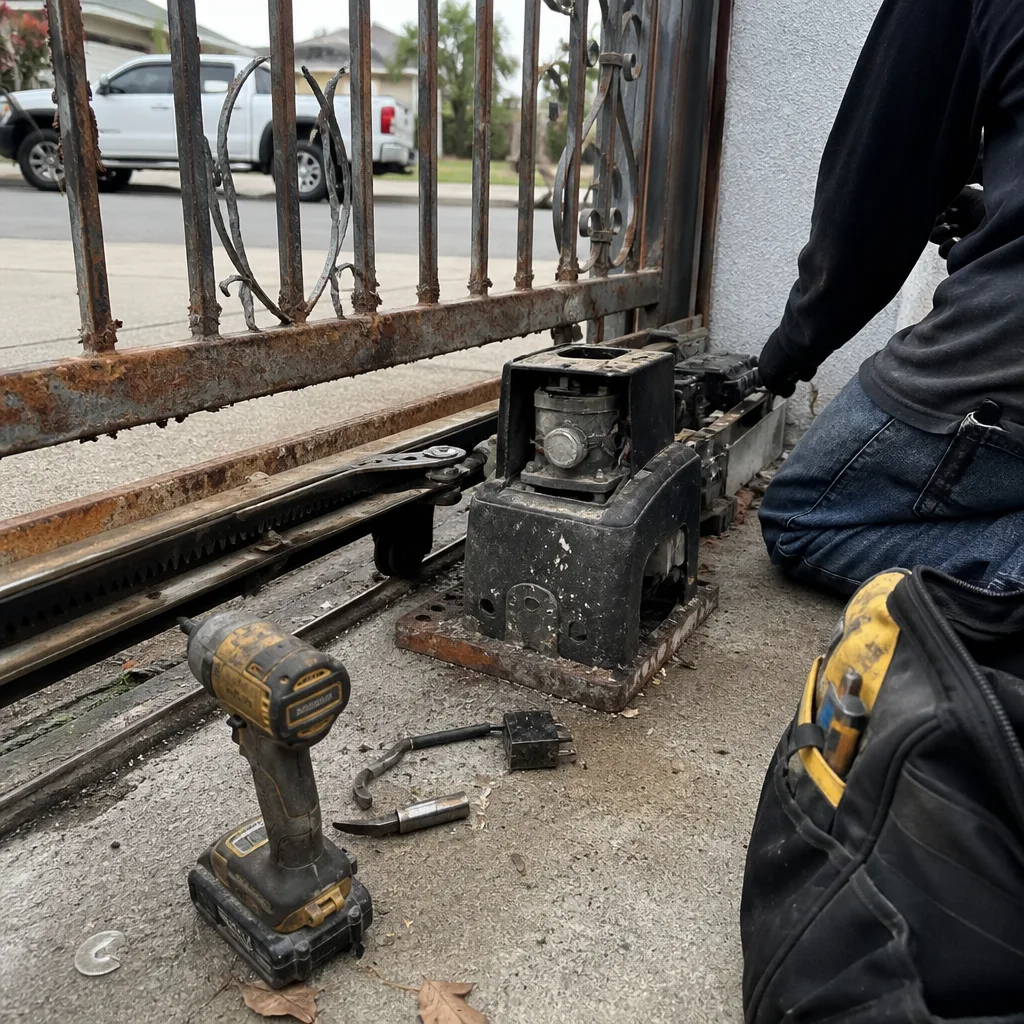 Before
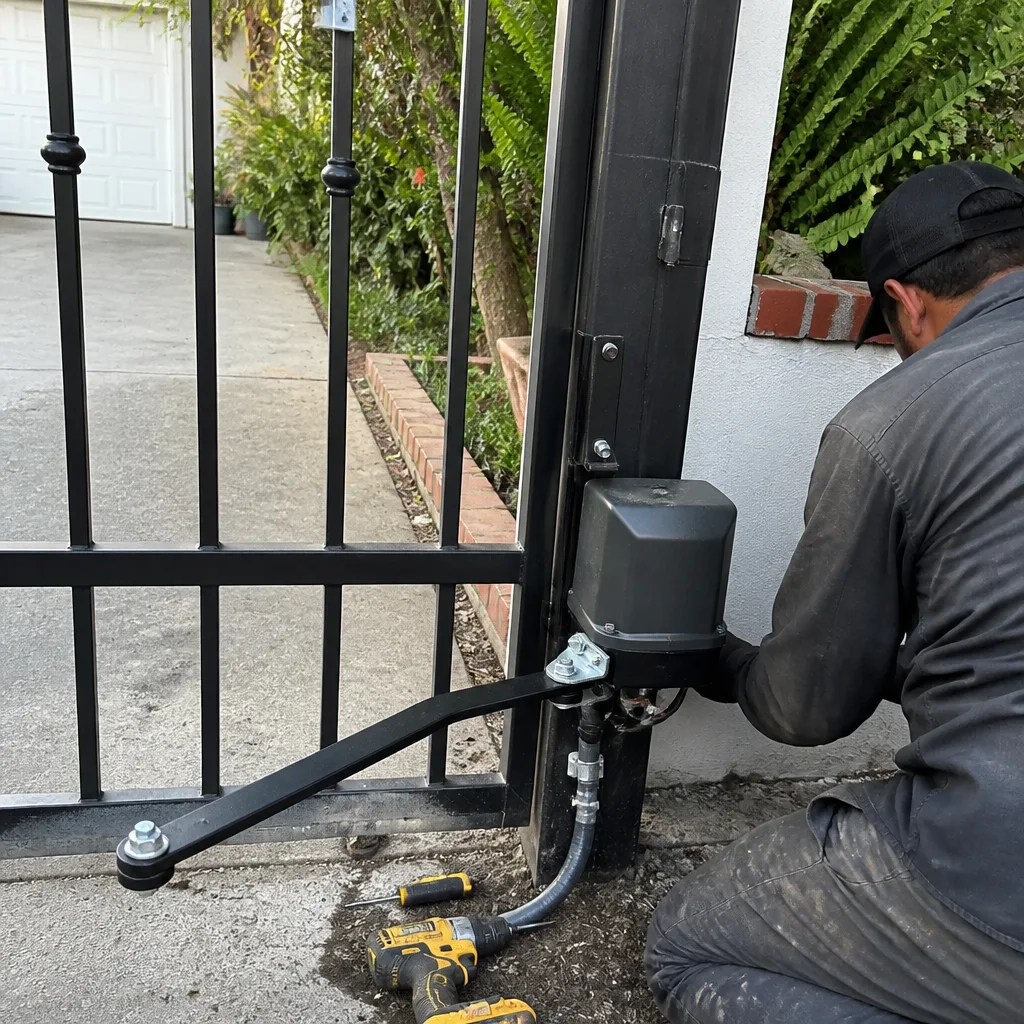 After
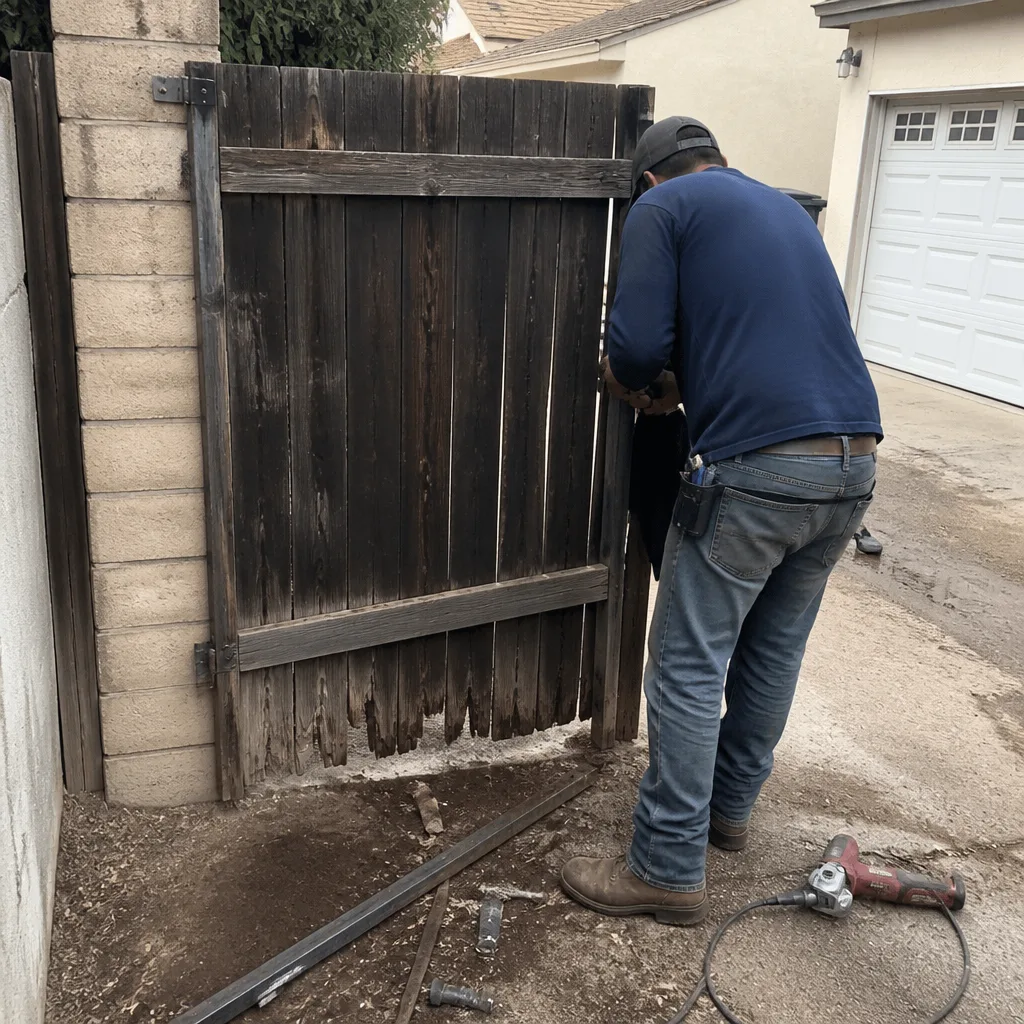 Before
 After
 Before
 After