
Last updated October 30, 2026
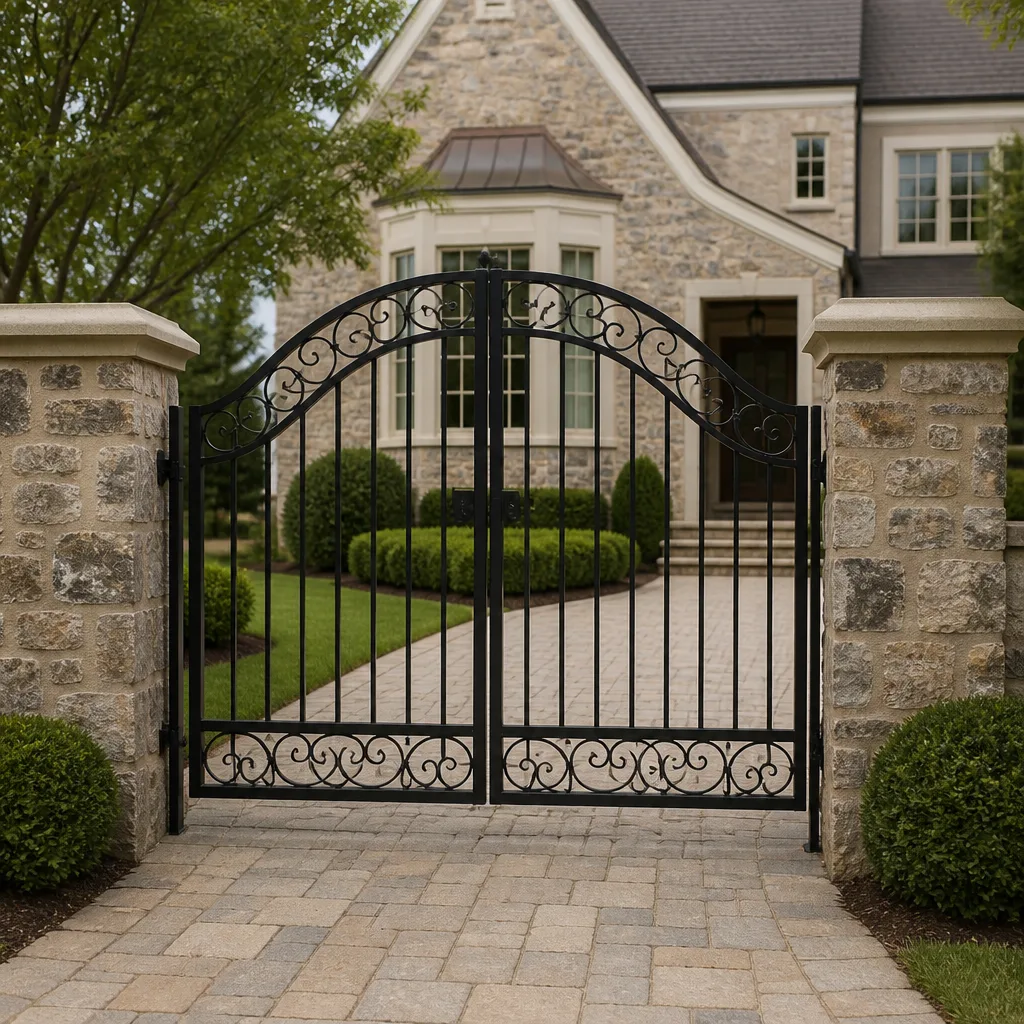 Wrought iron
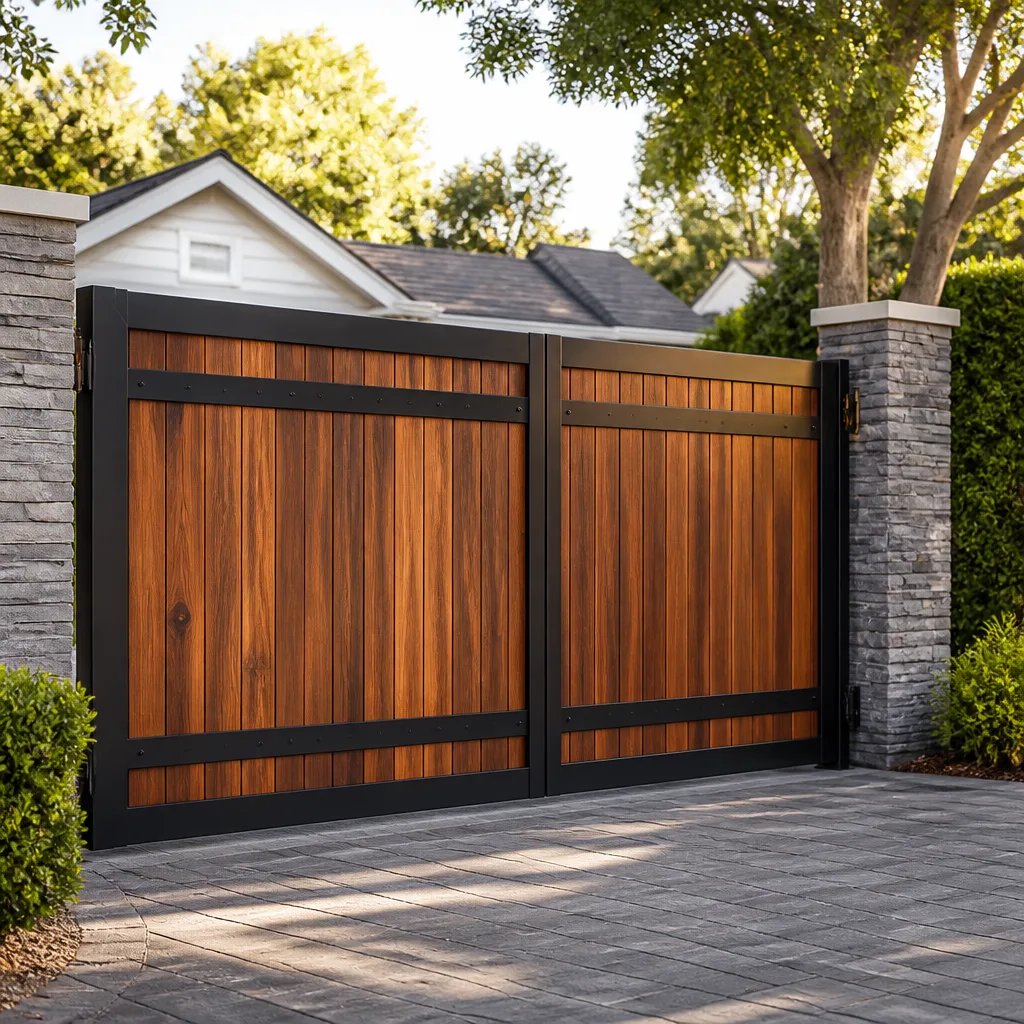 Wood & steel frame
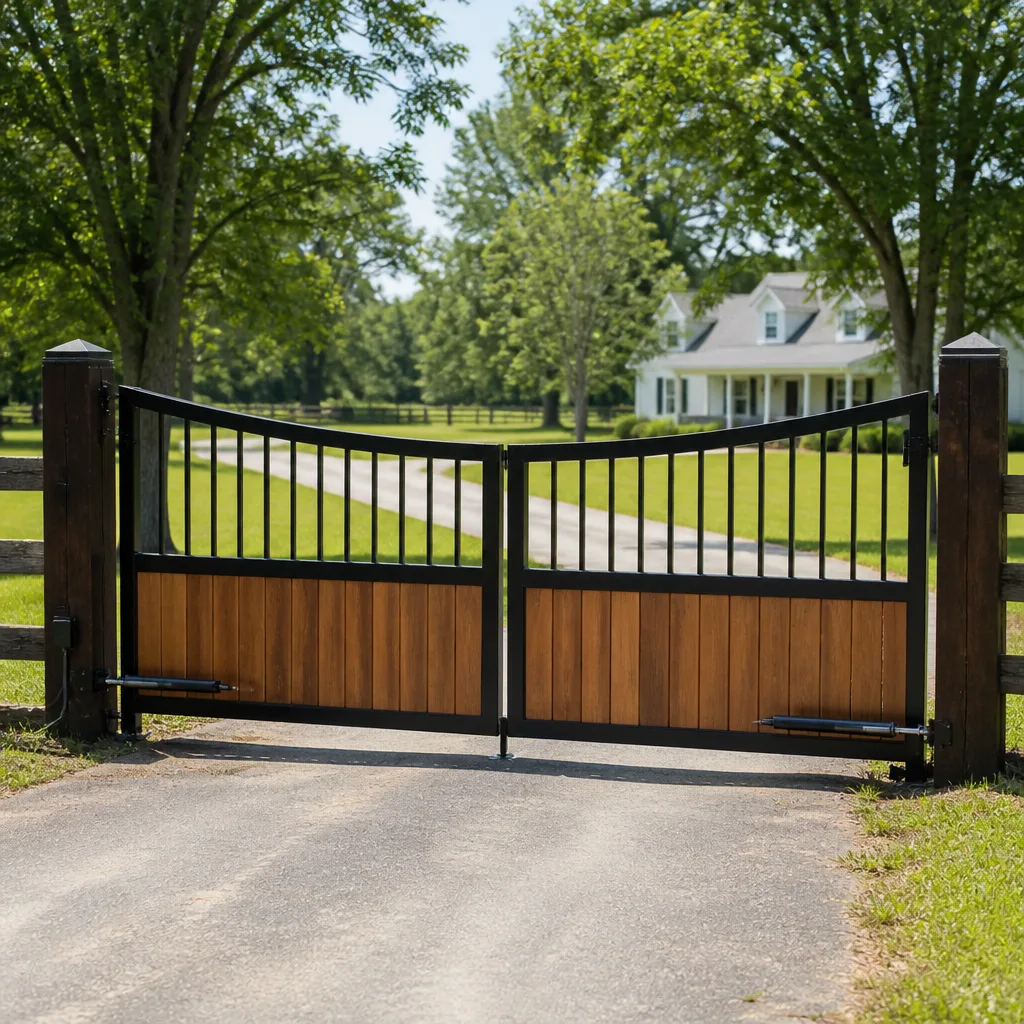 Farm & ranch
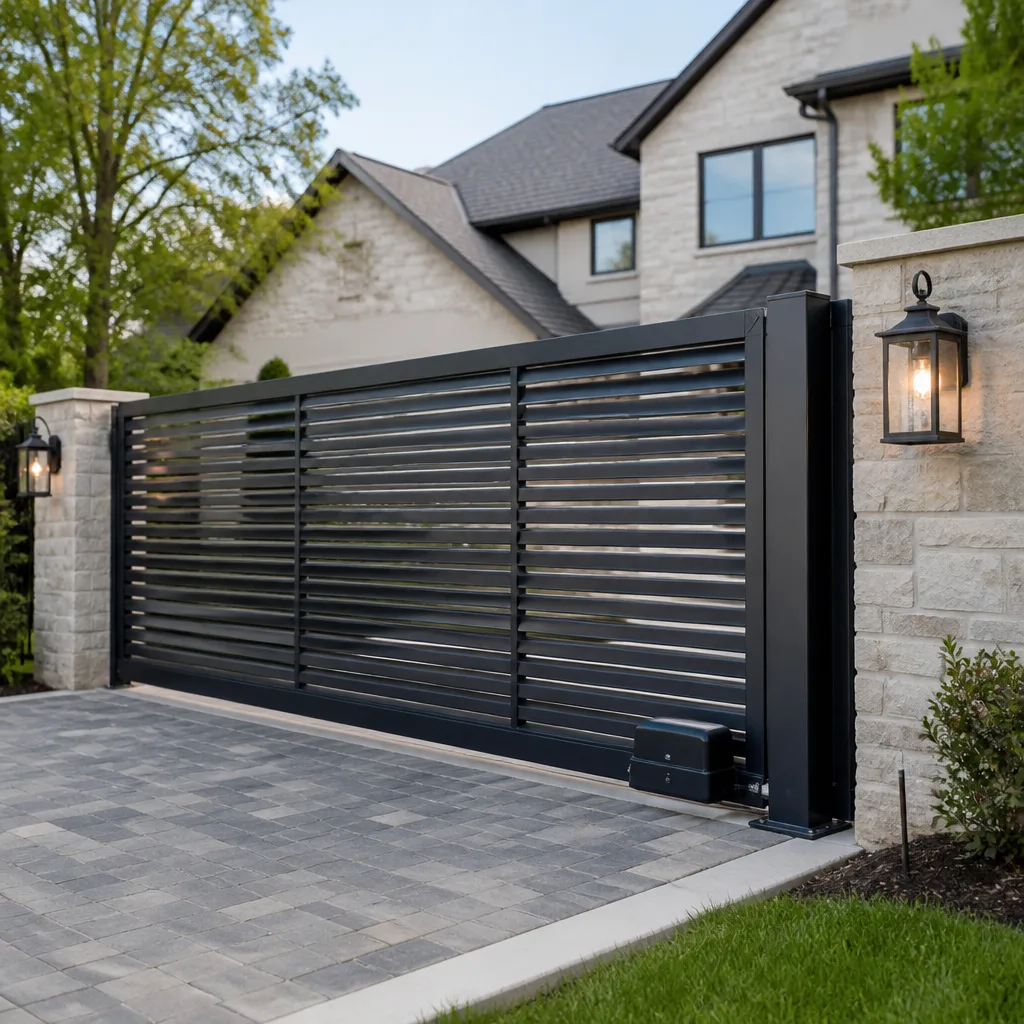 Sliding driveway gates
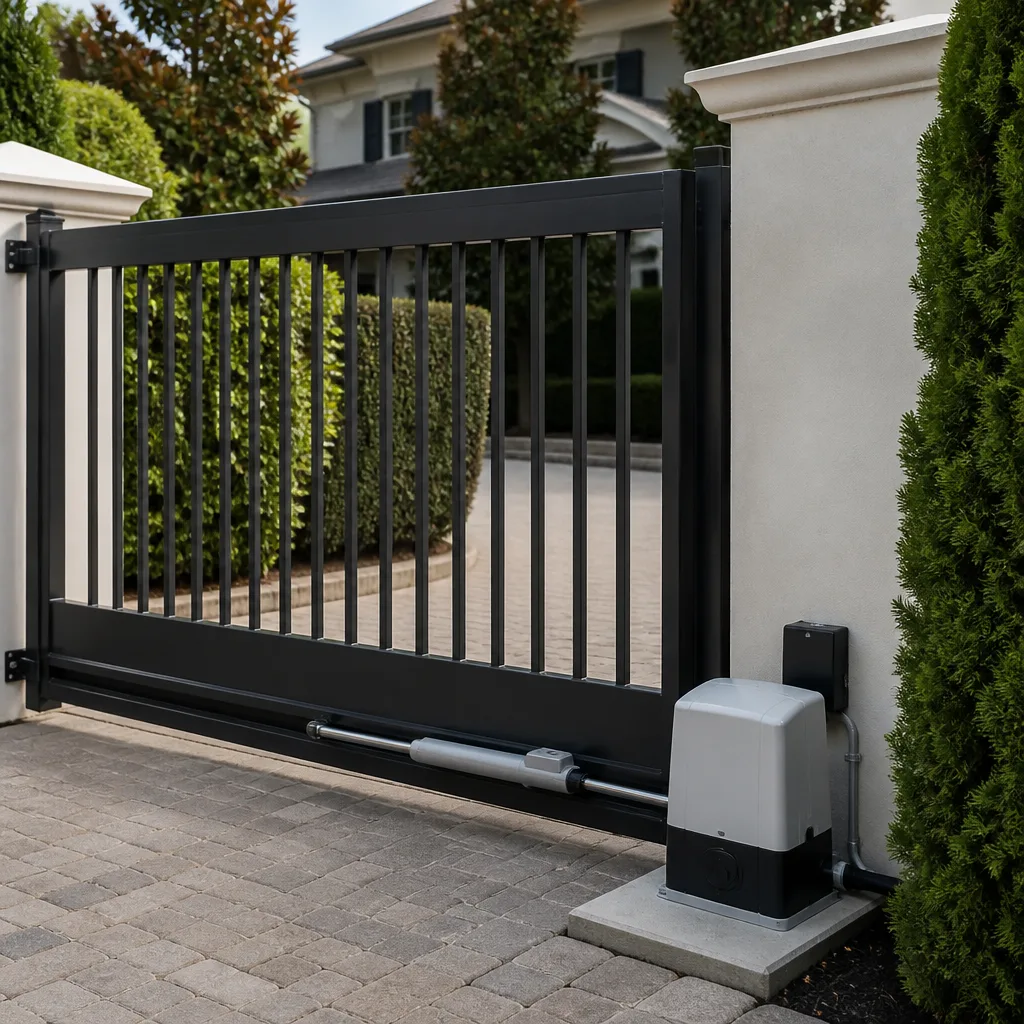 LiftMaster operators
Free on-site gate assessment - hinges, posts, and your LiftMaster or Nice gate operator checked before anything is quoted
The assessment is free and the quote is the invoice.
Get your free estimateThe Complete Guide to Gate Repair in Anaheim
You’re about to learn something the parts stores won’t tell you, and it’s going to save you a second repair call sometime in the next two years. When we get called out to a gate in Anaheim that “just needs a new motor,” our technicians find a different story about seven times out of ten. The motor is dead. That part is true. But the reason it died is usually a hinge that’s been quietly fighting a leaning post for months, or a control board that’s been drowning in the humidity from a clay soil that never dries out. Anaheim sits on some of the most expansive, movement-prone ground in Orange County, and your gate feels every inch of it. This guide is about the gate as a complete system: what fails, why it fails in this specific climate, how to read the symptoms before they become a midnight lockout, and when the right move is our Gate Repair services instead of a guess.
Quick Answer
Gate repair in Anaheim is driven by three forces that most guides never mention: hinge load, operator compatibility, and soil movement from expansive clay. Before replacing a motor or a board, a proper diagnosis starts with the post and the hinges, because those two components are what determine whether the next repair lasts 90 days or nine years. If your gate is off level, groaning on the swing, or throwing error codes at 6 a.m., stop throwing parts at it, and read the chain of failures that starts below.
Styles & brands we work with
Table of Contents
- Why Anaheim Gates Fail Differently Than Gates Anywhere Else
- Hinge Load: The Failure You Don’t See Until It Eats Your Operator
- Operator Compatibility: Why the Motor Is Almost Never the First Domino
- How to Read Your Gate’s Error Codes (Apollo, FAAC, DoorKing Boards)
- Why a Residential Swing Gate Is a Different Job Than a Commercial Slide Gate
- Which Repairs Need a Licensed Contractor, and Which Ones You Can Address Without Voiding the UL Listing
- Anaheim Soil, Posts, and the Cascade Effect
- Common Mistakes to Avoid
- When to Call a Professional
- Frequently Asked Questions
Why Anaheim Gates Fail Differently Than Gates Anywhere Else
Anaheim’s soil is the quiet variable behind half of our repair calls. This part of Orange County sits on what engineers call expansive clay, a soil type that swells when it gets wet and shrinks when it dries. During the winter rain cycle, the ground under your gate post soaks up water and expands, pushing the post a fraction of an inch out of plumb. Then summer arrives, the clay bakes dry, and the post leans a little further into the void the shrinking soil created. Over three or four seasons, that tiny drift compounds into a post that’s an inch or more out of level at the top. At that point, the gate leaf is no longer swinging on the plane the hinges were built for. The load shifts. The hinges bind. And the operator, which was never sized to drag a binding gate through its cycle, burns out its capacitor or strips its gear trying. We’ve replaced operators in neighborhoods like West Anaheim and Platinum Triangle where the only real problem was a post that had wandered off by an inch and a quarter.
This is not a universal gate problem. Gates in Phoenix, on decomposed granite, don’t drift the way Anaheim gates do. Gates in coastal Huntington Beach sit on sandy, stable soil and behave differently under the same seasonal moisture. When you’re troubleshooting in Anaheim, you’re troubleshooting for Anaheim, and that means checking the ground before you check the control board.
Hinge Load: The Failure You Don’t See Until It Eats Your Operator
Hinges on a residential swing gate are the mechanical heart of the entire system, and they’re the least glamorous thing to inspect. A set of three weld-on barrel hinges carries the entire weight of the gate leaf, every time it swings open or closed. When the post is plumb and the gate is hung level, that load distributes evenly across the hinge pins. The gate swings easily, and the operator does about the electrical equivalent of walking on flat ground.
The moment the post leans, the hinge load concentrates on the top pin and the bottom bracket starts to twist. You’ll hear the tell-tale signs before you see them: a low pop when the gate starts to move, a scraping sound at the half-open position, or a gate that swings closed on its own faster than it used to. Those aren’t noise issues. They’re the hinge assembly redistributing force into the operator’s arm, and they’re the reason a brand-new $800 operator can fail in under a year.
What we check first on any Anaheim repair call:
- Post plumb, both in the gate’s swing plane and perpendicular to it, with a 6-foot level
- Hinge pin wear, especially on the top hinge, which takes the most lateral load when the post moves
- Weld signs, including hairline cracks where the hinge plate meets the post, a common Anaheim failure from repeated soil-driven movement
- Gate leaf level, with the leaf swung to 45 degrees and rechecked for sag
- Operator arm mounting bolts, because a binding gate will begin to loosen these before anything else fails
We service gates from Viking, Ghost Controls, and Elite, and the hinge-load diagnosis is the same regardless of brand. The gate doesn’t care what name is on the operator; it cares whether it’s fighting its own hinges on every cycle. Fixing the hinge load first is what turns a six-month repair into a six-year repair.
Operator Compatibility: Why the Motor Is Almost Never the First Domino
We get the call that says “the motor is dead” more than any other phrase in this business. And sometimes it is. But dead motors in Anaheim are usually the last link in a chain, not the first. The chain starts with the hinge bind we just covered, moves into the control board trying to compensate for the added current draw, and then lands on the operator’s capacitor or gear train, which wasn’t designed to run under that kind of strain for years on end.
There’s a second and less discussed compatibility problem: operator sizing. A gate that weighs 800 pounds with a full steel frame and decorative pickets needs a different class of operator than a lightweight aluminum gate of the same width. If a previous installer dropped an undersized operator on a heavy gate because that’s what was in stock, the system will work for a while. Then the duty cycle will slowly kill it. We see this pattern repeatedly on properties along East Anaheim’s older neighborhoods, where original steel gates from the 1970s got retrofitted with modern operators sized for much lighter aluminum gates.
Brand-specific failure patterns also matter here. A LiftMaster LA500 and a Viking Access operator respond differently to the same overload condition. The LiftMaster tends to throw an error code and lock out, protecting itself. A Viking operator, on the same binding gate, will often keep grinding until the gear or the capacitor gives out. That’s not a knock on one brand over the other. It’s a design difference, and it’s why we don’t diagnose the operator until we’ve established what the gate is actually doing to it. Brand-agnostic troubleshooting across LiftMaster, Linear, Viking, Elite, and others means we’re not locked into one manufacturer’s playbook when a fault condition doesn’t match the manual.
How to Read Your Gate’s Error Codes (Apollo, FAAC, DoorKing Boards)
Before you call anyone, there’s a decent chance your gate is already telling you what’s wrong. Most modern operators have a diagnostic board with a small screen or an LED that blinks out a code. Knowing how to read those codes turns a mysterious failure into a phone call with useful information, and it can keep a tech from ordering the wrong part on the first visit. For more guides & resources, check out our blog.
Here’s how the three most common board families in Anaheim behave when something goes wrong:
- Apollo boards typically show a numeric code on the LCD. Codes in the 80s usually point to an obstruction or a force-setting issue; codes in the 90s often mean a limit switch or motor circuit problem. Apollo boards are vocal. Trust what they say, but verify with a physical check of the gate, because a force-setting error is frequently caused by that hinge bind, not by a bad board.
- FAAC boards use a more cryptic blink pattern on a small LED. Three blinks on many FAAC residential boards indicates an obstacle detected during movement; five blinks often points to a motor thermal cutout. The thermal cutout is usually telling you the operator ran too hot, which again is a load question, not an electrical fault.
- DoorKing boards on commercial swing and slide operators have a status display. A “loop detector” error doesn’t mean the loop itself is bad. It often means moisture has intruded into the saw cut, which happens more in Anaheim’s clay soil, and that’s an access system issue, not a board issue.
You don’t need to be an electrical engineer to read these codes. You need to know that the code is a symptom, not a diagnosis. When you call a gate specialist, having the code in hand speeds up the visit and lets us bring the right parts on the first trip. Electric gate acting up? We diagnose the motor, the board, and the operator, not just the obvious part.
Why a Residential Swing Gate Is a Different Job Than a Commercial Slide Gate
Anaheim’s gate landscape splits into two rough categories: the residential swing gate on a steel post at the end of a driveway, and the commercial slide gate at an apartment complex, warehouse, or industrial park. The two systems share almost no failure patterns, and treating them as the same job is how repair costs spiral.
A residential swing gate usually runs on a 12-volt DC operator from Mighty Mule, Ghost Controls, or LiftMaster, and the most common problems are mechanical: hinge wear, post lean, a sagging leaf, or a photo-eye that’s been knocked out of alignment by a gardener’s truck. Parts are common, lead times are short, and most repairs are same-day jobs if the technician carries the right swing-arm and hinge stock.
A commercial slide gate is a different animal. These systems run on track, rollers, and a chain-driven operator from FAAC, BFT, DoorKing, or Viking, and they often integrate with a whole access system: vehicle loop detectors, keypads, card readers, and a fire department emergency release. Repair complexity goes up because the failure can originate in the gate hardware, the operator, or the access control side. Part lead times can stretch to two or three weeks for specialized control boards or hardened track components, because commercial operators aren’t stocked at the local supply house the way residential boards are.
That’s why the right question to ask a gate company in Anaheim isn’t “do you fix gates?” It’s “do you fix the whole gate system, including the access piece?” We work on Viking, FAAC, BFT, DoorKing, Linear, and Elite, and the difference between a gate-only shop and a full-system gate specialist shows up fastest on the commercial side.
Which Repairs Need a Licensed Contractor, and Which Ones You Can Address Without Voiding the UL Listing
Here’s a truth most gate companies won’t put in writing, because it costs them a service call. There are a handful of things a homeowner can legitimately handle on a gate, and there’s a much longer list that should stay in the hands of someone who works on these systems daily. See our DIY vs Professional Gate Repair: The Anaheim Homeowner’s Decision Guide for the full breakdown.
What you can address yourself, with reasonable care and no risk to your operator’s UL listing:
- Cleaning and lubricating visible hinge pins and the operator’s drive chain, using a dry silicone spray, not grease
- Clearing debris from the gate’s travel path and around the photo-eye lenses
- Checking that the photo-eye sensors are still aligned and pointed at each other, not knocked sideways
- Tightening any visibly loose bolts on the operator mounting bracket, using hand tools
- Recording the exact error code showing on the board before you call us
What requires a licensed contractor, both for safety and to keep your operator’s installation in compliance:
- Any work on the 120-volt supply side of the operator, including the disconnect, the outlet, or the wiring from the panel
- Replacing or rewiring the control board, photoelectric safety edges, or the main motor circuit
- Post reset, re-pouring a concrete footing, or any repair that involves moving the gate’s load-bearing structure
- Work on commercial access systems where the gate is tied into a fire department release or a monitored entry system
- Any repair where the gate weighs over 300 pounds and must be unbolted from its hinges, because a falling gate leaf is a serious crush hazard
The UL listing on the operator covers the system as it was installed and tested. Modifying the board, bypassing the safety edges, or rewiring the motor circuit yourself voids that listing and can put you in a bad spot with your insurance if the gate injures someone. We’d rather walk you through a safe, free phone diagnosis than have you open the electrical enclosure with a screwdriver. High-current circuitry and multi-hundred-pound gate leaves don’t forgive mistakes.
From a stuck swing gate to a full commercial access system installation, one call gets you a real diagnosis, not a parts-toss. That’s the whole First Light Gate Repair home promise.
Anaheim Soil, Posts, and the Cascade Effect
The cascade is the single most Anaheim-specific thing about gate repair in this city, and it follows a predictable sequence. Understanding it helps you know whether your gate needs a $40 hinge shim or a full post reset and footing pour.
- Soil expansion. Winter rains saturate the clay around your gate post. The soil swells and pushes the post slightly out of plumb, usually toward the path of least resistance, which is the open gate swing side.
- Post lean. The post moves maybe a quarter inch that first season. Not enough to see, but enough to shift the gate leaf’s center of gravity away from the hinge centerline.
- Hinge bind. The top hinge now carries an eccentric load every cycle. The pin wears into an oval. The gate starts to sag and drag at the latch side.
- Operator strain. The operator’s motor now draws higher current to overcome the drag. The capacitor runs hotter, the gear wears faster, and the board records force-setting errors.
- Board or motor failure. Finally, something gives. It might look like a “dead motor” or a “fried board,” but the actual cause was a footing that wasn’t poured deep enough for Anaheim’s clay.
The fix that lasts is to interrupt the cascade, not replace its final victim. That means resetting the post on a deeper footing, often 30 inches or more in this soil, with proper drainage so the clay doesn’t hold water against the concrete. Then the hinges get replaced or reamed, and only then does the operator get addressed. We’ve seen this sequence play out across Anaheim, from the apartment gates along Brookhurst to the custom iron gates in Anaheim Hills. The soil doesn’t care how nice the gate is.
What Gate Repair in Anaheim Actually Costs
You should know the numbers before anyone shows up. Our Gate Repair Cost Breakdown: The Anaheim Homeowner’s Reference for 2026 explains what to expect. Gate repair pricing in this market is not mysterious, and a reputable company will quote you a range over the phone before they dispatch. Here’s what we see across Anaheim as of 2025, for common repair scenarios. Every price is quoted and agreed before any work starts, and you’ll never see a surprise invoice at the end.
Common Gate Repair Price Ranges in Anaheim
- Diagnostic service call (credited toward repair): $49 – $95 depending on location in Anaheim, waived or applied if you proceed with the repair
- Hinge replacement, including weld-on hinges and shimming to restore level: $180 – $420 for a standard residential swing gate, depending on gate weight and number of hinges
- Post reset with new concrete footing, including removal and re-pour: $550 – $1,100, with Anaheim’s clay soil sometimes requiring a deeper footing than code minimum
- Control board replacement (residential operator): $250 – $600 parts and labor, varies by brand: Mighty Mule and Ghost Controls boards are less expensive, FAAC and DoorKing boards run higher
- Operator motor replacement (residential, 12-volt DC): $400 – $850 installed, with the exact price tied to the brand and duty cycle your gate needs
- Full operator replacement package, including new arm and safety photo-eyes: $850 – $1,800 for most residential systems; commercial operators start around $2,500 and go up with access system integration
- Photo-eye realignment or single sensor replacement: $85 – $180, the cheapest repair on a swing gate and the most often misdiagnosed as “the gate won’t close”
- Commercial slide gate track and roller service, including broken roller replacement: $300 – $900, depending on track length and whether the gate needs to be lifted off
These ranges assume a standard residential gate or a straightforward commercial roller replacement. A custom gate in Anaheim Hills, or a commercial slide gate with a failing vehicle loop detector, can run higher because the parts are more specialized and the labor time increases. The right move is to call, describe the symptom and the brand, and get a written range before you commit to a service visit. Free estimates in Anaheim come from companies that want to earn the repair, not surprise you with it.
Common Mistakes to Avoid
- Replacing the motor without checking the hinges. The most expensive and most common mistake we see. A brand-new operator on a binding gate will fail again in months, and the warranty won’t cover it because the failure was mechanical.
- Treating an error code as the whole diagnosis. Error codes tell you what circuit detected a fault, not why. A force-setting error on your Apollo board is usually a hinge or soil problem, not a board problem.
- Skipping the post check because “the gate still swings.” A post can be a full inch out of plumb and the gate will still open. It just won’t open without slowly destroying the operator.
- Using grease instead of dry silicone on hinge pins. Grease holds dust and Anaheim’s dry-season grit, turning your hinge into a lap joint that wears itself out. Dry silicone repels dirt.
- Letting a general handyman touch the electrical side of the operator. The 120-volt side of a gate operator is not a handyman job, and an improper splice inside the enclosure can create a fire hazard or a shock risk.
- Deferring a noisy gate because “it still works.” By the time it stops working, the hinge wear and operator strain have usually spread to three other components. The longer you wait, the more expensive the fix.
When to Call a Professional
Call a gate specialist when the gate won’t open or close reliably, when it reverses mid-cycle without an obstruction, when you hear metal-on-metal grinding, or when you’ve already replaced a part and the problem came back within a few months. Those are signs of a system-level issue, not a single bad component. Also call if the gate is tied to an access system, a keypad, or a commercial property entrance, because those integrations require someone who understands the full electrical and mechanical chain. In our experience, the most cost-effective calls are the ones where the homeowner got the error code, made a note of the sound, and called before replacing anything. First Light Gate Repair offers free estimates in Anaheim, call (833) 734-5599.
Frequently Asked Questions
Most residential gate repairs in Anaheim land between $180 and $850, depending on whether the problem is a hinge, a post, a board, or an operator. A simple photo-eye realignment is under $100; a full operator replacement with new arms and safety sensors runs $850 to $1,800. The exact price is quoted and agreed before any work starts. For a free estimate on your specific gate, call (833) 734-5599.
Yes, for most residential swing gate repairs, same-day service is available if the parts are in stock, and we carry the common boards, arms, and hinge sets for Viking, Ghost Controls, DoorKing, and Elite. Commercial slide gate repairs may take longer if the operator or board must be ordered. Call (833) 734-5599 and we’ll give you an honest answer before you book.
We work on LiftMaster, FAAC, BFT, Linear, Viking, Ghost Controls, DoorKing, Elite, and Mighty Mule, nine major gate brands covering both residential and commercial systems. That range means we diagnose your gate on its own terms rather than pushing one manufacturer’s parts.
Sometimes. A gate operator that failed from a documented power surge may be covered by homeowner’s insurance, and some home warranty companies cover specific operator brands. But mechanical failures from hinge wear or a leaning post are usually excluded. We can help you document the failure with photos and a written diagnosis if you need to file a claim.
Yes. Anaheim’s clay soil expands when wet and shrinks when dry, which slowly moves shallow post footings out of plumb over time. That post lean shifts the gate’s weight onto the top hinge, and the operator eventually fails trying to drag the gate through its cycle. A deeper footing with proper drainage is the only long-term fix.
Check that the photo-eye lenses are clean and pointing at each other, clear any leaves or dirt from the gate’s travel path, and then look for the error code on the board. If the code points to a force-setting or obstruction error, the cause is often hinge bind rather than the photo-eye. Call (833) 734-5599 with the code in hand and we’ll tell you whether it’s a quick fix or a repair visit.
The Bottom Line
Your gate is a complete system, not a collection of replaceable parts, and the failures you’ll call about in Anaheim trace back to load, compatibility, and soil movement. A gate that gets diagnosed at the hinge and the post before the board and the motor is a gate that stays fixed. If you want a gate specialist who reads the whole system, works across nine major brands, and doesn’t split time between gates and unrelated trades, that’s Gate Repair in Anaheim from First Light. We’re not here to sell you a motor. We’re here to make sure the next motor doesn’t have to work against a gate that’s been fighting itself for years.
Your gate is the only thing we fix. For all gate repair, Electric Gate Repair in Anaheim, and Gate Installation in Anaheim, call First Light Gate Repair at (833) 734-5599.
Written by the team at First Light Gate Repair, serving Anaheim since 2014.
See the difference
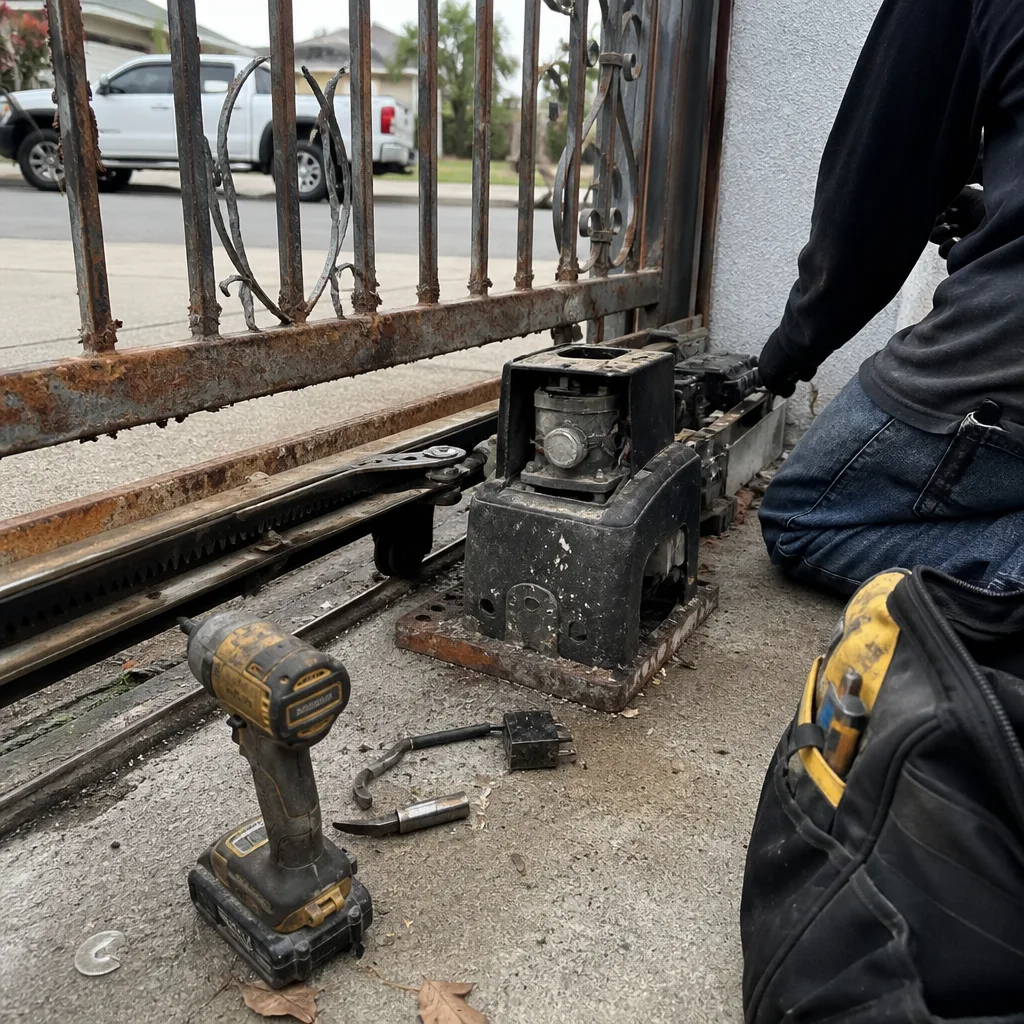 Before
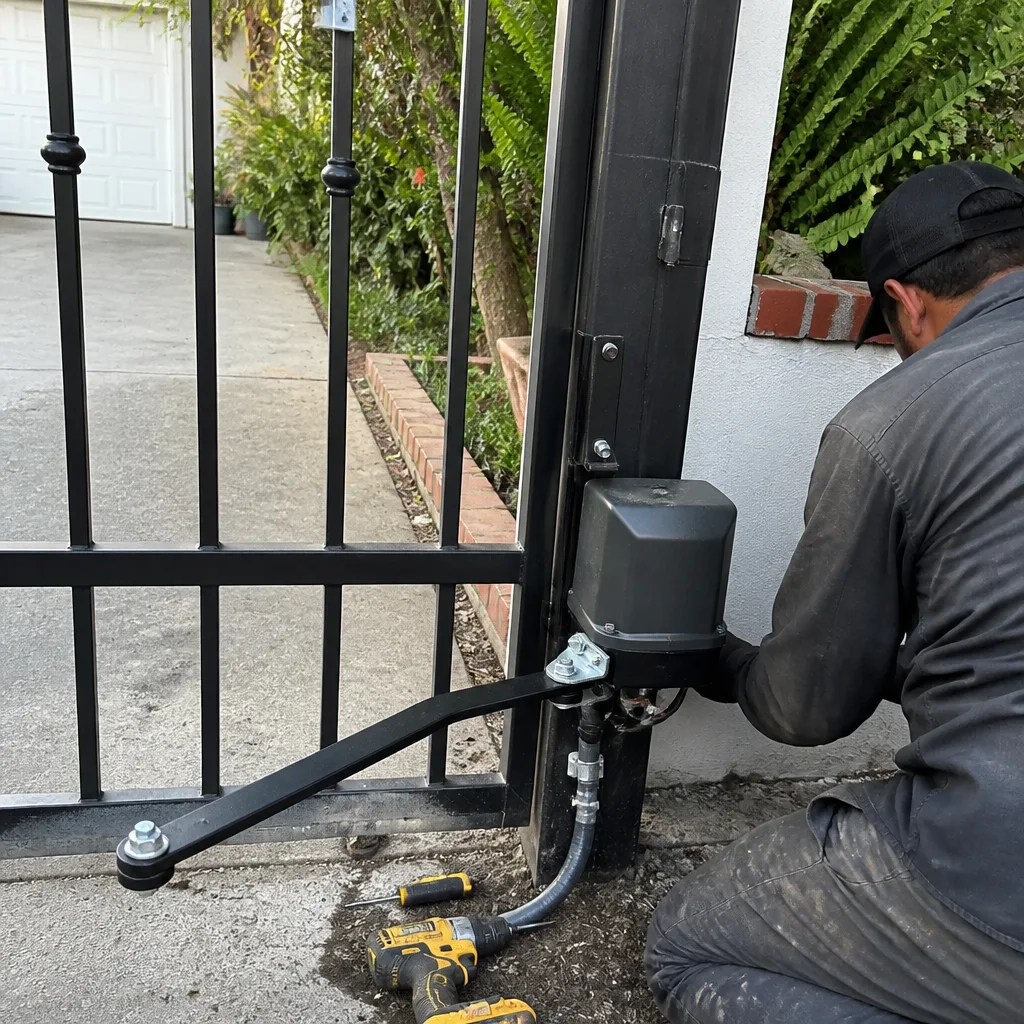 After
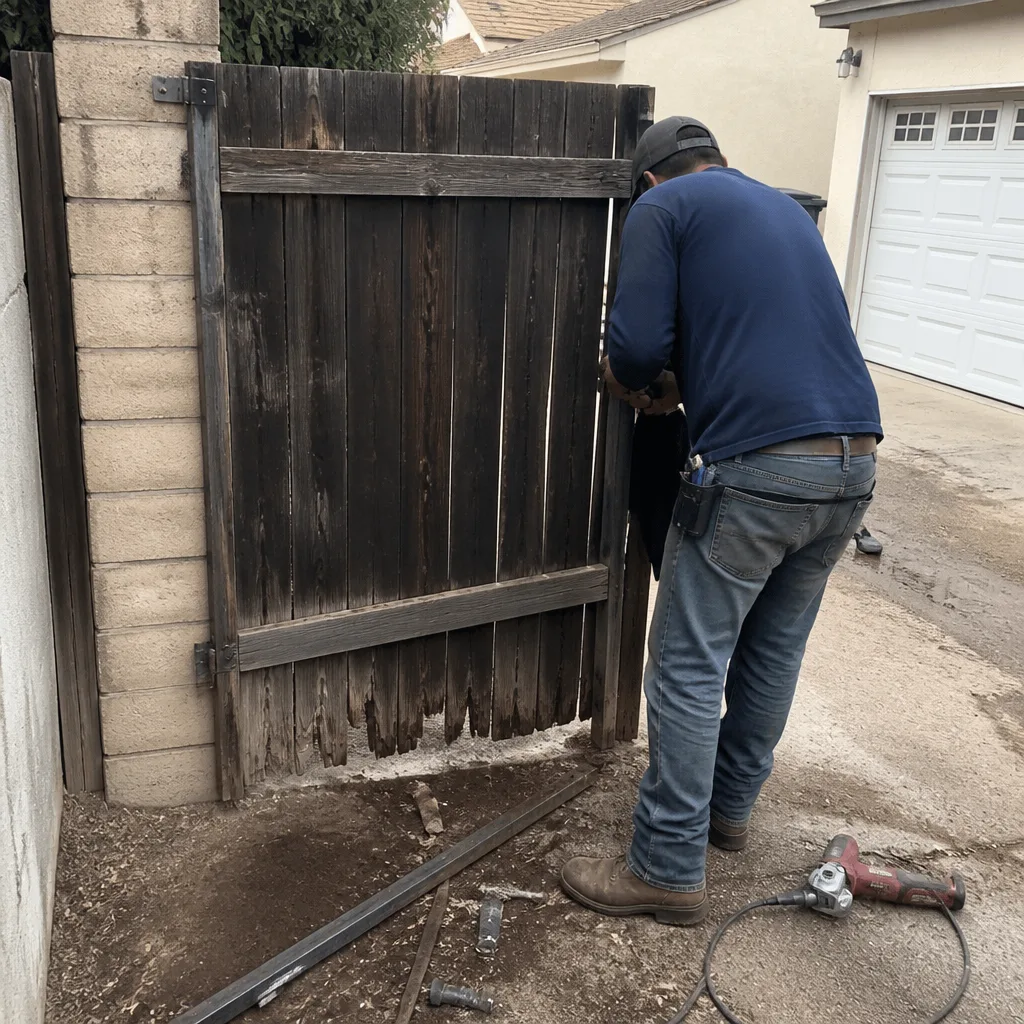 Before
 After
 Before
 After